Эта статья пока доступна только на английском — перевод на русский в процессе.
Online Personal Training Cost UK: 2026 Pricing Guide
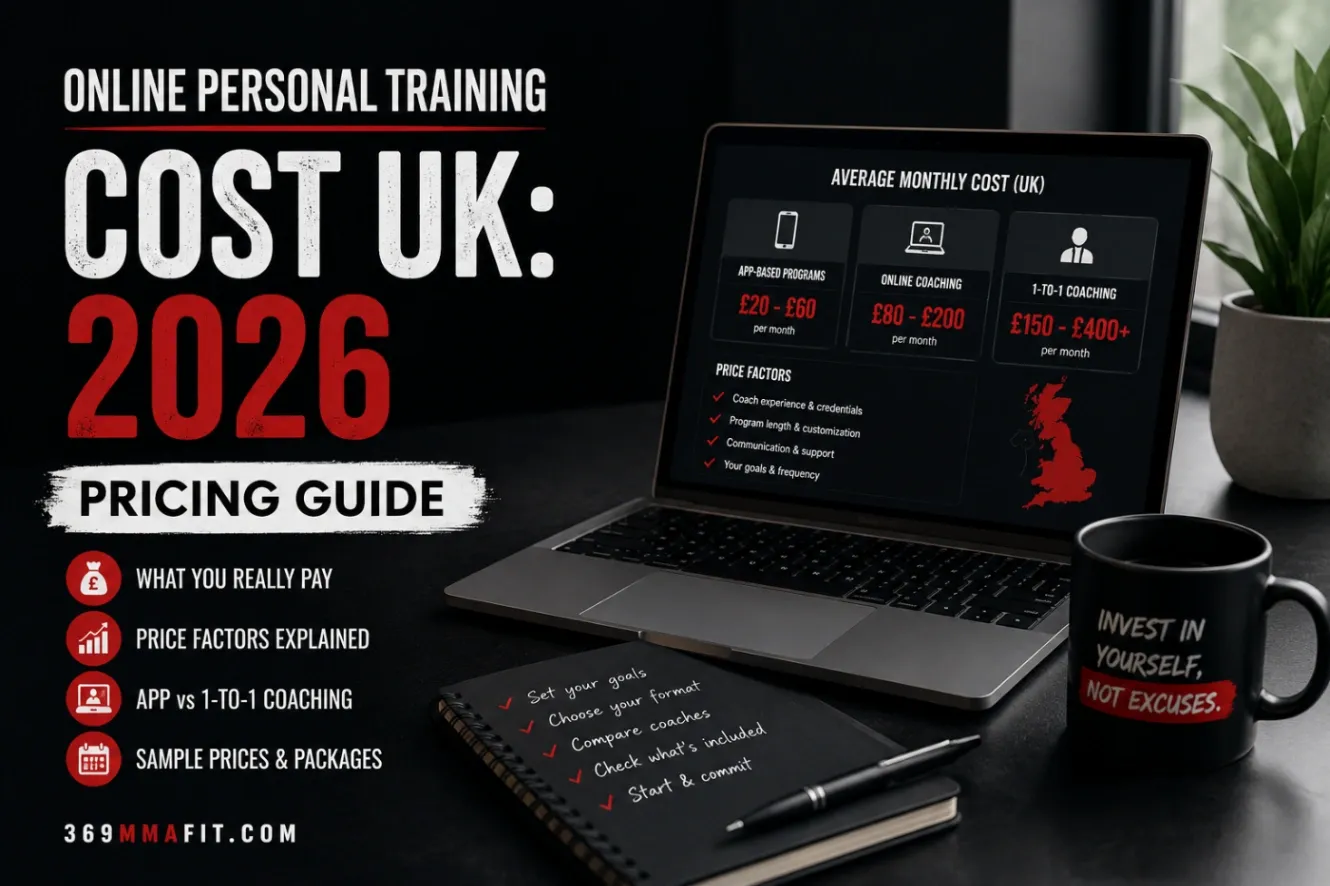
If you are weighing up online personal training in the UK and want a straight answer on price before you commit, this guide is for you. We break down realistic 2026 cost ranges for app-based programming, hybrid coaching and live 1-to-1 video sessions, explain exactly what pushes the price up or down, and show you how to judge value rather than just chasing the cheapest monthly fee. The aim is to help you spend confidently and get matched with the right coach for your budget.
What online personal training actually includes
Online personal training is not a watered-down version of working with a coach in person — it is a different delivery model. Instead of meeting at a gym, you receive a structured programme through a coaching app, regular check-ins, and (depending on the package) live video sessions where a trainer watches and corrects your form in real time. Because there is no physical location to rent, online coaching is genuinely available to anyone in the UK, whether you train from a flat in Manchester or a rural home in the Highlands.
Most UK online coaching packages fall into three broad tiers, and understanding them is the first step to understanding the price:
- App-based programming: a personalised training and (often) nutrition plan delivered through an app, updated regularly, with messaging support and periodic check-ins. No scheduled live sessions.
- Hybrid coaching: app-based programming plus a smaller number of live video calls each month for technique reviews, accountability and plan adjustments.
- Live 1-to-1 video coaching: scheduled real-time sessions where the trainer coaches you through the workout over video, similar in feel to an in-person session.
If you are still deciding whether the online model suits you, it is worth reading how online training works in practice before you compare prices, because the format affects what you are paying for.
UK online personal training cost ranges in 2026
Prices vary by coach experience, qualifications, customisation and contact frequency, so treat these as realistic ranges rather than fixed figures. They reflect typical UK private-market pricing for online coaching in 2026, and any individual coach may sit above or below them.
App-based programming
- Typical range: roughly £40–£120 per month.
- What you get: a tailored plan, app access, written and video exercise guidance, messaging support and regular check-ins (often weekly or fortnightly).
- Best for: people who are reasonably confident exercising alone and want structure, progression and accountability without scheduled calls.
Hybrid coaching
- Typical range: roughly £100–£250 per month.
- What you get: everything in app-based programming, plus a set number of live video calls per month (commonly two to four) for form checks and accountability.
- Best for: those who want a custom plan but value occasional real-time eyes on their technique.
Live 1-to-1 video coaching
- Typical per-session range: roughly £25–£60 per session, with experienced or specialist coaches charging more.
- Typical monthly range: roughly £150–£500+ per month depending on session frequency.
- Best for: beginners who want maximum guidance, people returning from injury, or anyone who thrives on scheduled accountability.
You can see how a specific coach packages these tiers — and what is included at each level — on individual profiles in the 369MMAFIT trainer directory, and compare structured options on the pricing page.
What actually drives the price
Two coaches can both call themselves online personal trainers and charge very differently. Here is what sits behind the number.
Contact frequency and customisation
The single biggest cost driver is how much of the coach's time you take up. A fully bespoke plan that is rewritten every week, with daily messaging and detailed video feedback, costs far more to deliver than a template lightly adjusted once a month. More live sessions, more frequent check-ins and deeper personalisation all push the price up — and for many people, that is exactly where the value is.
Qualifications and specialism
Reputable UK coaches typically hold recognised qualifications and may be registered with CIMSPA, the chartered body for the sport and physical activity sector. Specialists — for example coaches working with pre- and post-natal clients, older adults, chronic conditions, or specific sports — generally charge a premium because of the additional training and risk management involved. The National Careers Service outlines the typical pay and qualification pathway for fitness instructors and personal trainers in the UK, which is useful background when judging whether a price is fair for the experience on offer.
Experience, results and demand
An established coach with a strong track record and a full client roster can command higher rates simply because of demand. Newer coaches often price competitively while they build a client base — which can be excellent value if their qualifications and approach are sound.
What you should expect at any price point
- A clear description of what is and is not included.
- Transparent contract length and cancellation terms (rolling monthly is common online).
- A coach who asks about your health history, goals and any injuries before prescribing anything.
- Programming grounded in established guidance, not fads.
Online versus in-person: the real cost comparison
In-person personal training in the UK is typically billed per session, and rates are usually higher per hour than online because the coach's time is fixed to one client in one place. Online coaching changes the maths in three ways:
- Lower per-unit cost: app-based and hybrid models spread a coach's expertise across asynchronous support, so you pay less for ongoing guidance than for the same number of in-person hours.
- No travel cost or time: there is no commute, no parking and no gym day-pass — a saving that is easy to overlook but adds up over a year.
- Flexibility: sessions and check-ins fit around shift work, childcare and travel, which improves consistency — and consistency is what produces results.
The trade-off is hands-on supervision. In person, a coach can physically spot you and adjust your position; online, they coach through video and your description. For most general fitness and fat-loss goals this is a minor difference, but for heavy barbell lifting or specific rehabilitation work, prioritise a hybrid or live-video package so a qualified coach can watch your technique.
A simple value comparison
- If your main need is structure and accountability: app-based programming usually offers the best value.
- If you want guidance plus occasional eyes-on coaching: hybrid is the sweet spot for most people.
- If you are a beginner or returning from injury: live 1-to-1 video coaching is worth the premium early on.
How to judge value, not just price
The cheapest plan is not the best plan if it does not get you moving consistently. Use this checklist to assess whether a package is genuinely worth the money.
- Does it move you toward UK activity guidance? The NHS recommends adults do at least 150 minutes of moderate or 75 minutes of vigorous activity per week, plus muscle-strengthening activity on at least two days. A good programme should build you toward that and beyond, in line with your goals. The World Health Organization sets out very similar targets.
- Is the coaching individualised? Guidance from bodies such as the American College of Sports Medicine and the National Strength and Conditioning Association emphasises that progressive, individualised programming drives results — a generic PDF does not.
- Is there real support between sessions? Response times, check-in quality and plan adjustments matter more than session count alone.
- Does it support long-term health, not just appearance? Regular activity is linked to lower cardiovascular risk; the British Heart Foundation and clinical guidance summarised by NICE both highlight physical activity as central to heart and metabolic health.
- Is nutrition handled responsibly? Sound coaching aligns with mainstream guidance such as that from the British Nutrition Foundation rather than promising extreme rapid results.
If your priority is fat loss specifically, look for a coach who pairs sensible programming with sustainable nutrition habits — our overview of online weight-loss coaching explains what a realistic, health-first approach looks like, and the general fitness coaching page covers strength and conditioning goals.
Free consultations and what to ask
It is now standard for UK online coaches to offer a free, no-obligation consultation or discovery call before you pay anything. This is your chance to check the fit — use it. Treat it as an interview, not a sales pitch.
Questions worth asking on a free consult:
- What qualifications do you hold, and are you insured and registered with a recognised body such as CIMSPA?
- What exactly is included each month, and how often is my plan updated?
- How, and how quickly, can I reach you between sessions?
- How do you handle injuries, medical conditions or modifications?
- What is the contract length and cancellation policy?
- Can you share examples of clients with goals similar to mine?
A confident, qualified coach will answer all of these clearly. Vague answers, high-pressure tactics or promises of dramatic results in a few weeks are red flags.
Putting a realistic budget together
Online coaching tends to deliver the best return when you commit for long enough to see adaptation — typically at least eight to twelve weeks. Spending on sport and fitness is a normal part of many UK household budgets, and the Office for National Statistics publishes data on what households spend on recreation and culture. Framing coaching as a planned monthly cost, alongside any gym or equipment costs, helps you choose sustainably rather than starting an expensive plan you cancel after a month.
A practical way to budget:
- Tight budget: app-based programming (£40–£120 per month) with a coach who offers strong messaging support.
- Mid budget, want accountability: hybrid coaching (£100–£250 per month) with two to four live calls.
- Beginner or high-support need: live 1-to-1 video coaching, scaling session frequency to fit your budget.
Get matched with the right coach for your budget
The fastest way to find good value is to compare real coaches and their packages side by side, then take a free consult before committing. 369MMAFIT is an online coaching platform that connects UK clients with certified online coaches for app-based programming, hybrid coaching and live 1-to-1 video sessions — so you can choose the tier that fits both your goals and your budget. Tell us what you are after and we will match you with suitable coaches; the discovery call costs nothing.
- Browse coaches now: Explore certified online trainers
- Prefer to be matched? Request a trainer and get matched free
Frequently Asked Questions
Q: How much does online personal training cost in the UK in 2026?
A: As a rough guide, app-based programming runs around £40–£120 per month, hybrid coaching around £100–£250 per month, and live 1-to-1 video coaching around £25–£60 per session or £150–£500+ per month. The exact figure depends on contact frequency, customisation and the coach's experience and qualifications.
Q: Is online personal training cheaper than in-person?
A: Usually yes, especially for app-based and hybrid models, because the coach's expertise is spread across ongoing support rather than fixed hourly sessions. You also save travel time and cost. The trade-off is less hands-on supervision, which matters most for heavy lifting or rehabilitation.
Q: What makes one online trainer more expensive than another?
A: The main drivers are how often you interact, how bespoke the programming is, and the coach's qualifications, specialism and demand. A weekly-updated bespoke plan with frequent live feedback costs more than a lightly adjusted template, and that extra support is often where the value lies.
Q: Do online personal trainers offer free consultations?
A: Yes, a free discovery call is now standard in the UK. Use it to confirm the coach's qualifications, insurance, what is included, response times and cancellation terms. Treat it as an interview and be cautious of high-pressure sales or promises of dramatic results.
Q: How do I know if an online trainer is properly qualified?
A: Look for recognised qualifications and registration with a chartered body such as CIMSPA. The National Careers Service describes the standard UK pathway for personal trainers, which is a helpful benchmark. A qualified coach will also take a health history before prescribing anything.
Q: How long should I commit to online coaching to see results?
A: Most people need at least eight to twelve weeks of consistent training to see meaningful change, in line with the progressive programming principles emphasised by bodies like ACSM and the NSCA. Budgeting for a few months rather than a single one gives the plan time to work.
References
- NHS — UK physical activity guidelines for adults
- National Careers Service — personal trainer pay and qualification pathway
- CIMSPA — chartered body for sport and physical activity professionals
- Office for National Statistics — UK household spending data
- British Heart Foundation — physical activity and heart health
- NICE — clinical guidance on physical activity
Готовы применить это на практике?
Подберём вам сертифицированного тренера 369MMAFIT в Дубае — персональные тренировки, ММА и питание, очно или онлайн.