Эта статья пока доступна только на английском — перевод на русский в процессе.
How to Lose Belly Fat in Dubai and Abu Dhabi: Evidence-Based Strategies That Work
How to Lose Belly Fat in Dubai and Abu Dhabi: Evidence-Based Strategies That Work
Belly fat is one of the most common fitness concerns among Dubai and Abu Dhabi residents — and one of the most misunderstood. The UAE market is saturated with products, programmes, and promises specifically targeting abdominal fat, most of which are scientifically unfounded. This guide gives you the evidence-based truth and a clear action plan.
The Science of Belly Fat
Not all body fat is equal. Two distinct types accumulate in the abdominal region:
- Subcutaneous fat: Fat under the skin, covering the abdominal muscles — soft, pinchable, primarily an aesthetic concern
- Visceral fat: Fat stored around internal organs (liver, pancreas, intestines) — metabolically active, secretes inflammatory cytokines, and is the primary driver of cardiovascular disease, type 2 diabetes, and metabolic syndrome
Research by Despres & Lemieux (2006, Nature) established that visceral fat quantity, independent of total body weight, is strongly predictive of cardiovascular and metabolic disease risk. This is clinically significant for UAE residents — the UAE has among the highest rates of type 2 diabetes and cardiovascular disease globally, and visceral fat accumulation is a primary driver.
The Spot Reduction Myth — Definitively Debunked
Abdominal exercises (crunches, sit-ups, leg raises) do not preferentially burn belly fat. Research by Vispute et al. (2011, Journal of Strength and Conditioning Research) directly tested this: six weeks of abdominal exercises produced no significant reduction in abdominal fat compared to control. Fat is mobilised from throughout the body during any caloric deficit — the body determines the source, not the exercise location. Doing 500 crunches per day in a Dubai gym burns approximately 25 calories — far less effective than managing caloric intake.
What Actually Burns Belly Fat: The Evidence
1. Sustained Caloric Deficit — The Essential Foundation
Fat loss of any kind requires a caloric deficit. Visceral fat, despite being more dangerous, is actually more metabolically responsive to energy deficit than subcutaneous fat — meaning it is often the first to reduce significantly. Research confirms visceral fat responds proportionally more to caloric restriction and exercise than subcutaneous abdominal fat.
Target for UAE residents: 300–500 calorie deficit daily, achieved through a combination of dietary adjustment and increased activity.
2. Aerobic Exercise — The Most Effective Intervention
A meta-analysis by Ismail et al. (2012, Obesity Reviews) found aerobic exercise was the most effective single intervention for visceral fat reduction — significantly more effective than resistance training alone for abdominal fat specifically. Recommendation: 150–300 minutes per week of moderate-intensity aerobic activity (walking, swimming, cycling, elliptical).
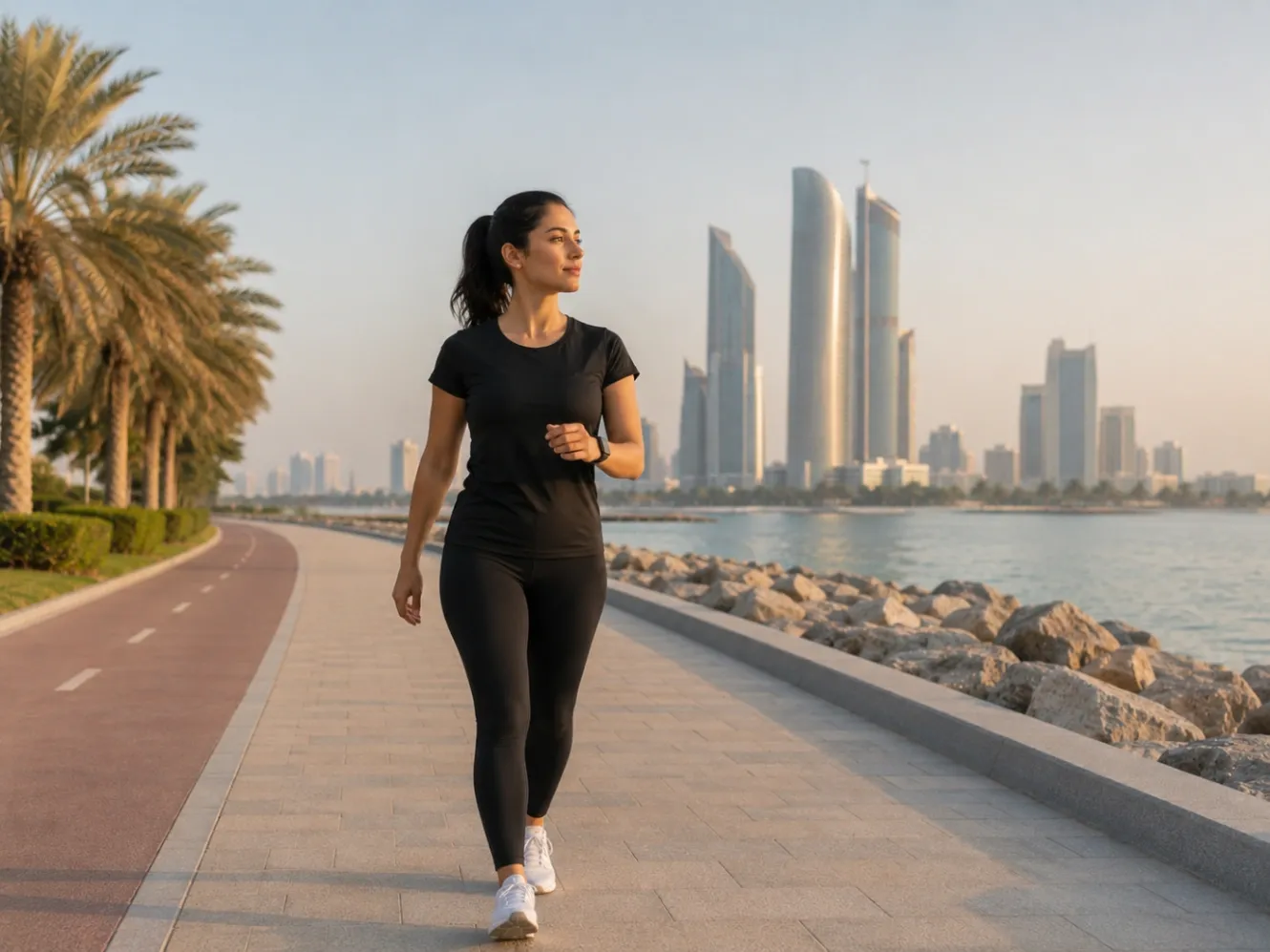
In UAE context: morning walks at Dubai Creek Park or Abu Dhabi Corniche during cool season; indoor cardio (treadmill, elliptical, swimming coaching) year-round.
3. Resistance Training — Essential for Preserving Muscle and Metabolism
While aerobic exercise removes visceral fat most efficiently, resistance training preserves muscle mass during the deficit — preventing metabolic rate suppression. The combination (aerobic + resistance) produces superior long-term body composition than either alone. Research by Willis et al. (2012) confirmed combined training was optimal.
4. Stress and Sleep Management — The Overlooked UAE Factors
Visceral fat is uniquely sensitive to cortisol. Chronic stress — extremely prevalent in Dubai and Abu Dhabi's high-pressure professional environment — directly promotes visceral fat deposition regardless of diet and exercise. Research by Epel et al. (2000) confirmed that women with higher cortisol reactivity had more visceral fat, independent of total body mass.
Sleep restriction below 6 hours also specifically increases visceral fat accumulation (Hairston et al. 2010, Sleep). For UAE residents doing everything else right but still not losing belly fat, stress and sleep are the most likely missing variables.
5. Dietary Strategies That Target Visceral Fat
Specific dietary patterns have evidence for visceral fat reduction beyond general caloric restriction:
- Reduced refined carbohydrates and sugar: Research by Maersk et al. (2012) found reducing sugary beverage intake specifically reduced visceral fat. UAE residents consuming fresh juices, sweetened coffees, and soft drinks are consuming primary visceral fat drivers.
- High protein diet: Meta-analysis shows high protein intake during caloric restriction produces greater visceral fat loss than standard protein intake (Magkos et al. 2016)
- Dietary fibre: Research by Hairston et al. (2012, Obesity) found 10g daily increase in soluble fibre intake reduced visceral fat accumulation by 3.7% over 5 years, independent of other factors
- Omega-3 fatty acids: Fish oil supplementation (2–3g EPA+DHA daily) has shown modest but consistent visceral fat reduction effects in multiple trials
UAE Lifestyle Factors Specifically Driving Belly Fat
- Car-centric culture: Minimal NEAT (non-exercise activity thermogenesis) from daily movement — a major UAE-specific contributor to visceral fat accumulation
- Alcohol: Among UAE's non-Muslim expat population, frequent alcohol consumption (widely available in Dubai and Abu Dhabi) is a significant source of visceral fat-promoting empty calories
- Friday brunch culture: An institution that can easily contribute 2,000+ calories in a single sitting
- Restaurant frequency: Eating out 4–5× weekly (common in UAE) reduces dietary control significantly
- Air conditioning sedentary comfort: The ease of indoor sedentary time in UAE's climate creates a uniquely low-NEAT environment
A 12-Week UAE Belly Fat Action Plan
- Calculate your TDEE and create a 400-calorie daily deficit through diet + activity
- Aerobic exercise: 3–5 sessions/week, 30–45 minutes each (swim, walk, cycle)
- Resistance training: 2–3 sessions/week (full body, compound movements)
- Eliminate liquid calories: Switch to water, unsweetened coffee/tea
- Increase dietary protein: 2g/kg bodyweight daily
- Sleep: 7.5+ hours, consistent schedule
- Stress: 10–15 min daily meditation, reduce training intensity if chronically fatigued
- Track progress with waist circumference (every 2 weeks) rather than scale weight
Ready to Train with a Certified Coach?
Get a free consultation and a training plan built specifically for your goals, level, and schedule.
Find Your Coach →Frequently Asked Questions
Q: Why can't I lose belly fat despite training in Dubai?
A: The most common reasons UAE residents fail to lose belly fat despite regular training: caloric intake exceeding expenditure (UAE's food culture makes this easy), inadequate sleep elevating cortisol and promoting visceral fat storage, chronic stress directly driving visceral fat accumulation, and insufficient aerobic volume (training 3× per week for 30 min may not create adequate deficit with UAE's sedentary baseline).
Q: Does sugar cause belly fat in UAE?
A: High-sugar diets specifically promote visceral fat accumulation through elevated insulin response and fructose-driven hepatic fat synthesis. UAE residents consuming fresh juices (often 40–60g sugar per serving), sweetened beverages, and dessert culture face a specific visceral fat driver. Reducing sugar intake — particularly liquid sugars — is one of the most impactful single dietary changes for reducing belly fat in UAE.
Q: How long does it take to lose belly fat in Abu Dhabi?
A: Visible belly fat reduction (1–2 cm waist circumference decrease) is typically achievable within 4–6 weeks of consistent 400-calorie deficit and regular aerobic exercise. Significant transformation — where the belly is notably flatter and waistline meaningfully reduced — typically takes 12–20 weeks of sustained effort. The good news: visceral fat is more metabolically active and often responds faster than subcutaneous fat.
Q: Are there foods that specifically burn belly fat in UAE?
A: No foods specifically "burn" belly fat — fat loss is systemic, driven by caloric deficit, not specific foods. However, some foods support the conditions for belly fat reduction: high-protein foods increase satiety and preserve muscle, fibre-rich foods reduce total caloric intake through increased satiety, omega-3 rich foods (salmon, walnuts) have modest anti-visceral-fat evidence. Focus on diet quality and caloric balance rather than individual "fat-burning foods."
Q: Is it possible to lose belly fat without losing muscle in Dubai?
A: Yes — body recomposition (losing fat while maintaining or gaining muscle) is achievable with: adequate protein intake (2g/kg), progressive resistance training, and a moderate rather than aggressive caloric deficit. This approach is slower than aggressive cutting but produces superior body composition. Many Dubai personal trainers specialise in guiding clients through recomposition programmes rather than simple weight loss.
Готовы применить это на практике?
Подберём вам сертифицированного тренера 369MMAFIT в Дубае — персональные тренировки, ММА и питание, очно или онлайн.