هذه المقالة متاحة باللغة الإنجليزية فقط حالياً — الترجمة العربية قيد الإعداد.
How to Get a Six-Pack in Dubai: The Science-Based Path to Visible Abs (2026 Realistic Timeline)
How to Get a Six-Pack in Dubai: The Science-Based Path to Visible Abs (2026 Realistic Timeline)
A six-pack is the most commonly stated, least commonly achieved fitness goal in Dubai. The reason is not training. Most Dubai gym-goers train hard. The reason is misinformation and impatience — fed by influencer marketing that promises 30-day transformations, supplement claims that don't survive scrutiny, and "ab workouts" that miss the actual mechanism of visible abdominals.
Here is the honest, evidence-based reality: visible six-pack abs are achieved at 8–12% body fat for men and 14–19% body fat for women. Reaching those levels from typical starting points (15–25% for men, 22–30% for women) requires 6–18 months of disciplined nutrition and training. There are no shortcuts. There are no "ab fat burners". There is only sustained caloric deficit, adequate protein, progressive strength training, and patience.
This guide walks through the realistic science, the training that actually matters, and the strategies that work in the Dubai food and lifestyle environment.
The Three Variables That Actually Matter
1. Body Fat Percentage
Abdominal definition is a function of body fat alone — not "ab workouts". The rectus abdominis is well-developed in almost everyone; it is the subcutaneous fat layer over it that determines visibility.
- Men: 4-pack visible at 14–16%; 6-pack visible at 10–12%; deep definition at 7–9%.
- Women: Visible abdominal lines start at ~22%; clear 6-pack at 16–18%; deep definition at 13–15% (lower levels can affect hormonal health).
Note: women's natural healthy body fat range is higher than men's, and dropping below 16% has documented effects on menstrual function, bone density, and recovery (Loucks, 2007 — Journal of Sports Sciences).
2. Muscle Mass on the Abdominals
While fat loss reveals abs, training builds their thickness. A well-developed rectus abdominis is more visible at higher body fat than a poorly developed one. Direct ab work matters — but only after fat loss has progressed sufficiently.
3. Time and Adherence
Sustainable fat loss is 0.4–0.8% of body weight per week (Hall & Kahan, 2018 — Medical Clinics of North America). An 85 kg male at 22% body fat aiming for 10% needs to lose approximately 10 kg of fat while preserving muscle. At 0.5 kg fat loss per week, that is 20 weeks — 5 months — of disciplined adherence. In practice, with lifestyle disruptions, plateaus, and refeeds, 8–12 months is realistic.
The Caloric Deficit Math
Fat loss requires a sustained caloric deficit. The pragmatic approach:
- Estimate your maintenance calories. Use a TDEE calculator (our TDEE Calculator is built for this).
- Subtract 300–500 kcal daily. This produces 0.3–0.5 kg weekly fat loss for most adults.
- Track for 2–3 weeks. If weight is not decreasing, reduce by another 200 kcal. If it is decreasing too fast (>1 kg per week), increase by 200 kcal — rapid loss costs muscle and triggers metabolic adaptation.
Protein Is Non-Negotiable
For fat-loss phases while preserving muscle, protein intake of 1.8–2.4 g per kg bodyweight per day is recommended (Helms et al., 2014 — Journal of the International Society of Sports Nutrition). For an 80 kg male, this is 144–192 g of protein daily. Sources: chicken breast, lean beef, fish, eggs, Greek yoghurt, whey protein. See Best Protein Foods in UAE.
The Training Side
Strength Training (3–4× per week)
Maintains muscle mass during fat loss — without this, 25–40% of weight loss can be muscle (Garthe et al., 2011 — International Journal of Sport Nutrition). Focus on compound lifts: squats, deadlifts, presses, rows, pull-ups. See Strength Training Tips for Dubai.
Cardio (2–4× per week)
Increases caloric expenditure and improves recovery. Mix of moderate steady-state cardio (zone 2 walking or cycling, 30–60 min) and high-intensity intervals (10–20 min twice weekly). See How Much Cardio Per Week.
Direct Ab Work (3–4× per week)
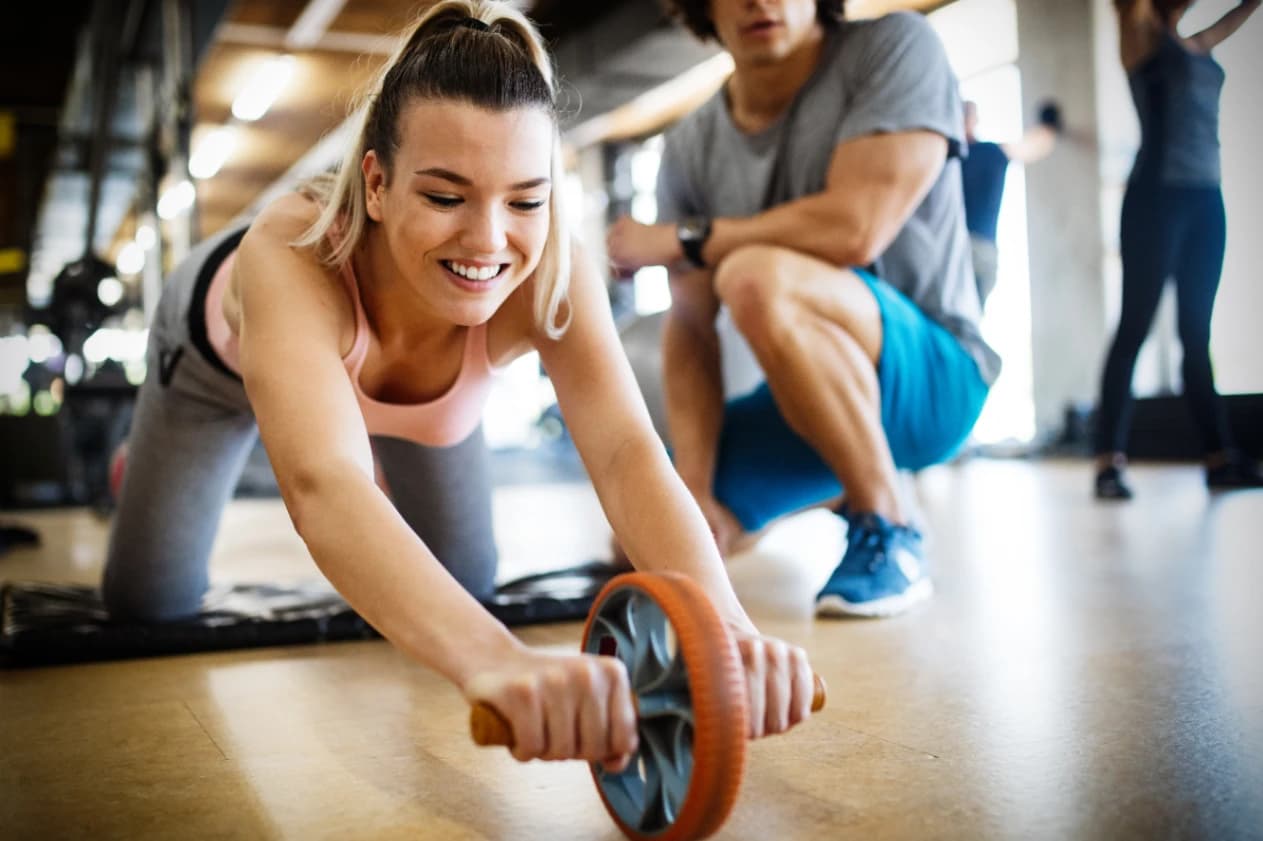
Builds abdominal thickness — useful once fat loss is progressing. Effective exercises: hanging leg raise, cable crunch, ab wheel rollout, dead bug, hollow hold. Avoid: sit-ups (overrated, lumbar stress); endless crunches (diminishing returns). See Core Training Beyond Crunches.
What Doesn't Work
- "Spot reduction": You cannot burn fat off specific areas through targeted exercise. Decades of research are unequivocal.
- "Fat burner" supplements: Most are stimulant blends that suppress appetite mildly. Effect on actual fat loss is marginal at best.
- 500-rep ab workouts: Without caloric deficit, you build hidden abs.
- Crash diets: Produce rapid loss followed by rapid regain. See UAE Crash Diets & Fad Detoxes.
- Sweat suits and waist trainers: Water loss, not fat loss. Rehydration reverses the effect within hours.
Dubai-Specific Strategy Notes
- Restaurant strategy: Dubai dining is unavoidable socially. Develop ordering habits — grilled protein, plain rice or potato, vegetables, light dressings. Cocktails and dessert are the heaviest caloric loads, not the main course.
- Brunch culture: 1,500–3,500 kcal per brunch session is typical. One brunch can erase a week of deficit. Adjust the rest of the week accordingly.
- Meal prep services: Kcal, The Meal Prep, Baja Fresh, Calo, Right Bite all offer calorie-tracked options that significantly simplify adherence.
- Heat training in summer: Sweat-driven dehydration can mask actual weight trends. Weigh at consistent times, ideally after morning toilet, before fluids.
- Ramadan adjustments: Annual schedule disruption. Maintain protein, accept maintenance rather than aggressive loss during the month. See Ramadan Workout Guide 2026.
Realistic Timeline by Starting Point
| Starting body fat | Target | Realistic timeline |
|---|---|---|
| 25% male | 10% male | 14–22 months |
| 18% male | 10% male | 8–12 months |
| 14% male | 10% male | 3–5 months |
| 28% female | 17% female | 12–18 months |
| 22% female | 17% female | 6–9 months |
Use our Body Fat Calculator for initial estimation.
Frequently Asked Questions
Q: Can I get a six-pack at 40+?
A: Yes. The science of fat loss and muscle preservation is the same at every age. Timelines may extend modestly due to slower recovery.
Q: How important is sleep?
A: Critical. Sleep deprivation increases hunger hormones (ghrelin), reduces satiety hormones (leptin), and impairs muscle recovery. See Sleep & Fitness in Dubai.
Q: Can I drink alcohol and get a six-pack?
A: Difficult. Alcohol is dense in calories, impairs protein synthesis, and disrupts sleep. Most successful body-recomposition transformations involve reducing or eliminating alcohol during the fat-loss phase.
Q: How much will a personal trainer help?
A: Substantially — through accountability, programme design, and form correction. Most successful Dubai body-recomposition cases involve 2–3 PT sessions per week during the active fat-loss phase.
Build the Body You Actually Want — With a Real Plan
Our Dubai coaches structure 6–18 month body-recomposition programmes with measurable nutrition, progressive strength training, and weekly accountability. Real outcomes, no marketing claims.
Find a Body-Recomp Coach →جاهز لتطبيق ذلك؟
احصل على مدرب 369MMAFIT معتمد في دبي — تدريب شخصي وMMA وتغذية، حضوريًا أو عبر الإنترنت.