هذه المقالة متاحة باللغة الإنجليزية فقط حالياً — الترجمة العربية قيد الإعداد.
Swimming for Rehabilitation in the UAE: Recovery After Injury, Illness, and Surgery
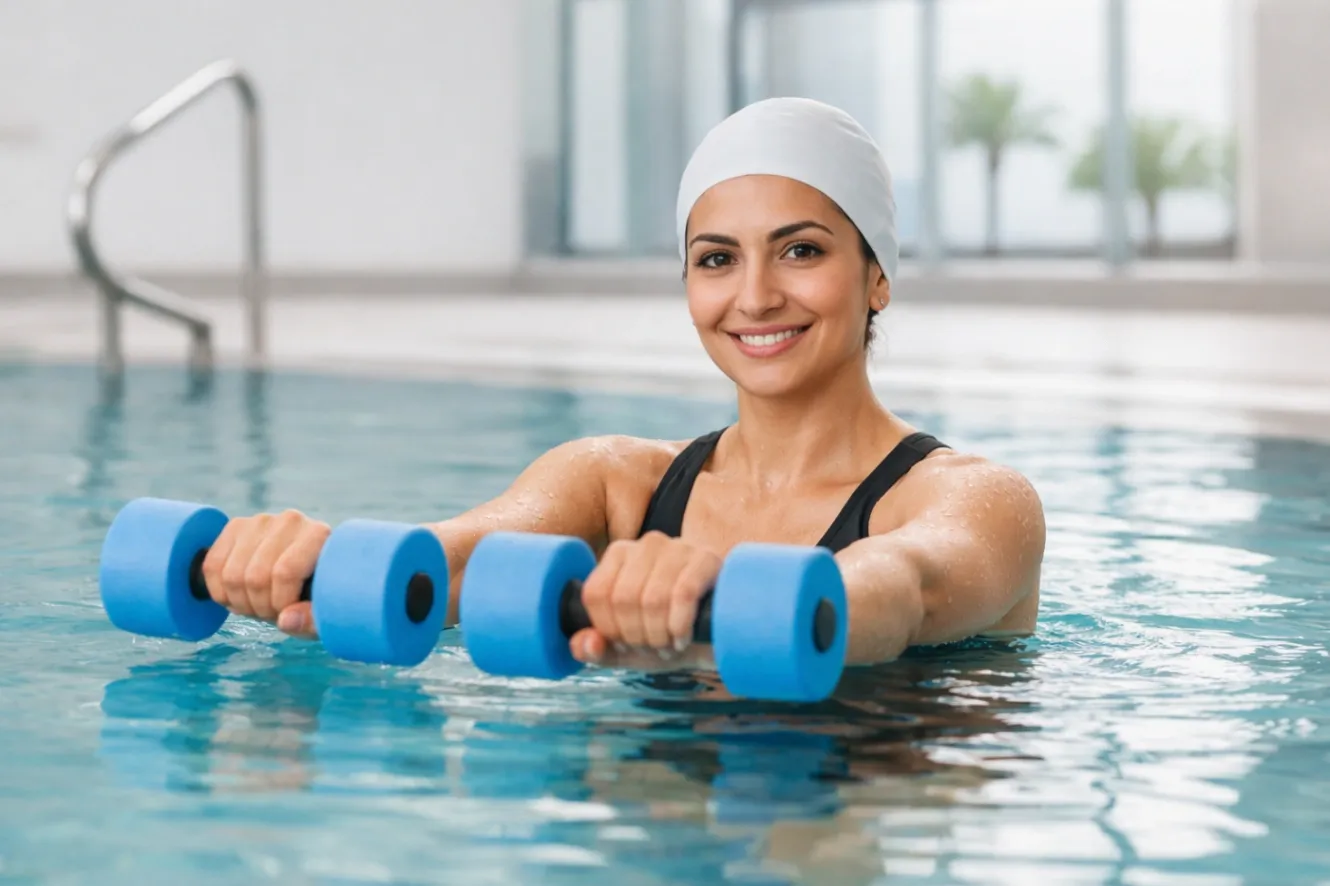
Swimming for Rehabilitation in the UAE: Recovery After Injury, Illness, and Surgery
swimming coaching and aquatic exercise occupy a unique position in rehabilitation medicine — the properties of water create a therapeutic environment that land-based exercise simply cannot replicate. For UAE residents recovering from joint surgery, sports injuries, chronic pain conditions, or illness, pool-based rehabilitation offers benefits unavailable through gym exercise or physiotherapy alone. This guide explains the science, the applications, and how to use aquatic exercise safely in Abu Dhabi and Dubai.
Why Water Is Uniquely Therapeutic
Four physical properties of water make aquatic exercise superior to land-based exercise in many rehabilitation contexts:
Buoyancy
Water buoyancy reduces effective body weight by 60–90% depending on immersion depth. Standing chest-deep in water reduces loading on weight-bearing joints (knees, hips, spine) to approximately 25% of body weight. This allows walking, exercise, and movement that would be impossible or painful on land — critical in the early post-surgical or post-injury period before tissues have sufficient strength for full weight-bearing.
Hydrostatic Pressure
Water exerts uniform pressure on submerged tissues, which: reduces swelling and oedema in injured limbs, improves venous blood return from the extremities, reduces the perception of pain (pain gate mechanism), and provides proprioceptive input that improves joint position sense. These effects begin immediately upon immersion — you can feel the relief when a swollen ankle is submerged.
Viscosity and Resistance
Water provides multidirectional resistance proportional to movement speed — faster movement produces more resistance. This creates a self-regulating rehabilitation environment: patients naturally move at a speed their tissues can manage, and the resistance provides gentle strengthening stimulus. Unlike gym equipment, there is no minimum load required — rehabilitation can begin at extremely low intensity.
Thermal Properties
Warm water (33–35°C, typical of hydrotherapy pools) reduces muscle spasm, increases tissue extensibility, and promotes relaxation — all beneficial for musculoskeletal rehabilitation. UAE hotel and resort pools (frequently 30–32°C) are warmer than typical gym pools and naturally therapeutic for joint conditions.
Evidence for Aquatic Rehabilitation
- Joint replacement: Rahmann et al. (2009, Archives of Physical Medicine and Rehabilitation) found aquatic exercise produced greater functional improvements in the first 6 weeks after hip replacement than land-based exercise, with earlier achievement of independent walking
- Knee osteoarthritis: A Cochrane Review by Bartels et al. (2016) found aquatic exercise produced clinically meaningful improvements in pain and function in knee osteoarthritis, with effects comparable to land-based exercise and superior tolerability
- Chronic back pain: Baena-Beato et al. (2014, Spine) demonstrated aquatic physiotherapy produced superior pain reduction and functional improvement compared to land-based physiotherapy for chronic low back pain
- Fibromyalgia: Multiple meta-analyses support aquatic exercise as a first-line non-pharmacological intervention — particularly relevant as fibromyalgia is significantly more prevalent in the UAE expat female population under high life stress
Rehabilitation Applications: Who Benefits Most
Post-Joint Surgery (Knee, Hip, Shoulder)
Aquatic rehabilitation typically begins 2–4 weeks post-surgery when wounds are fully healed (surgical staples removed, no open areas). Walking in chest-deep water normalises gait pattern and rebuilds leg strength without the impact forces that stress the healing joint. Most orthopaedic surgeons at private hospitals in Dubai and Abu Dhabi (Cleveland Clinic, Mediclinic, Saudi German Hospital) support early aquatic rehabilitation as part of post-operative protocols.
Sports Injuries
Ankle sprains, stress fractures, ACL injuries, and muscle strains all benefit from aquatic rehabilitation during the period when weight-bearing on land is restricted. Pool running (aqua jogging with a flotation belt) maintains cardiovascular fitness and running-specific neuromuscular patterns during non-weight-bearing recovery — crucial for UAE runners and athletes who cannot afford prolonged detraining.
Chronic Back Pain
The combination of buoyancy (offloading the spine), warmth (reducing muscle spasm), and gentle movement (reducing pain sensitisation) makes swimming and hydrotherapy highly effective for chronic low back pain management in UAE residents. Backstroke and gentle flutter kicking in water are typically the most comfortable for lumbar conditions; breaststroke with its extension demand on the lumbar spine is often less appropriate.
Neurological Rehabilitation
Stroke, multiple sclerosis, Parkinson's disease, and spinal cord injuries — while beyond the scope of typical fitness swimming — all have aquatic rehabilitation evidence. UAE residents with these conditions should discuss aquatic therapy specifically with their neurologist and engage with a physiotherapist specialising in neurological rehabilitation.
Practical Guide for Rehabilitation Swimming in UAE Pools
Starting Safely
- Always obtain clearance from your surgeon or physiotherapist before entering the pool — wound healing status is critical
- Begin with walking in shallow-to-chest-deep water, not swimming
- A qualified hydrotherapy physiotherapist can design a specific aquatic rehabilitation programme for your condition
- Start 15–20 minutes per session; increase based on symptom response (not time targets)
Choosing the Right Pool
For rehabilitation purposes, warmer pools (30–34°C) are preferable to competition pools (26–28°C). In Abu Dhabi and Dubai:
- Hotel pools are typically warmer and excellent for rehabilitation
- Private physiotherapy clinics with hydrotherapy pools (available at Cleveland Clinic, several specialist physiotherapy centres) provide the most controlled therapeutic environment
- Avoid crowded lap swimming pools for rehabilitation — you need space and freedom to move at your own pace
Frequently Asked Questions
Q: Can I swim after knee replacement surgery in Abu Dhabi?
A: Yes — but timing and approach matter. Water walking and gentle pool exercise typically begin 4–6 weeks post-surgery when the wound is fully healed. Actual swimming (particularly breaststroke, which loads the knee) is typically appropriate from 8–12 weeks, subject to your orthopaedic surgeon's clearance. Front crawl with a pull buoy (no leg kick) is often the first swimming technique used as it avoids knee flexion loading.
Q: Is swimming good for a slipped disc (disc herniation) in Dubai?
A: Generally yes — swimming is one of the most recommended exercises for disc herniation rehabilitation because of its unloading effect on the spine. Freestyle (front crawl) and backstroke are typically most appropriate. Breaststroke involves significant lumbar extension and can aggravate posterior disc herniations — avoid if it causes leg pain. All exercise for disc herniation should be discussed with a physiotherapist or spinal specialist in Dubai or Abu Dhabi — exercise type matters significantly depending on the herniation level and direction.
Q: How soon can I swim after giving birth in the UAE?
A: After vaginal birth: when postnatal bleeding (lochia) has completely stopped AND any perineal wounds are fully healed — typically 6–8 weeks post-birth minimum. After caesarean section: typically 8–12 weeks, when the incision is fully healed with no areas of sensitivity. Always confirm with your obstetrician before entering a pool. The risk is infection through an incompletely healed wound — once healing is complete, swimming is an excellent postnatal rehabilitation and fitness tool.
Q: I have fibromyalgia. Can swimming help in Abu Dhabi?
A: Yes — aquatic exercise has among the strongest evidence for fibromyalgia of any exercise modality. The warm water reduces widespread pain hypersensitivity, the buoyancy removes gravitational load from tender joints, and the gentle movement improves the deconditioning that typically accompanies fibromyalgia. Begin with water walking in warm (32–34°C) water for 15–20 minutes, 3 times per week. Progress slowly — fibromyalgia patients are particularly susceptible to post-exertional malaise from rapid intensity increases. A physiotherapist specialising in fibromyalgia in Abu Dhabi or Dubai can design an appropriate aquatic programme.
Q: Are there specialist aquatic physiotherapy services in Abu Dhabi or Dubai?
A: Yes — several facilities offer hydrotherapy and aquatic physiotherapy in the UAE. Cleveland Clinic Abu Dhabi, HealthPlus Group physiotherapy, Physiofirst (Dubai), and various sports medicine clinics offer hydrotherapy services. For insurance-covered aquatic physiotherapy, a referral from your treating orthopaedic surgeon or physician to a registered physiotherapist who includes aquatic sessions is the typical pathway. Always verify your UAE health insurance covers hydrotherapy sessions specifically.
Ready to Train with a Certified Coach?
Get a free consultation and a training plan built specifically for your goals, level, and schedule.
Find Your Coach →References: Rahmann et al. 2009, Arch Phys Med Rehab | Bartels et al. 2016, Cochrane Review | Baena-Beato et al. 2014, Spine | Bidonde et al. 2014, Cochrane Review — aquatic exercise fibromyalgia
جاهز لتطبيق ذلك؟
احصل على مدرب 369MMAFIT معتمد في دبي — تدريب شخصي وMMA وتغذية، حضوريًا أو عبر الإنترنت.