این مقاله فعلاً فقط به انگلیسی موجود است — ترجمهی فارسی بهزودی اضافه میشود.
Walking for Fitness in Abu Dhabi and Dubai: The Complete Guide
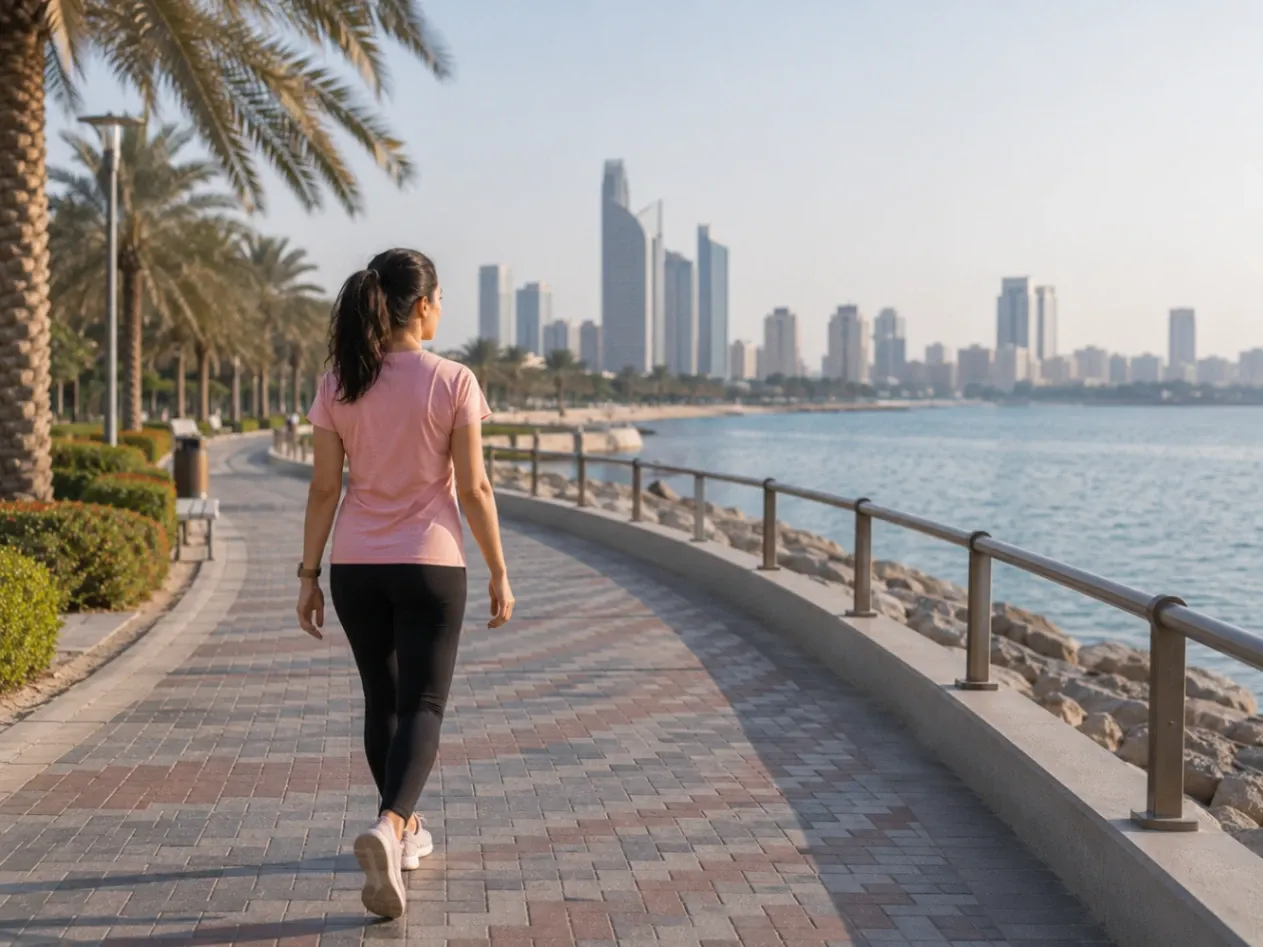
Walking for Fitness in Abu Dhabi and Dubai: The Complete Guide
Walking is the most accessible, lowest-barrier fitness activity available to UAE residents — and it is significantly more effective than most people realise. Despite the heat, the car-centric culture, and the abundance of high-intensity gyms in Abu Dhabi and Dubai, walking remains one of the most evidence-supported tools for cardiovascular health, weight management, and long-term wellbeing.
The Science Behind Walking for Fitness
Walking is a moderate-intensity aerobic activity that operates primarily through the aerobic energy system, engaging slow-twitch muscle fibres and the cardiovascular system. Research consistently demonstrates meaningful health outcomes from regular walking:
- Cardiovascular health: A landmark meta-analysis by Hamer & Chida (2008, European Journal of Cardiovascular Prevention and Rehabilitation) found that regular walking reduced cardiovascular disease risk by 31% and cardiovascular mortality by 32% compared to sedentary individuals.
- Weight management: Walking at 5–6 km/h burns approximately 280–400 kcal per hour depending on body weight. More importantly, it preserves muscle mass better than higher-intensity cardio during a caloric deficit — important for body composition outcomes.
- Mental health: Yerkes et al. (2019, JAMA Psychiatry) found that even low-intensity physical activity including walking significantly reduced depression and anxiety scores.
- Blood glucose control: A 10-minute walk after meals reduces post-meal blood glucose more effectively than a single 30-minute walk (Henson et al., 2016, Diabetologia) — highly relevant given UAE's elevated diabetes prevalence.
Walking in the UAE Climate: Seasonal Strategy
The UAE's extreme summer heat (June–September: 40–48°C, humidity 70–90%) requires adapting your walking schedule to remain safe and effective.
Summer Walking (June–September)
- Walk exclusively before 7:00am or after 8:00pm when temperatures drop to 30–35°C
- Indoor alternatives: Abu Dhabi's Al Reem Island and Dubai Mall walking paths, Yas Mall, Dubai Festival City provide air-conditioned walking of 1–3km per loop
- Hydrate aggressively: 500ml before walking, 250ml every 20 minutes during, 500ml after
- Never walk outdoors between 10am–6pm during Ramadan or summer months — heat illness risk is severe
Winter Walking (October–April)
The UAE's October–April period offers ideal outdoor walking conditions: 18–28°C with low humidity. This is when outdoor walking programmes can run at any time of day.
- Abu Dhabi: Corniche Promenade (8km, fully paved, beautiful waterfront), Al Bateen Beach Walk, Yas Island cycling/walking paths, Mangrove National Park boardwalk
- Dubai: JBR Beach Walk (5km), Dubai Creek Promenade, Al Qudra Cycling/Walking Track (86km desert path, one of the best in the region), Jumeirah Beach Walk
How Much Walking Do You Need? Evidence-Based Targets
The often-cited "10,000 steps per day" was originally a marketing figure from a Japanese pedometer company in the 1960s, not a scientific recommendation. More recent research provides nuanced guidance:
- Minimum effective dose: Lee et al. (2019, JAMA Internal Medicine) found that mortality risk decreased significantly at 4,400 steps/day and continued to decrease up to approximately 7,500 steps/day, with diminishing returns beyond that
- For weight loss: 8,000–10,000 steps/day in a caloric deficit produces meaningful fat loss over 12+ weeks
- For cardiovascular health: 150 minutes of brisk walking (5–6 km/h) per week meets WHO recommendations for moderate-intensity activity
Progressive Walking Programme for UAE Beginners
If you are currently sedentary, do not start with long daily walks — soreness and joint stress will cause you to stop. Follow this evidence-based progression:
Weeks 1–2: Foundation
- Walk 20 minutes, 4 days per week at a comfortable pace (conversation possible)
- Focus on consistency, not speed or distance
- Wear supportive walking shoes — flip-flops and sandals common in UAE culture cause ankle and knee issues
Weeks 3–4: Build
- Increase to 30 minutes per session
- Add one incline or stair element (JBR has several bridges; Abu Dhabi Corniche has gradients)
- Target 6,000 steps/day measured by phone or wearable
Weeks 5–8: Progress
- 45 minutes per session, 5 days per week
- Introduce intervals: 3 minutes brisk walking (slightly breathless) + 2 minutes moderate, repeated
- Target 8,000+ steps/day
Walking vs. Running: Which Is Better for UAE Residents?
Walking's lower impact makes it superior for many populations in the UAE:
- Overweight individuals: Running generates 3–5x body weight impact force per step — for those carrying excess weight, this creates joint stress that frequently causes injury and dropout. Walking at a brisk pace produces similar cardiovascular stimulus at a fraction of the injury risk.
- Over 50s and seniors: Walking is joint-preserving while still producing meaningful cardiovascular benefit
- Post-injury rehabilitation: Walking is often the recommended return-to-activity tool following lower limb injury
- True beginners: Walking builds the aerobic base and musculoskeletal conditioning that makes running sustainable when you're ready
Making Walking More Effective: Research-Backed Enhancements
Pace and Heart Rate
Brisk walking (5.5–6.5 km/h, roughly 100 steps/minute) places you in the moderate-intensity zone (50–70% HRmax). For a 40-year-old, that's 90–120 bpm. Walking faster than this transitions toward jogging — maintain a pace where you can speak in full sentences but would be slightly out of breath singing.
Incline Walking
Walking on a 5–10% incline doubles caloric expenditure and activates glutes and hamstrings to a much greater degree than flat walking. Most UAE gym treadmills allow incline walking — this is effective year-round regardless of outdoor temperature.
Weighted Vest or Rucksacking
Adding 5–10% of bodyweight in a weighted vest or backpack increases caloric expenditure and bone density benefits. Avoid ankle or wrist weights — they alter gait mechanics and can cause injury.
Frequently Asked Questions
Q: Can walking help me lose weight in Dubai without changing my diet?
A: Walking alone without dietary change produces modest weight loss — approximately 0.5–1kg per month at 10,000 steps/day for most people. Walking combined with a modest caloric deficit (300–500 kcal/day reduction) produces much more meaningful results. Diet and exercise work synergistically; relying on one alone is less effective than combining both.
Q: Is it safe to walk outside in Dubai or Abu Dhabi in summer?
A: Only during very early morning (before 7am) or late evening (after 8pm) in June–September. Dubai and Abu Dhabi heat between 10am–6pm during summer months presents genuine heat illness risk, particularly for people unacclimatised to the heat or with cardiovascular conditions. Use indoor malls and air-conditioned tracks during the summer peak.
Q: How many steps per day is realistic for a busy Dubai professional?
A: Most Dubai professionals in desk-based roles accumulate 3,000–5,000 steps naturally. Adding two 20-minute walks (during lunch and evening) typically adds 4,000–5,000 steps, bringing total to 7,000–9,000. This is achievable and significantly more health-protective than remaining sedentary. Parking further from your destination and using stairs at your building in Dubai adds meaningful steps without dedicated exercise time.
Q: What shoes are best for walking in the UAE?
A: Dedicated walking shoes or running shoes with adequate cushioning and arch support. Avoid flat fashion trainers — they provide minimal shock absorption and cause plantar fasciitis and knee pain on the concrete surfaces of Dubai and Abu Dhabi. Leading brands available in UAE malls (Asics, Brooks, New Balance, Saucony) all offer suitable walking options at AED 350–600.
Q: Can I walk for fitness if I have knee pain?
A: In most cases, yes — and walking is often recommended as part of knee rehabilitation. Start with flat surfaces, avoid inclines initially, and prioritise footwear with shock absorption. If you experience sharp pain during walking (not general soreness), consult a sports medicine doctor in Abu Dhabi or Dubai before progressing. Swimming is a useful alternative during periods of knee irritation.
Ready to Train with a Certified Coach?
Get a free consultation and a training plan built specifically for your goals, level, and schedule.
Find Your Coach →References: Hamer & Chida 2008, Eur J Cardiovasc Prev Rehab | Lee et al. 2019, JAMA Internal Medicine | Henson et al. 2016, Diabetologia | WHO Global Physical Activity Guidelines 2020
آمادهاید این را عملی کنید؟
با یک مربی معتبر 369MMAFIT در دبی مچ شوید — تمرین شخصی، MMA و تغذیه، حضوری یا آنلاین.