Tennis for Teenage Fitness in the UAE: Benefits Beyond Sport
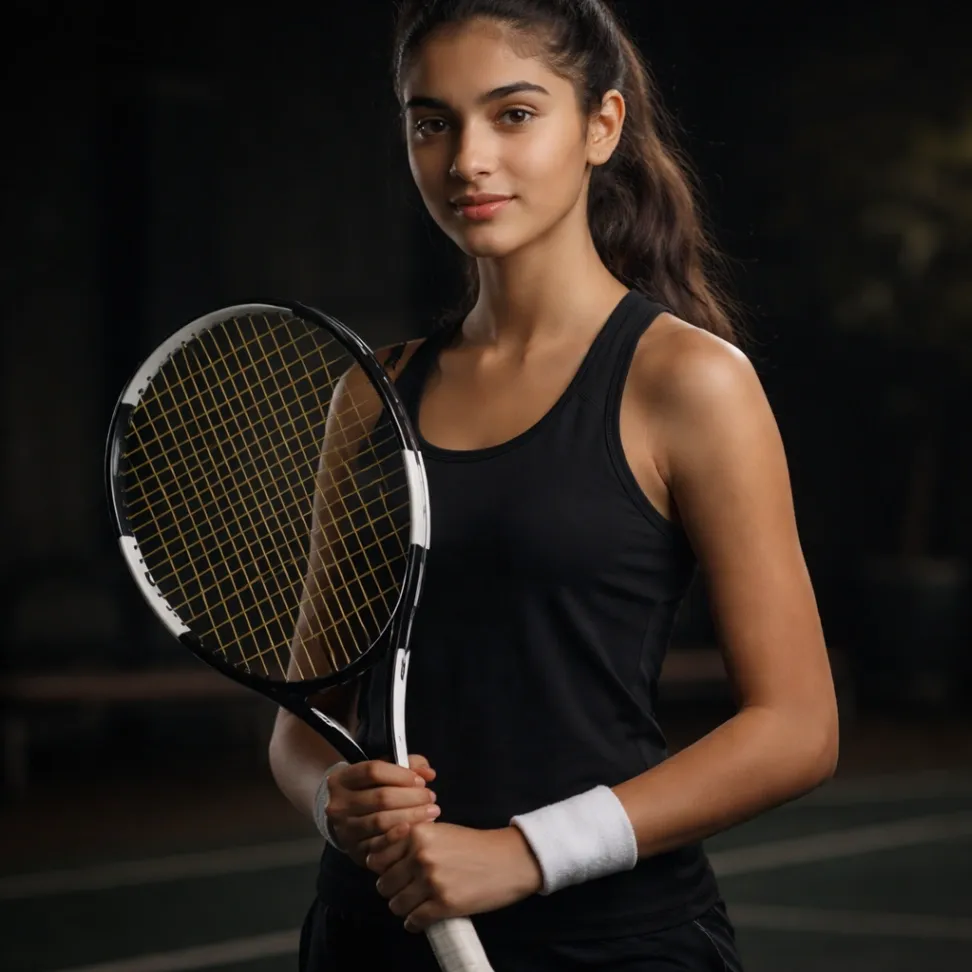
Tennis for Teenage Fitness in the UAE: Benefits Beyond Sport
Teenagers in the UAE face a unique combination of pressures: competitive academic environments, intense social media exposure, hot weather limiting outdoor activity, and a fitness culture that often prioritises appearance over wellbeing. In this context, tennis stands out as a remarkably complete developmental activity — one that addresses physical fitness, mental health, cognitive function, and social skills simultaneously.
Whether your teenager is a complete beginner or an ambitious junior competitor, the UAE offers some of the best tennis infrastructure in the region. This guide presents the evidence for why tennis may be the single most beneficial sport for teenage development — and how to access it in Abu Dhabi and Dubai.
Physical Fitness Benefits: What Research Shows
Tennis is one of a small number of sports classified as an "open-skill, multi-directional, intermittent" sport — a category associated with particularly broad physical development. A 2018 systematic review by Fernandez-Fernandez et al. (British Journal of Sports Medicine) summarised tennis's physical adaptations across adolescent players:
- Cardiovascular fitness (VO2max): Regular tennis play increases VO2max by 8–15% over 12 weeks — comparable to structured aerobic training programmes.
- Agility and reaction time: Tennis develops faster reaction times and multi-directional movement ability than most single-direction sports (running, cycling, swimming).
- Bone density: Tennis is a high-impact, multi-directional sport — among the strongest bone-density stimuli available during the critical adolescent bone development window (ages 12–18). Research shows tennis players have measurably higher bone density in the dominant arm and spine compared to swimmers and cyclists (Sanchis-Moysi et al., 2010 — British Journal of Sports Medicine).
- Muscular endurance: Sustained court coverage over 1–2 hours of match play develops whole-body muscular endurance without the joint impact of distance running.
Mental Health Benefits: Critical for UAE Teenagers
Adolescent mental health is a growing concern in the UAE, where rates of exam-related anxiety and social media-driven stress have increased significantly. A 2020 UAE Mental Health Survey found that 22% of UAE students aged 14–18 reported clinically significant anxiety symptoms.
Tennis specifically addresses several key mental health dimensions:
Stress Reduction Through Physical Activity
All moderate-to-vigorous physical activity reduces cortisol and increases endorphin production. Tennis, with its combination of sustained aerobic effort and explosive sprints, produces a particularly robust hormonal response (Hicks et al., 2019 — Frontiers in Psychiatry).
Focus and Cognitive Function
Tennis requires continuous tactical decision-making — reading your opponent, selecting shot type, adjusting position — engaging the prefrontal cortex (the brain's executive function centre) in sustained, active challenge. Research by Chang et al. (2012 — Neuroscience & Biobehavioral Reviews) found that exercise requiring cognitive engagement produces greater improvements in academic performance measures than purely physical aerobic exercise.
Resilience and Emotional Regulation
Tennis is uniquely failure-rich: even world-class professionals win only 55–60% of points. Learning to recover emotionally from errors — to move on from a double fault, a net cord that cost a set — is a transferable life skill. Research by Jones et al. (2012) found that junior tennis players scored significantly higher on resilience measures than age-matched non-playing peers.
Digital Detox and Screen-Free Focus
Two hours on a tennis court — requiring full visual tracking attention — is one of the most effective screen breaks available to UAE teenagers. The singular focus demanded by ball tracking makes passive phone use impossible during practice. Research on adolescent screen time and mental health (Twenge & Campbell, 2019 — Preventive Medicine Reports) identifies sport participation as one of the most effective countermeasures to screen-associated wellbeing decline.
Social and Academic Benefits
Etiquette and Sportsmanship
Tennis has a formalised etiquette system — calling balls in or out honestly, acknowledging good shots, shaking hands at the net — that explicitly teaches integrity and sportsmanship. For UAE teenagers navigating complex social environments, this structured social code provides clear behavioural guidance.
International Community Access
Tennis is played identically worldwide. A UAE teenager who develops tennis skill can access courts, clubs, communities, and competitions globally — a significant social advantage in an internationally mobile expatriate community. The sport serves as a social passport.
Academic Performance
Multiple studies connect regular sport participation with improved academic outcomes in adolescence. A 2017 meta-analysis of 9,000+ students (Singh et al. — BJSM) found that regular sport participation was associated with improved grades, concentration, and classroom behaviour — partially mediated by the executive function benefits of complex sport participation.
Getting Started: Tennis for UAE Teenagers
Key UAE Venues for Junior Tennis
- Abu Dhabi: Zayed Sports City Tennis Centre (ITU-standard courts, junior programme), Abu Dhabi Country Club (established junior academy), Al Ain Club.
- Dubai: Dubai Tennis Stadium (major ATP host), Aviation Club Tennis Centre (extensive junior scheduling), various community courts in Dubai Sports City.
Programme Options
- Group junior academies: 2–3 sessions per week with mixed-age peer groups — excellent for social development and competitive motivation.
- Private coaching: Accelerates technical development and is recommended for teenagers with competitive aspirations or who need individual attention.
- School leagues: Many UAE international schools run inter-school tennis competitions — competitive context without leaving the school community.
- UAE Tennis Association junior circuit: Competitive tournaments for committed juniors from age 8 upwards, run throughout the UAE season (October–April).
Frequently Asked Questions
Q: Is it too late to start tennis at age 14 or 15 in the UAE?
A: For recreational tennis and club-level competition, it is absolutely not too late — many adult club players started as teenagers. For professional aspirations, the window is narrower (top professionals typically begin serious training at 6–10), but UAE junior circuits welcome late starters at age-appropriate competition levels.
Q: How does tennis compare to other sports for teenage health?
A: A comprehensive review of 80,000 individuals across 15 sports (Oja et al., 2017 — British Journal of Sports Medicine) found that tennis/badminton players had the lowest cardiovascular mortality risk of all sports studied — 47% lower than inactive adults. This was attributed to tennis's combination of aerobic demands, social interaction, and cognitive engagement.
Q: Can tennis help with exam stress for UAE students?
A: Yes — significantly. Structured physical activity reduces cortisol (stress hormone) and improves sleep quality, both of which directly support exam performance. Multiple UAE schools have noted improvements in student wellbeing metrics among students engaged in regular sport during exam periods.
Q: How much does junior tennis coaching cost in Abu Dhabi?
A: Group junior programmes typically range from 150–350 AED per month for 1–2 sessions per week. Private coaching runs 150–350 AED per session. Many clubs offer family membership discounts that include junior programme access.
Q: Does tennis provide fitness equivalent to gym training for teenagers?
A: For cardiovascular fitness, agility, and bone development — yes, often exceeding gym training. For muscular strength and hypertrophy, dedicated resistance training is more effective. The ideal programme for most UAE teenagers combines sport participation (tennis, swimming, football) with basic resistance training from age 14–15.
Find a Junior Tennis Coach in Abu Dhabi or Dubai
Our certified tennis coaches work with teenagers across the UAE — building fitness, technique, and the mental resilience to compete and succeed both on and off the court.
Find Your Coach →Ready to put this into action?
Get matched with a certified 369MMAFIT coach in Dubai — personal training, MMA, and nutrition, in-person or online.