Dubai Marathon Training Plan: 16-Week Programme for the 2026 Standard Chartered Dubai Marathon
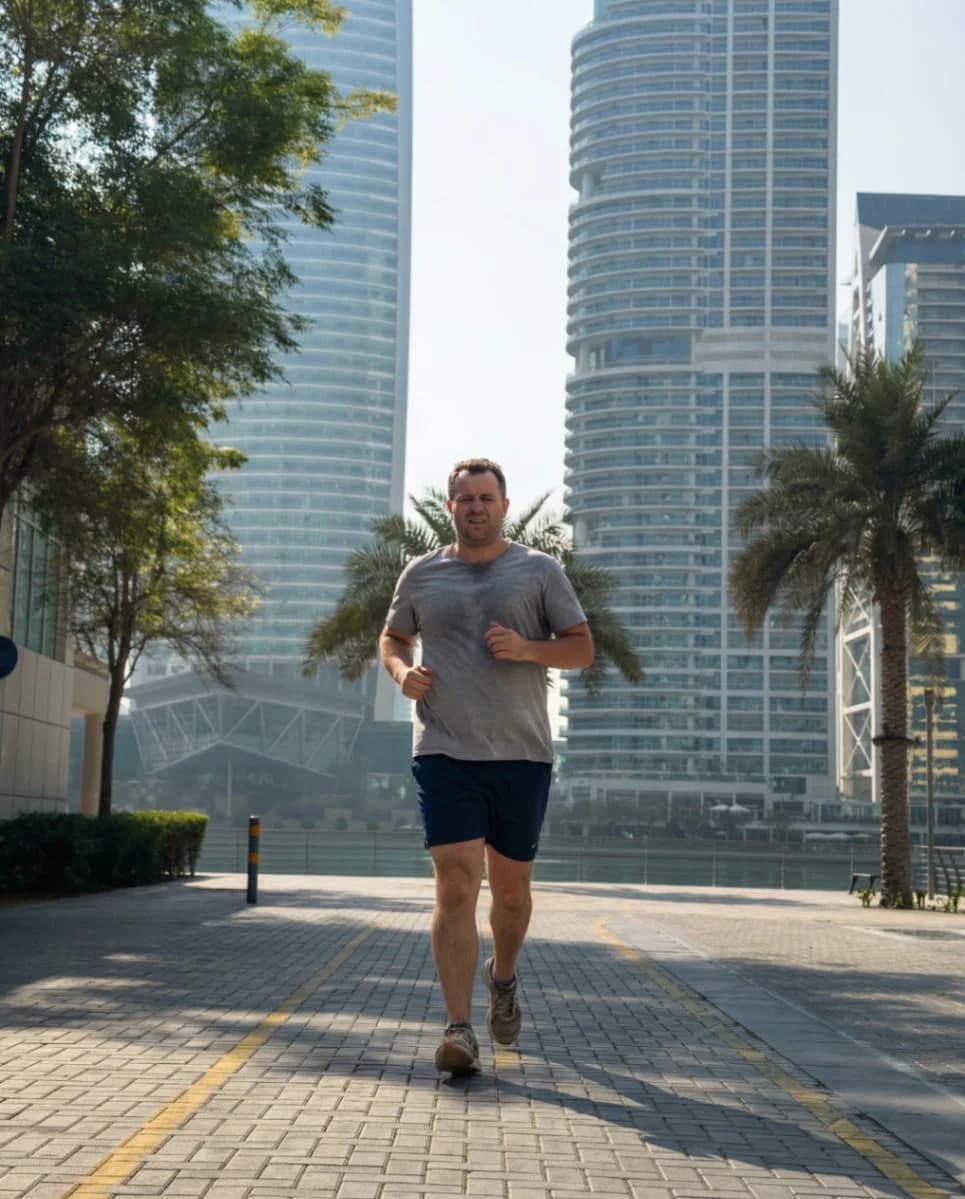
Dubai Marathon Training Plan: 16-Week Programme for the 2026 Standard Chartered Dubai Marathon
The Standard Chartered Dubai Marathon is one of the world's fastest courses — pancake-flat, mostly along Sheikh Mohammed bin Rashid Road (SMBR), with a January race date that hits the sweet spot of UAE winter cool. Elite times here are routinely under 2:04 for men and 2:18 for women. For ordinary runners, the conditions and course profile create the realistic possibility of running a personal best.
This guide presents a structured 16-week training plan adapted for three runner profiles: first-time marathoner, sub-4:00 target, and sub-3:30 target. The plan accounts for Dubai's specific environment — moderate winter temperatures during taper/race, the need for heat-acclimatisation during the build phase (October–November), and the local long-run route options.
Prerequisites Before Starting the 16-Week Plan
- You should currently be able to run 8–10 km comfortably (any pace).
- Running 3+ days per week in the 4 weeks preceding plan start.
- No active injury requiring physiotherapy or rehabilitation.
- Medical clearance from a DHA-licensed physician for those over 40, or anyone with cardiovascular history.
If you cannot currently run 8 km, start with a 12-week base-building plan first. See Running in Dubai Beginner's Guide.
Plan Structure Overview (All Three Levels)
The 16 weeks divide into:
- Weeks 1–4 — Base building: Establish weekly mileage and easy aerobic capacity.
- Weeks 5–10 — Build: Add tempo runs, intervals, and longer long runs. Peak mileage in week 10.
- Weeks 11–14 — Peak: Specific marathon-pace work, race-rehearsal long runs, full fuelling practice.
- Weeks 15–16 — Taper and race: Reduce volume 30–40%, maintain intensity, optimise sleep and nutrition.
Plan A: First-Time Marathoner (Goal: Finish)
Weekly structure: 4 runs per week (Tue easy, Thu tempo or intervals, Sat long run, Sun easy recovery). Plus 1–2 cross-training sessions (cycling, swimming, strength).
| Wk | Tue | Thu | Sat (Long) | Sun | Total |
|---|---|---|---|---|---|
| 1 | 5 km easy | 6 km incl. 3×3min tempo | 12 km | 4 km easy | 27 km |
| 4 | 6 km easy | 7 km incl. 4×4min tempo | 18 km | 5 km easy | 36 km |
| 8 | 7 km easy | 8 km incl. 5×5min tempo | 24 km | 6 km easy | 45 km |
| 10 (peak) | 8 km easy | 10 km incl. 6×4min @ marathon pace | 30 km | 8 km easy | 56 km |
| 14 | 7 km easy | 8 km incl. 4×5min @ MP | 32 km (longest) | 7 km easy | 54 km |
| 15 | 5 km easy | 6 km easy | 18 km | 4 km easy | 33 km |
| 16 | 4 km easy | 3 km easy | Race Day | — | 49.2 km |
Longest training run: 32 km in week 14. Total cumulative training: ~700 km over 16 weeks.
Plan B: Sub-4:00 Marathon (Goal: ~5:40 per km pace)
5 runs per week. Weekly mileage peaks at 70–80 km. Adds dedicated interval sessions and marathon-pace blocks within long runs.
- Tuesday: 8–12 km easy
- Wednesday: Quality session — intervals (e.g. 5×1000m @ 5:00/km pace) or tempo run (6–10 km @ half-marathon pace)
- Thursday: 6–10 km easy
- Saturday: Long run with marathon-pace block (e.g. 25 km with last 8 km @ MP = 5:40/km)
- Sunday: 8–10 km easy recovery
Longest training run: 33–35 km in week 14.
Plan C: Sub-3:30 Marathon (Goal: ~5:00 per km pace)
6 runs per week. Peak weekly mileage 90–110 km. Includes structured speed work, two quality sessions per week, and long runs with substantial MP blocks.
This level assumes recent half-marathon time of sub-1:38, ideally with structured training history. Self-coached runners targeting this level benefit substantially from a dedicated running coach.
Heat Acclimatisation (Critical for Dubai Build Phase)
The 16-week build begins in October — when Dubai is still in 30–38°C territory. Direct outdoor afternoon training in October–early November is genuinely dangerous. Adjustments:
- Train before 7 a.m. for the first 4–6 weeks.
- Treadmill substitution for tempo and interval work during the hottest weeks — quality work doesn't have to be outdoors.
- Gradual heat acclimatisation: 10–14 days of consistent moderate outdoor exposure produces significant cardiovascular and sweat-rate adaptations.
- Hydration: 500–700 ml per hour during outdoor sessions; electrolyte replacement on long runs.
See Dubai Hydration Guide and Beat the Heat in Dubai.
Fuelling — The Race Day Strategy
Marathon fuelling research (Stellingwerff et al., 2019 — Sports Medicine) supports 60–90 g carbohydrate per hour during a marathon for performance running. Practice this in long runs from week 8 onward — never introduce new fuelling in race week.
- Pre-race: 2–3 g carbohydrate per kg bodyweight 3–4 hours before; coffee 60 min before.
- During race: 60–90 g carbs per hour (typically 1 gel every 25–30 minutes plus carbohydrate drink).
- Hydration: 400–800 ml per hour depending on body size and conditions.
Gear Notes for the Dubai Marathon
- Shoes: Race in shoes with 100+ km of training in them; modern carbon-plate racing shoes (Nike Vaporfly, Adidas Adios Pro, Asics Metaspeed) reduce running economy cost by 2–4%.
- Clothing: Light, breathable — January race-day temperatures of 15–22°C are favourable.
- Anti-chafing: Body Glide or equivalent for nipples, thighs, anywhere else you experience friction in training.
- Sunglasses, light cap or visor: Sun exposure on SMBR can be significant in the second half.
Strength and Cross-Training
2× weekly strength training reduces injury risk by 50%+ in distance runners (Lauersen et al., 2014 — British Journal of Sports Medicine). Focus on hip stability, posterior chain strength, and core. See Strength Training Tips for Dubai.
Frequently Asked Questions
Q: How fast is the Dubai Marathon course?
A: One of the world's fastest. Flat, well-organised, generally favourable conditions in January. Personal-best potential is real.
Q: Can I do this plan with only a treadmill?
A: Yes, particularly during the heat-affected weeks. Long runs ideally move outdoors as soon as morning temperatures allow.
Q: Do I need to follow a strict diet during marathon training?
A: No "diet" required, but adequate carbohydrate intake (5–7 g/kg/day during build, 7–10 g/kg/day in race week) is non-negotiable. See Carbohydrates Are Not the Enemy for context.
Q: What if I have to skip a week due to work travel?
A: Skip a week, resume at the same point if travel was active; back up 1 week if it was sedentary.
Run the Dubai Marathon With Expert Coaching
Our endurance coaches in Dubai build individualised marathon plans, fuel testing, and race-week preparation. From first-time to sub-3 hour.
Find a Running Coach →Ready to put this into action?
Get matched with a certified 369MMAFIT coach in Dubai — personal training, MMA, and nutrition, in-person or online.