Reiki for Health and Fitness in the UAE: What It Is and How It Can Help
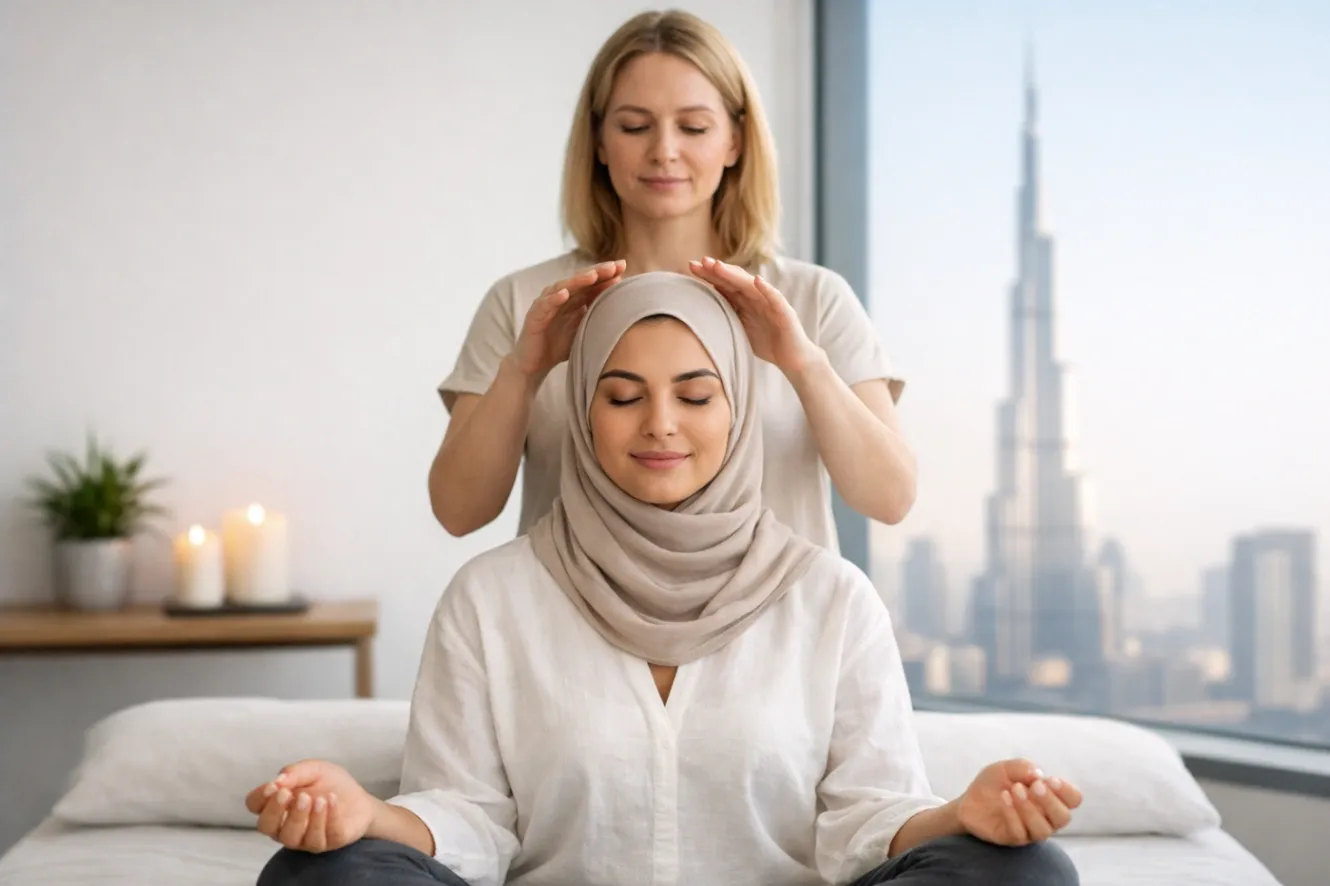
Reiki for Health and Fitness in the UAE: What It Is and How It Can Help
Reiki has established a presence in the wellness landscape of Dubai and Abu Dhabi, offered by practitioners in spas, wellness centres, and increasingly in integrative health clinics. As interest in holistic approaches to health grows among UAE residents, many are exploring reiki as a complement to their fitness and recovery routines. This guide provides an honest, evidence-informed assessment of what reiki is, what the current research shows, and how it may fit into a comprehensive UAE wellbeing programme.
What Is Reiki?
Reiki is a Japanese healing practice developed by Mikao Usui in the 1920s. The word is derived from the Japanese words rei (universal) and ki (life energy — equivalent to the Chinese concept of qi). Reiki practitioners use light hand placements on or just above the body, with the intention of channelling "life force energy" to promote relaxation, reduce stress, and support the body's natural healing processes.
Reiki is not a medical treatment and makes no claim to diagnose or cure disease. It is categorised as a complementary therapy — intended to work alongside conventional medical and physical training approaches, not replace them.
The Science of Reiki: What Research Actually Shows
Reiki research has improved in quality but remains limited compared to established medical interventions. The most credible evidence:
- Stress and anxiety reduction: The most consistently demonstrated effect. Multiple small randomised controlled trials show significant reductions in self-reported stress, anxiety, and cortisol levels following reiki sessions compared to sham reiki (hands-off control conditions). Baldwin & Schwartz (2006, Journal of Alternative and Complementary Medicine) showed reiki-induced heart rate variability improvements consistent with parasympathetic nervous system activation.
- Pain management: Shore (2004, Journal of Alternative and Complementary Medicine) found significant reductions in pain and depression in participants with stress-related conditions after 6 weeks of weekly reiki sessions. Multiple cancer care studies show reductions in chemotherapy-related anxiety and pain — several major US cancer centres now offer reiki as a complementary service.
- Sleep quality: A 2019 study in the Holistic Nursing Practice journal found reiki produced significant improvements in sleep quality in community-dwelling adults, with effects comparable to progressive muscle relaxation.
- Important caveat: The "active ingredient" is debated. Some researchers argue the benefits are primarily from the therapeutic touch, relaxed environment, caring attention, and placebo effect — rather than from any specific energy transfer mechanism. The absence of a plausible physiological mechanism for "life energy" channels prevents reiki from being classified as evidence-based medicine. This does not mean it is without benefit — placebo and relaxation effects are real and clinically meaningful — it means the theoretical framework requires scientific scrutiny.
Reiki and Fitness Recovery in the UAE
The potential relevance of reiki to fitness and athletic recovery in Abu Dhabi and Dubai relates primarily to its stress and recovery effects:
Cortisol Regulation
Chronic stress — prevalent among UAE professionals managing demanding careers, family obligations, and the pressures of expatriate life — elevates cortisol, which impairs muscle recovery, promotes fat storage (particularly abdominal), disrupts sleep, and blunts immune function. Techniques that genuinely reduce cortisol support physical training outcomes regardless of mechanism. To the extent reiki reduces stress and cortisol, it may contribute to improved training recovery.
Parasympathetic Activation
The deep relaxation produced by reiki sessions — lying still in a calm environment with gentle touch for 45–90 minutes — activates the parasympathetic nervous system. This is the physiological state required for tissue repair, digestion, and hormonal recovery from training. For high-volume exercisers or those with chronic sympathetic nervous system dominance (common in high-stress UAE lifestyles), dedicated relaxation sessions have measurable recovery value.
Mental Recovery
Physical training produces not only physical fatigue but also central nervous system and psychological fatigue. Practices that facilitate psychological recovery — removing the mind from performance demands and problem-solving — support overall training resilience. This is the same rationale behind meditation, mindfulness, and float tank sessions that elite athletes increasingly incorporate.
What to Expect From a Reiki Session in Dubai or Abu Dhabi
A standard reiki session in Dubai or Abu Dhabi typically proceeds as follows:
- Initial consultation (5–10 minutes): the practitioner asks about your goals and any health conditions
- You lie fully clothed on a massage table in a quiet, dimly lit room
- The practitioner places hands lightly on or just above various positions on the body (head, shoulders, chest, abdomen, limbs) for several minutes each
- Sessions typically last 45–90 minutes; many people fall asleep
- Common reported experiences: warmth or tingling under or near the practitioner's hands, deep relaxation, emotional release, reduced pain perception
Reiki should never involve inappropriate touch, pressure, or removal of clothing. A reputable practitioner will clearly explain the process and obtain consent before each session.
Finding Qualified Reiki Practitioners in the UAE
Reiki is not regulated in the UAE in the same way as medical professions. Quality varies significantly between practitioners. Look for:
- Usui Reiki certification at Level II or Master level from a recognised lineage
- Membership in professional organisations (UK Reiki Federation, International Association of Reiki Professionals)
- Clear, realistic communication about what reiki can and cannot do (avoid practitioners making medical claims)
- Transparency about training and experience
Reiki sessions in Dubai and Abu Dhabi wellness centres typically cost AED 250–500 per session. Some practitioners offer packages. Reiki is available in many Dubai and Abu Dhabi spas (Sofitel, COMO, Anantara properties), dedicated holistic wellness centres (several in Jumeirah and Downtown Dubai), and through private practitioners.
Frequently Asked Questions
Q: Is reiki scientifically proven to work in Dubai?
A: The evidence is mixed and limited. Reiki consistently produces relaxation and stress-reduction effects in clinical research, and these have real physiological value. The specific mechanism (energy transfer) is not scientifically established. Honest practitioners present reiki as a complementary relaxation and stress-management practice — not as a cure for medical conditions. Used within these realistic expectations, the available evidence supports reiki as a useful wellbeing tool for UAE residents experiencing stress and seeking deeper relaxation.
Q: Can reiki help with weight loss in Abu Dhabi?
A: Indirectly, perhaps. Chronic stress and high cortisol are established contributors to fat accumulation — particularly abdominal fat in UAE residents. If reiki effectively reduces chronic stress and cortisol (which some research supports), it may modestly improve body composition outcomes as part of a broader fitness and nutrition programme. Reiki alone does not burn fat or alter metabolism directly. Claims that reiki "promotes weight loss" by specific energy mechanisms are not supported by evidence.
Q: Is reiki compatible with Islam in the UAE?
A: This is a matter of personal religious interpretation. Some Muslim scholars have concerns about the "life force energy" concept in reiki and its origins in Japanese spiritual tradition. Other Muslim practitioners and recipients engage with reiki purely as a relaxation technique, separating the physical relaxation benefit from any spiritual framework. Individuals should consult their own religious guidance on this question. The UAE's diverse multicultural population means reiki is accessed by people of all backgrounds, and practitioners in the UAE work respectfully with diverse cultural contexts.
Q: How many reiki sessions do I need before feeling benefits in Dubai?
A: Most people notice some relaxation benefit from their first session. For more sustained effects on stress, sleep, or pain, practitioners typically recommend 3–6 initial sessions over 4–8 weeks to assess whether reiki is beneficial for your specific situation. Regular ongoing sessions (monthly or bi-monthly) are then used by those who find reiki helpful as part of their wellness maintenance.
Q: Can reiki help with sports recovery for UAE athletes?
A: As a relaxation and parasympathetic activation tool, reiki may support recovery by reducing stress hormones and promoting the physiological state required for tissue repair. For this purpose, it can be considered alongside other recovery modalities (massage, float tanks, meditation, yoga Nidra). There is no evidence that reiki directly accelerates muscle repair or physiological recovery. Athletes who find reiki relaxing and stress-reducing report it as a useful part of their recovery toolkit — used appropriately alongside nutrition, sleep, and conventional recovery methods.
Ready to Train with a Certified Coach?
Get a free consultation and a training plan built specifically for your goals, level, and schedule.
Find Your Coach →References: Baldwin & Schwartz 2006, J Alt Complement Med | Shore 2004, J Alt Complement Med | Thrane & Cohen 2014, J Pain Symptom Manage — reiki systematic review | NCCIH (National Centre for Complementary and Integrative Health) reiki review 2021
Ready to put this into action?
Get matched with a certified 369MMAFIT coach in Dubai — personal training, MMA, and nutrition, in-person or online.