این مقاله فعلاً فقط به انگلیسی موجود است — ترجمهی فارسی بهزودی اضافه میشود.
How Tennis Boosts Cardiovascular Health in the UAE: Science and Benefits
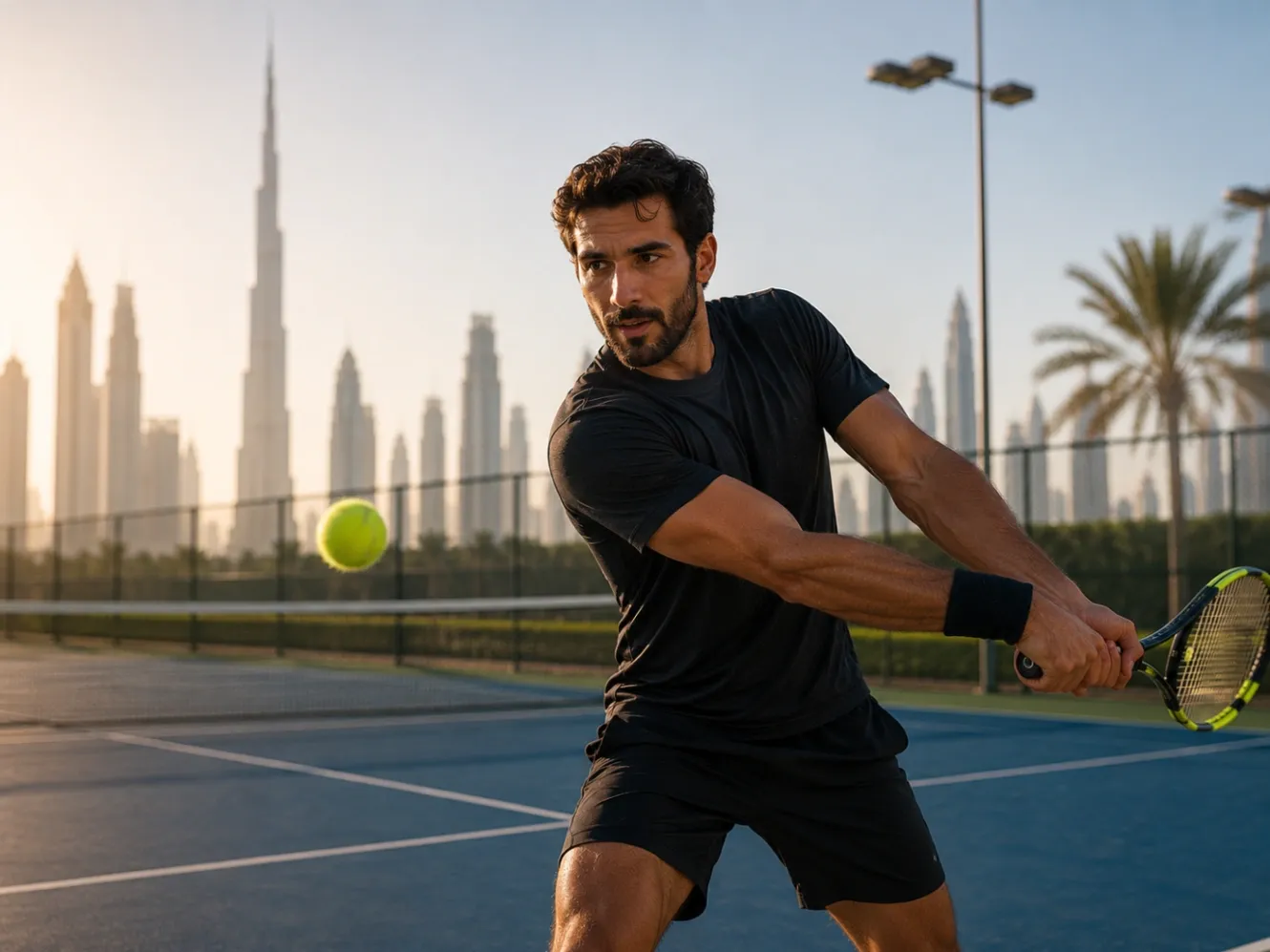
How Tennis Boosts Cardiovascular Health in the UAE: Science and Benefits
Tennis occupies a unique position among sports in the UAE's fitness landscape — it combines high-intensity interval exercise, social engagement, cognitive challenge, and strategic thinking in a way that no other single activity replicates. Recent research has elevated tennis from a recreational sport to one of the most strongly evidence-supported cardiovascular health activities available. For Dubai and Abu Dhabi residents seeking both fitness and longevity, the case for tennis is compelling.
The Landmark Longevity Study
The most cited research in sports and longevity comes from Schnohr et al. (2018, Mayo Clinic Proceedings) — the Copenhagen City Heart Study following 8,577 adults over 25 years. The study ranked sports by life expectancy extension compared to sedentary individuals:
- Tennis: +9.7 years
- Badminton: +6.2 years
- Football/Soccer: +4.7 years
- Cycling: +3.7 years
- Swimming: +3.4 years
- Jogging: +3.2 years
- Gym exercise: +1.5 years
The researchers attributed tennis's exceptional result not only to its cardiovascular demands but to its inherently social nature — the social component of sport independently reduces mortality risk through its stress-buffering effects on the cardiovascular and immune systems. UAE residents in Abu Dhabi and Dubai tennis communities benefit from both dimensions.
Why Tennis Is Uniquely Effective for Cardiovascular Health
High-Intensity Interval Training in Disguise
A tennis rally lasts 3–10 seconds followed by 10–25 seconds of active rest between points. This produces a naturally occurring high-intensity interval training (HIIT) pattern — alternating maximal or near-maximal effort with recovery — that research consistently shows produces greater cardiovascular adaptation per unit time than steady-state aerobic exercise. Research by Fernandez-Fernandez et al. (2006, British Journal of Sports Medicine) found competitive recreational tennis at the intensity most Dubai and Abu Dhabi club players achieve produces average heart rates of 70–80% HRmax throughout a match.
Multi-Directional Movement
Unlike running or cycling (single-plane movement), tennis demands lateral movement, stopping and starting, rotation, and rapid direction changes. This multi-directional cardiovascular demand improves vascular adaptability, neuromuscular coordination, and agility in ways that linear cardio cannot match — particularly important as these capacities decline with age and are strong predictors of fall prevention and functional independence in older UAE residents.
Upper and Lower Body Integration
The powerful hip-to-shoulder kinetic chain of a groundstroke involves virtually every major muscle group in the body. Unlike running (predominantly lower body) or rowing (upper body with some lower), tennis produces balanced whole-body cardiovascular demand and muscular conditioning — particularly the rotator cuff, core, and forearm musculature.
Cognitive and Neurological Demand
Tennis requires rapid decision-making under fatigue — reading ball flight, anticipating opponent position, selecting shot, and executing under pressure. This dual cognitive-motor demand activates the prefrontal cortex alongside aerobic pathways. Emerging research on "cognitive exercise" suggests activities requiring simultaneous physical and cognitive engagement produce greater brain health benefits than either alone — particularly relevant for UAE residents seeking cognitive longevity.
Cardiovascular Benefits for UAE-Specific Health Risks
The UAE has among the highest rates of cardiovascular disease risk factors globally — obesity, type 2 diabetes, hypertension, and physical inactivity are all highly prevalent. Tennis specifically addresses multiple risk factors simultaneously:
- Blood pressure: Regular aerobic exercise reduces systolic blood pressure by an average of 3.8 mmHg (Cornelissen & Smart 2013, JAHA) — clinically meaningful risk reduction
- Blood glucose: Tennis's HIIT-like pattern is particularly effective at improving insulin sensitivity and post-exercise blood glucose clearance
- LDL cholesterol: Aerobic exercise increases HDL ("good") cholesterol and reduces LDL ("bad") cholesterol — both contributing to reduced atherosclerotic plaque development
- Visceral fat: Tennis's high caloric expenditure (500–900 kcal per hour depending on intensity and body weight) supports reduction of visceral fat — the most metabolically dangerous fat type in UAE residents
Getting the Cardiovascular Benefits: Practical Requirements
To obtain meaningful cardiovascular benefit from tennis in Abu Dhabi and Dubai, certain minimum standards apply:
- Frequency: Minimum 2 sessions per week — research shows cardiovascular adaptations require consistent stimulus
- Duration: 45–90 minutes per session (including warm-up, play, and cool-down)
- Intensity: Play should produce moderate-to-vigorous exertion — recreational social play at very low intensity provides less cardiovascular stimulus than the research above would suggest
- Season: Year-round play via indoor courts during Abu Dhabi and Dubai summer (June–September) maintains consistent cardiovascular stimulus; significant detraining occurs with 8+ week gaps
Frequently Asked Questions
Q: How does tennis compare to gym workouts for heart health in Dubai?
A: The Schnohr et al. (2018) Copenhagen study found tennis associated with 9.7 additional years of life expectancy versus 1.5 years for gym exercise — a striking difference. The researchers attribute this to tennis's social component (strong independent predictor of cardiovascular and all-cause mortality reduction), its interval training pattern, and its lifelong accessibility. This does not mean gym training is ineffective — it means that the combination of social engagement, cognitive demand, and physical exertion in tennis produces health benefits beyond what isolated exercise provides.
Q: Is tennis appropriate cardio for someone over 60 in Abu Dhabi?
A: Yes — tennis is one of the most age-appropriate cardio activities, particularly doubles play. The self-regulated pace, social element, and cognitive engagement make doubles tennis excellent for older UAE residents. The stop-start nature is gentler on the cardiovascular system than sustained high-intensity running, and the social setting provides motivation for consistent participation that solitary exercise rarely maintains. Abu Dhabi's tennis facilities specifically offer senior and beginner programmes.
Q: Can I play tennis if I have high blood pressure in Dubai?
A: Regular moderate-intensity tennis is associated with blood pressure reduction and is generally safe for people with controlled hypertension. Obtain clearance from your cardiologist or GP in Dubai or Abu Dhabi before starting, particularly if your blood pressure is uncontrolled or you have other cardiac risk factors. Start with doubles (lower intensity) and progress to singles as your fitness improves. During the first few weeks, monitor how your body responds and stop if you experience chest pain, unusual breathlessness, or dizziness.
Q: How many calories does playing tennis burn in Abu Dhabi?
A: A 70kg person playing recreational singles tennis burns approximately 450–600 kcal/hour. Competitive recreational play (club level) burns 600–800 kcal/hour. Doubles play burns approximately 300–450 kcal/hour (lower intensity due to covering less court). These are meaningful caloric expenditures — two hours of singles tennis per week contributes approximately 900–1,200 kcal to weekly energy expenditure, equivalent to 0.25–0.35kg of fat per week in a caloric deficit context.
Q: Is it too hot to get cardiovascular benefit from tennis outdoors in Dubai?
A: During UAE winter (October–April), outdoor tennis at any time of day provides full cardiovascular benefit. During summer (June–September), outdoor tennis should be limited to early morning (before 7:30am) or late evening (after 8pm) — and even then, duration should be limited to 60 minutes with aggressive hydration. Indoor air-conditioned tennis courts in Abu Dhabi and Dubai provide equivalent cardiovascular stimulus year-round and are the recommended option for maintaining consistent cardiovascular benefit through the UAE summer.
Ready to Train with a Certified Coach?
Get a free consultation and a training plan built specifically for your goals, level, and schedule.
Find Your Coach →References: Schnohr et al. 2018, Mayo Clinic Proceedings | Fernandez-Fernandez et al. 2006, BJSM | Cornelissen & Smart 2013, JAHA | Kovacs 2007, Strength & Conditioning Journal — tennis physiology
آمادهاید این را عملی کنید؟
با یک مربی معتبر 369MMAFIT در دبی مچ شوید — تمرین شخصی، MMA و تغذیه، حضوری یا آنلاین.