این مقاله فعلاً فقط به انگلیسی موجود است — ترجمهی فارسی بهزودی اضافه میشود.
Overcoming Fear of Water: How Adults Learn to Swim in Dubai and Abu Dhabi
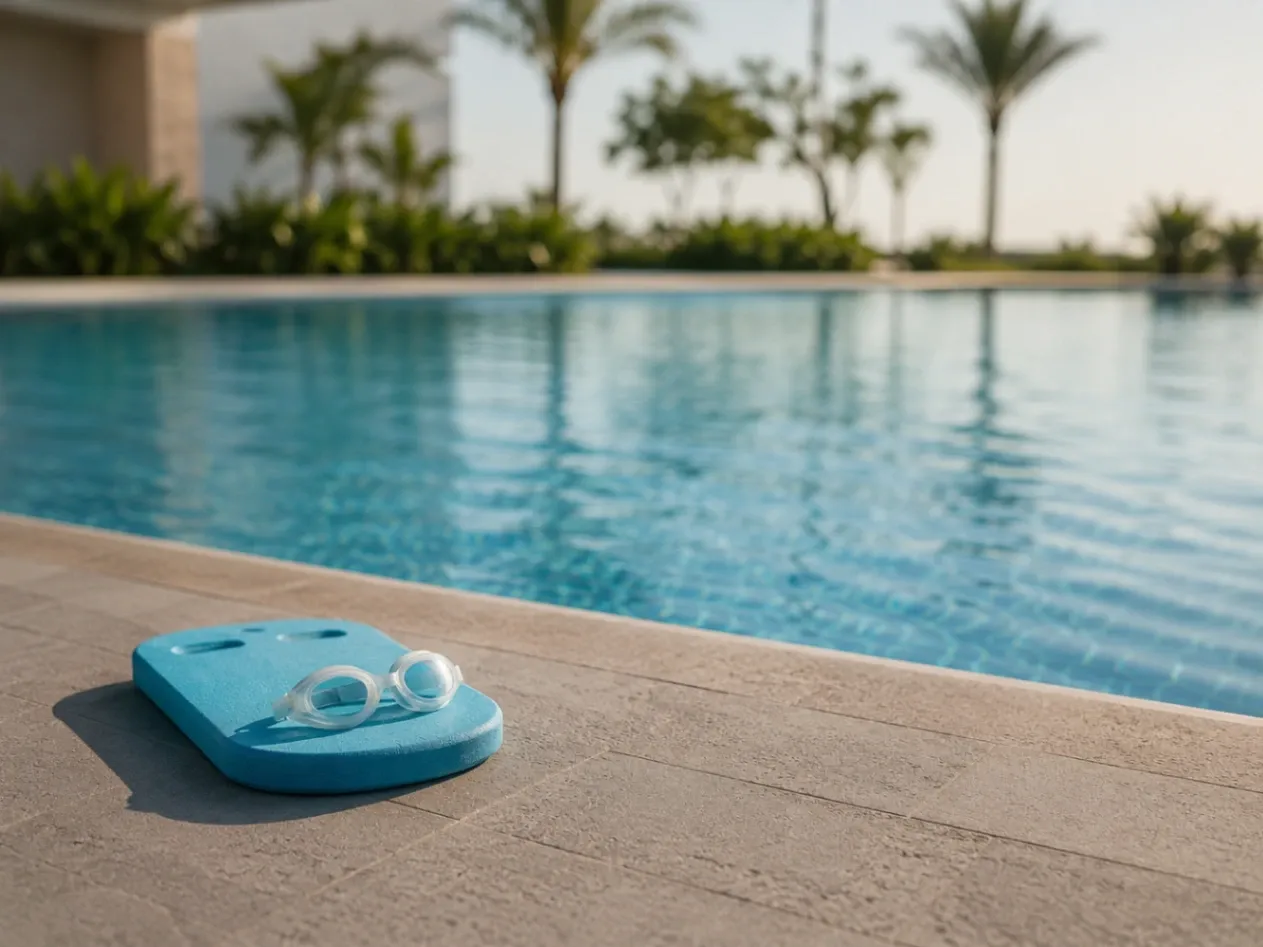
Overcoming Fear of Water: How Adults Learn to Swim in Dubai and Abu Dhabi
Fear of water is significantly more common than most people acknowledge, particularly among adults in the UAE — where many residents grew up in countries without widespread access to swimming coaching facilities, where summer heat discourages outdoor water exposure, and where cultural factors sometimes prevent early swimming development. If you are an adult in Dubai or Abu Dhabi who cannot swim or is afraid of deep water, this guide is for you.
Understanding Aquaphobia: Why Adults Fear Water
Aquaphobia (pathological fear of water) and general water discomfort exist on a spectrum. Research by Muris et al. (2000, Journal of Child Psychology and Psychiatry) found that 38% of children reported meaningful fear of deep water — and without intervention, many carry this into adulthood. In the UAE context, additional factors amplify this:
- Limited childhood exposure: Adults from many South Asian, African, and Middle Eastern backgrounds where swimming pools were inaccessible in childhood have no foundational water comfort
- Negative early experiences: Being pushed or thrown into water, near-drowning incidents, or coercive "sink or swim" teaching methods create lasting fear associations
- Cultural factors: Modest swimwear requirements and cultural norms around gender-mixed swimming facilities in some UAE communities create barriers to early swimming exposure
- Loss of initial ability: Some adults swam as children but lost the skill and confidence after years without practice
The Neuroscience of Fear: Why It Feels So Overwhelming
Fear of water activates the amygdala (the brain's threat-detection centre) in the same way as genuine survival threats. This produces:
- Increased heart rate, shallow breathing, muscle tension — all counterproductive in water
- Narrowed attentional focus (hypervigilance to threat cues)
- Inhibited motor learning — it is neurologically harder to acquire new skills when in a fear state
This is why the standard approach of simply "getting in and trying" fails for fearful adults — it reinforces fear rather than building confidence. Effective adult swimming instruction must address the psychological dimension alongside the physical skills.
The Evidence-Based Approach: Graduated Exposure
The most evidence-supported intervention for specific phobias, including water fear, is Graduated Exposure Therapy (Wolpe 1958; Rachman 1990) — systematic, controlled exposure to feared stimuli at increasing intensity while maintaining a state of relaxation and control. Applied to adult swimming in the UAE:
Stage 1: Water Familiarity (Weeks 1–2)
- Sit on the pool steps in shallow water (Abu Dhabi or Dubai pool, 0.6–0.9m depth) fully clothed or in swimwear with no pressure to proceed
- Practice diaphragmatic breathing — slow exhale through mouth is critical in water; most fearful swimmers hold their breath and panic
- Splash water on face progressively over several sessions — building comfort with water on the face is often the single biggest barrier
- Duration: 15–20 minutes, ending on a positive experience
Stage 2: Buoyancy Discovery (Weeks 2–4)
- Stand in chest-deep water, hold the pool wall, and allow legs to float up briefly (supported)
- Wall-supported kicking practice — builds leg strength and the feel of horizontal body position
- Face submersion: begin with 1-second dips, progress to 5-second holds, then blowing bubbles underwater
- The key insight: water supports you. Many fearful adults intellectually know this but have never experienced it somatically. Flotation noodles help this.
Stage 3: Independent Floating (Weeks 3–5)
- Back float with instructor support gradually reduced
- Survival float (face-down relaxed float) — the single most important water safety skill
- Brief forward glides from wall push-off with face submerged
Stage 4: Stroke Development (Weeks 4–8+)
- Front crawl arms with kickboard support
- Coordinated breathing pattern (turn head to breathe every 2–3 strokes)
- First complete length of pool (25m) — a transformative milestone for fearful adult swimmers
Finding the Right Swimming Instruction in the UAE
Not all swim instructors are equipped to work with fearful adults. What to look for in Abu Dhabi and Dubai:
- Adult-specific experience: Teaching adults requires different pedagogical skills than children's instruction — ask explicitly about adult beginner experience
- Patience and non-pressure approach: A good instructor will never push you past your current comfort level. If you feel pressured, find another instructor.
- Small group or private lessons: Fear is worse in group settings where comparison and performance pressure exist. Private 1:1 swimming lessons in Abu Dhabi or Dubai are strongly recommended for fearful adults.
- Relevant qualifications: ASA (Amateur Swimming Association), STA (Swimming Teachers' Association), or AUSTSWIM certification, plus ideally a background in working with adults
Most major hotel pools, community pools, and fitness facilities in Abu Dhabi and Dubai offer adult learn-to-swim programmes. Facilities with warm pools (30–32°C) are more comfortable for anxious beginners than cold competition pools.
Psychological Tools That Accelerate Progress
- Visualisation: Spending 5 minutes before each session visualising yourself swimming calmly and competently activates motor learning pathways and reduces anticipatory anxiety (Weinberg 2008)
- Controlled breathing: Slow 4-count inhale through nose, 6-count exhale through mouth before entering water reduces acute anxiety response
- Progress journal: Record every small milestone — first face submersion, first float, first 5 metres. Fear tends to distort memory toward the negative; writing down achievements provides objective evidence of progress
- Buddy support: Having a non-judgmental friend or partner present (not coaching — just present) during early sessions significantly reduces anxiety in adults
Frequently Asked Questions
Q: Is it possible to learn to swim as an adult in Dubai at age 40 or 50?
A: Absolutely. Adults can learn to swim at any age — there is no physiological barrier. The neurological adaptations required (motor pattern development, buoyancy calibration, breathing coordination) occur in adults, though potentially more slowly than in children. Many adults in Dubai and Abu Dhabi learn to swim in their 40s, 50s, and beyond. The main variable is patience and a good instructor — the skill is fully acquirable.
Q: How many lessons will I need to overcome water fear in Abu Dhabi?
A: For mild water discomfort with no prior negative experience, 6–8 private lessons (30–45 minutes each) typically produces competent shallow-water swimming. For more significant fear (prior near-drowning, strong phobia), 12–20 lessons may be needed with a patient, experienced instructor. Practising independently between lessons (even 2 × 15 min pool visits) accelerates progress significantly by increasing exposure frequency.
Q: I nearly drowned as a child. Can I still learn to swim in Dubai?
A: Yes — but near-drowning experiences create strong conditioned fear responses that require a more gradual and psychologically sensitive approach. Work with an instructor explicitly experienced with trauma-associated water fear. Some adults with severe aquaphobia from near-drowning benefit from a few sessions with a psychologist or counsellor using exposure therapy techniques alongside swim instruction. Do not rush the process — forcing yourself past panic is counterproductive.
Q: Are there women-only swimming lessons in Abu Dhabi for adults?
A: Yes. Several facilities in Abu Dhabi offer women-only swimming sessions and lessons including Zayed Sports City Aquatic Centre, some hotel pool facilities, and private instruction in women-only pool time slots. Female swim instructors are available on request. This option makes learn-to-swim accessible for women in the UAE whose cultural background makes mixed-gender swimming uncomfortable.
Q: My child wants to swim but is also afraid of water. What should I do in the UAE?
A: Never force or pressure a child into the water — this creates or entrenches fear. The UAE's many swimming academies offer child-appropriate gradual exposure programmes that build water confidence through play rather than instruction. Children's water fear typically responds faster than adult fear due to greater neuroplasticity. Look for Royal Life Saving Society-certified children's programmes in Abu Dhabi and Dubai swimming academies.
Ready to Train with a Certified Coach?
Get a free consultation and a training plan built specifically for your goals, level, and schedule.
Find Your Coach →References: Muris et al. 2000, J Child Psychol Psychiatry | Wolpe 1958 — systematic desensitisation | Rachman 1990, Fear and Courage | Swim England Adult Learn to Swim Framework | AUSTSWIM Teaching Adults guidelines
آمادهاید این را عملی کنید؟
با یک مربی معتبر 369MMAFIT در دبی مچ شوید — تمرین شخصی، MMA و تغذیه، حضوری یا آنلاین.