Postnatal Fitness in the UAE: When Can I Start Training Again After Birth?
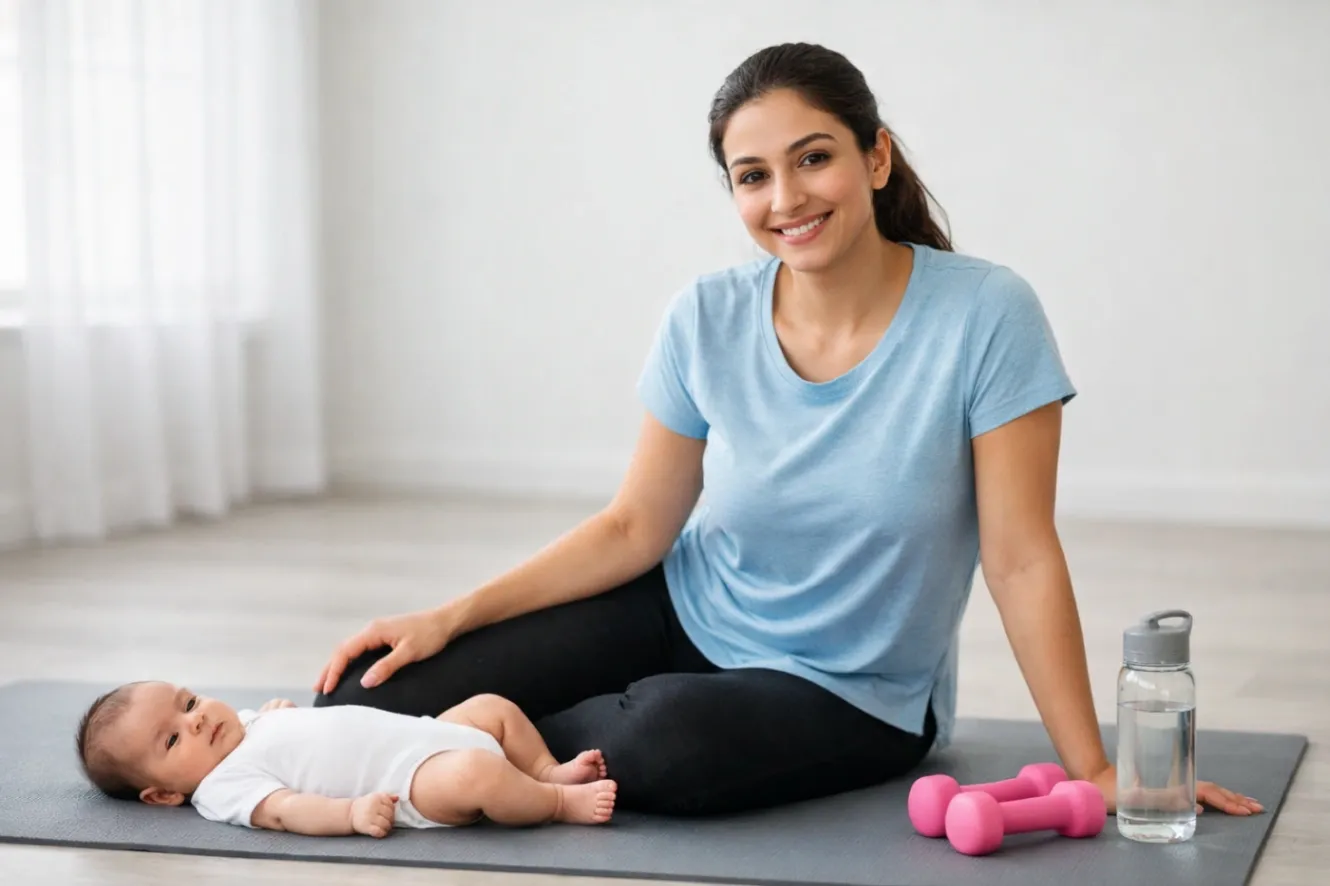
Postnatal Fitness in the UAE: When Can I Start Training Again After Birth?
The question every new mum in Abu Dhabi and Dubai eventually asks — "when can I start exercising again?" — is one of the most important and most frequently answered incorrectly. Both extremes occur: some women are told to wait 6 months for any exercise (unnecessarily long), while others return to running or HIIT at 6 weeks following a "green light" from a doctor who was not specifically assessing exercise readiness. This guide gives you the evidence-based answer, personalised to your birth type and exercise type.
Why the Return-to-Exercise Timeline Matters
The postnatal period involves significant physiological changes that affect exercise safety:
- Pelvic floor recovery: Childbirth stresses the pelvic floor muscles (levator ani, coccygeus) and supporting ligaments. These structures require adequate time to heal before being subjected to high-impact loading or heavy intra-abdominal pressure.
- Ligament laxity: Relaxin (the hormone that loosened ligaments for birth) remains elevated for several months, particularly in breastfeeding women. Joints are more vulnerable to injury during this period.
- Wound healing: Perineal tears or episiotomies (vaginal birth) and caesarean incisions require time to achieve sufficient tensile strength before being subjected to loading.
- Hormonal changes: Significant hormonal fluctuations affect energy, mood, and recovery capacity — appropriate training intensity must account for these.
The Evidence-Based Return-to-Exercise Timeline
The most authoritative current guidance comes from Groom, Donnelly & Brockwell (2019, British Journal of Sports Medicine), which updated the traditional 6-week post-vaginal-birth blanket clearance with a more nuanced, symptom-based framework:
First 6 Weeks Post-Birth (All Birth Types)
What is appropriate:
- Pelvic floor exercises (Kegels) from day 1 — these are rehabilitative, not stressful, and begin restoring pelvic floor function immediately
- Gentle walking — 10 minutes initially, increasing based on symptom response
- Diaphragmatic breathing — reconnects breath and deep core function
- Gentle postural exercises (gentle neck, shoulder, and upper back stretches)
What to avoid:
- Any high-impact exercise (running, jumping, aerobics)
- Heavy lifting (including gym weights — note: lifting and carrying your baby is unavoidable and fine)
- Core-loading exercises (planks, crunches, sit-ups, yoga poses requiring significant abdominal engagement)
- Swimming (until any wounds are fully healed and bleeding has stopped — typically 6–8 weeks)
6–12 Weeks Post-Vaginal Birth
Following your 6-week check with your obstetrician in Abu Dhabi or Dubai, and subject to no pelvic floor symptoms (see below), you may progressively introduce:
- Longer walks and brisk walking
- Low-impact exercise: cycling (stationary), swimming, low-impact aerobics
- Bodyweight resistance exercises (squats, lunges, bridges, modified push-ups) — progress gradually from Weeks 7–12
- Light resistance training — starting with minimal weights and focusing on technique and symptom response
After 12 Weeks Post-Vaginal Birth (With Symptom Clearance)
Running and higher-impact activity typically becomes appropriate after 12 weeks — not 6 weeks — subject to passing a functional readiness screen:
- Can you walk briskly for 30 minutes without symptoms?
- Can you stand on one leg for 10 seconds without pelvic floor leaking or discomfort?
- Can you do 20 single-leg calf raises without symptoms?
- Can you do 10 single-leg bridges without symptoms?
If these are achievable, progressive running introduction (using run/walk intervals) is appropriate. If any cause symptoms, continue lower-impact exercise and see a women's health physiotherapist in Abu Dhabi or Dubai.
After Caesarean Section
Caesarean section is major abdominal surgery — the healing timeline is longer:
- Weeks 1–8: Walking only (progressively increasing), pelvic floor exercises, gentle breathing
- Weeks 8–12: Low-impact exercise introduced only after wound has fully healed, with no scar pain or sensitivity. Avoid any exercise creating direct pressure on the abdominal scar.
- Weeks 12–16+: Progressive return to resistance training and moderate exercise — progress guided by symptom response, not a fixed timeline
- Running: Typically not before 16 weeks post-caesarean; scar tissue maturation and pelvic floor recovery both take longer after C-section
Warning Signs: Stop Exercise and Seek Professional Assessment
The following symptoms during or after postnatal exercise indicate the return has been too rapid and require assessment by a women's health physiotherapist in Abu Dhabi or Dubai:
- Leaking urine (stress incontinence) during exercise, coughing, sneezing, or jumping
- Pelvic or vaginal heaviness, pressure, or a sensation of "something falling out" (may indicate pelvic organ prolapse)
- Pain in the perineum, vagina, or abdominal incision during or after exercise
- Low back or pelvic girdle pain that worsens with exercise
- Abdominal "coning" or "doming" during exercise (the midline of the abdomen visibly protrudes — a sign of diastasis recti under load)
Diastasis Recti: The Condition Many UAE Mums Don't Know They Have
Diastasis recti — separation of the linea alba (the connective tissue joining the two sides of the rectus abdominis) — occurs to some degree in up to 60% of postpartum women. It can impair core function and cause "mummy tummy" appearance. Key points:
- Mild diastasis recti often resolves spontaneously with appropriate exercise
- Avoid sit-ups, crunches, leg raises, and oblique twists until assessed — these commonly worsen diastasis recti
- A women's health physiotherapist in Abu Dhabi or Dubai can assess separation, advise on exercise modifications, and provide targeted rehabilitation
Frequently Asked Questions
Q: My doctor gave me a 6-week clearance to exercise after birth in Dubai. Does that mean I can run?
A: Not necessarily. The 6-week obstetric check assesses wound healing and uterine involution — it is not a specific assessment of exercise readiness, particularly for high-impact activity. The current evidence-based guidance from Groom et al. (2019) recommends waiting until at least 12 weeks post-vaginal birth before returning to running, and longer post-caesarean. Always ask specifically what types of exercise are cleared — "you can exercise" does not mean "you can do everything."
Q: I had my baby 3 months ago in Abu Dhabi but I'm still leaking when I run. Is this normal?
A: Leaking during impact exercise (running, jumping) is common but not normal — it indicates pelvic floor dysfunction that should be addressed. See a women's health physiotherapist in Abu Dhabi for a pelvic floor assessment. Continuing to run through leaking does not train the pelvic floor to stop leaking; it worsens the pattern. Effective pelvic floor rehabilitation resolves stress incontinence in most postpartum women within 8–12 weeks of appropriate treatment.
Q: Can I do pilates 6 weeks after a C-section in Abu Dhabi?
A: Gentle clinical Pilates with a qualified postnatal instructor in Abu Dhabi — who avoids direct pressure on the scar and avoids heavy core loading — may be appropriate from 8–10 weeks post-caesarean with medical clearance. "Clinical Pilates" in a physiotherapy clinic setting is the safest option; standard group Pilates classes may not be sufficiently modified for post-caesarean specific needs. Always show your scar to the instructor and disclose your birth history.
Q: How quickly can I lose the baby weight through exercise after birth in Dubai?
A: The priority in the first 3 months postpartum is healing and recovery — not weight loss. Many women in Dubai and Abu Dhabi feel pressure to return to pre-pregnancy body quickly, but aggressive caloric restriction and high-intensity exercise in the early postnatal period impairs healing, worsens pelvic floor dysfunction, and (for breastfeeding mothers) can reduce milk supply. Gentle movement, good nutrition, and adequate sleep in months 1–3 lay the foundation for safe, sustainable fat loss from months 4–12. Patience in the early period produces better long-term outcomes.
Q: Is there a postnatal fitness class specifically for new mums in Abu Dhabi?
A: Yes — multiple options exist. Women's health physiotherapy clinics in Abu Dhabi (several in Khalidiyah, Al Reem, and Saadiyat areas) offer structured postnatal exercise rehabilitation programmes. Postnatal Pilates classes are available at specialist women's fitness studios. Online postnatal fitness programmes from UAE-based coaches are also available for those whose schedule does not allow attending classes. Look specifically for instructors with "postnatal exercise specialist" qualifications rather than general fitness certifications.
Ready to Train with a Certified Coach?
Get a free consultation and a training plan built specifically for your goals, level, and schedule.
Find Your Coach →References: Groom, Donnelly & Brockwell 2019, BJSM — return to sport postnatal guidelines | Dufour et al. 2019, BJSM — postnatal exercise consensus | ACOG Committee Opinion 804 | Bø et al. 2017, BJSM — postnatal pelvic floor
Ready to put this into action?
Get matched with a certified 369MMAFIT coach in Dubai — personal training, MMA, and nutrition, in-person or online.