هذه المقالة متاحة باللغة الإنجليزية فقط حالياً — الترجمة العربية قيد الإعداد.
Hydration and Exercise Performance in the UAE: A Science-Based Guide
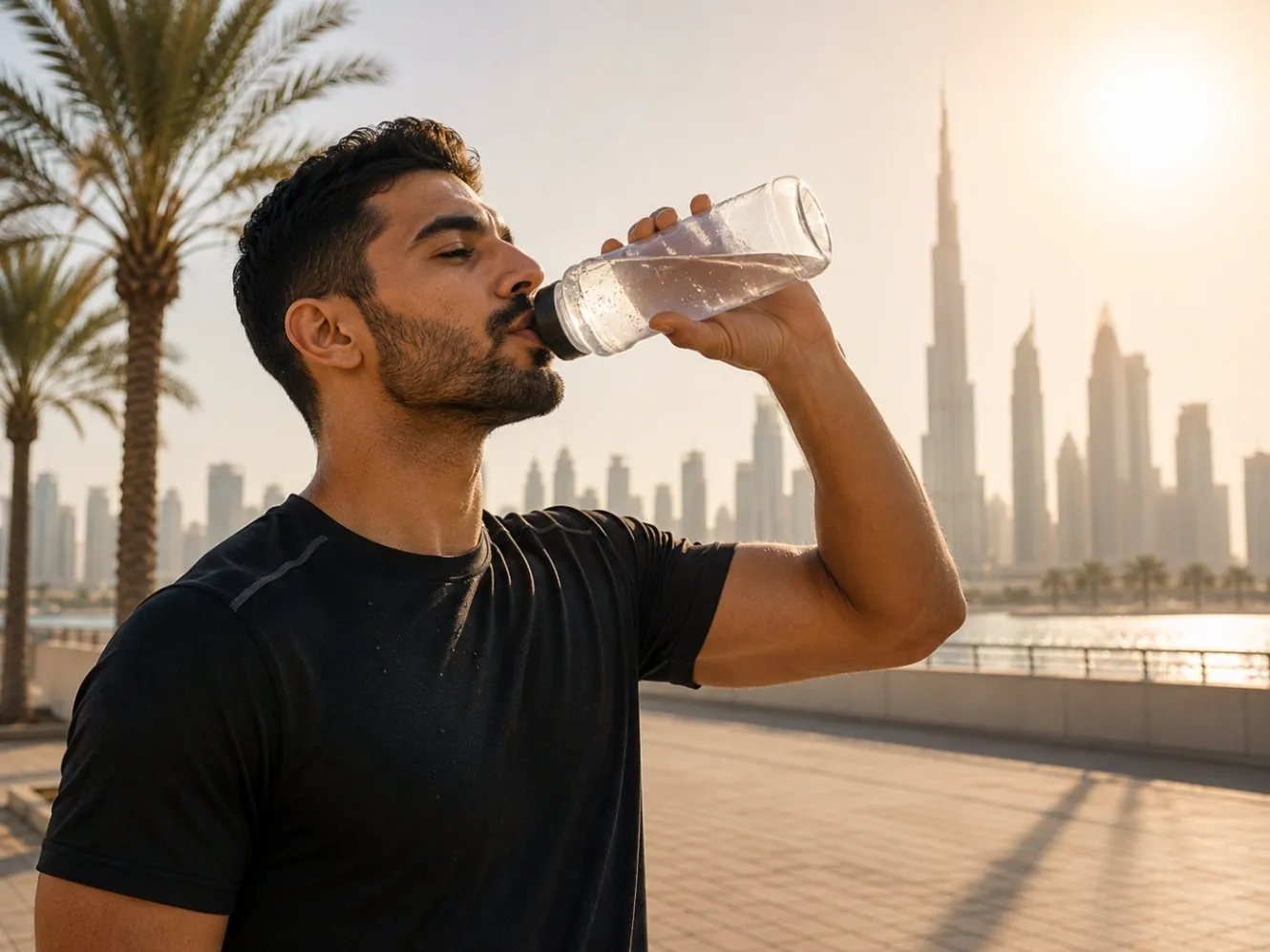
Hydration and Exercise Performance in the UAE: A Science-Based Guide
The UAE's climate makes hydration simultaneously more important and more neglected than almost anywhere else in the world. In Dubai and Abu Dhabi, temperatures exceeding 40°C with 70–90% humidity during summer months create sweat rates and dehydration rates that challenge even acclimatised athletes. Yet many UAE residents exercise with chronically inadequate hydration — impairing performance, increasing injury risk, and in extreme cases creating genuine medical emergencies. This guide provides the evidence-based hydration framework every UAE resident exercising in this climate should know.
Why Hydration Matters: The Physiology
Water comprises 60% of total body mass and is involved in virtually every physiological function. During exercise, its roles become critical:
- Thermoregulation: Sweat evaporation is the primary cooling mechanism. Without adequate fluid, sweating rate decreases and core body temperature rises — directly impairing exercise performance and increasing heat illness risk
- Cardiovascular function: Blood plasma (predominantly water) delivers oxygen and nutrients to working muscles. Dehydration reduces plasma volume, increasing heart rate for the same workload and reducing maximal cardiac output
- Muscle function: Dehydrated muscle contracts less forcefully and fatigues more rapidly — even mild dehydration (2% body mass loss) reduces strength by 5–10% and endurance performance by 20–30% (Maughan & Shirreffs 2010, Journal of the International Society of Sports Nutrition)
- Cognitive function: Dehydration impairs concentration, reaction time, and decision-making — critical for safe training and competition
UAE-Specific Sweat Rates: The Challenge
Sweat rate in the UAE can be dramatically higher than temperate environments:
- Sedentary UAE summer exposure: 0.5–1.5 litres/hour sweat loss
- Moderate exercise in UAE heat: 1.5–2.5 litres/hour
- Vigorous exercise in UAE summer: 2–3+ litres/hour
A 90-minute outdoor run in Abu Dhabi summer heat can produce 2.5–4.5 litres of total fluid loss. Even in air-conditioned gyms, indoor exercise produces meaningful sweat losses (0.5–1.5 litres/hour) that require replacement. Most people dramatically underestimate how much they sweat during UAE exercise — weighing yourself before and after a workout (each kg = approximately 1 litre of fluid loss) provides a personalised sweat rate measurement.
How Much Should You Drink? Evidence-Based Guidelines
Before Exercise
- Arrive to exercise well-hydrated: urine should be pale yellow (lemonade colour) not dark yellow (apple juice)
- Consume 400–600ml water in the 2 hours before exercise
- An additional 200–300ml 15–30 minutes before starting
During Exercise
The American College of Sports Medicine (ACSM Position Stand 2007) recommends drinking to prevent dehydration exceeding 2% body mass loss:
- For sessions under 60 minutes in moderate conditions: water as needed (150–250ml every 15–20 minutes)
- For sessions over 60 minutes or in UAE heat: 400–800ml per hour, with electrolyte replacement (see below)
- Avoid drinking only when thirsty during high-intensity UAE heat exercise — thirst sensation lags behind actual dehydration, particularly in heat
- Also avoid over-drinking — hyponatraemia (low blood sodium from excessive water intake without electrolytes) is a real risk in endurance events
After Exercise
- Replace 150% of fluid losses (weigh before and after to calculate): 1.5 litres per kilogram lost
- Include sodium with rehydration fluid (food with meals, sports drink, or electrolyte tablets) to promote fluid retention and accelerate rehydration
- Urine colour should return to pale yellow within 1–2 hours of completing exercise
Electrolytes: The Overlooked Component
Sweat contains not only water but significant electrolytes — primarily sodium (0.5–2g per litre of sweat), potassium, magnesium, and chloride. Long sessions, high sweat rates, and the UAE heat mean electrolyte losses are substantial:
- Sodium: The most critical electrolyte for fluid balance. Replacing fluid without sodium causes excess urinary fluid losses and can lead to hyponatraemia. Add a pinch of salt to water for sessions over 90 minutes, or use sports drinks and electrolyte tablets.
- Potassium: Lost in sweat; replenished easily through food (bananas, potatoes, oranges — all widely available in UAE supermarkets)
- Magnesium: UAE residents, like many global populations, are commonly deficient. Magnesium supports hydration status, muscle function, and sleep quality — consider supplementation (UAE pharmacies stock it widely).
Recognising Dehydration and Heat Illness in the UAE
Heat illness exists on a spectrum — from mild dehydration through heat exhaustion to life-threatening heat stroke:
Signs of Dehydration
- Dark urine, reduced urination frequency
- Thirst, dry mouth
- Headache, fatigue, reduced performance
- Mild dizziness
Heat Exhaustion (Stop Exercise Immediately)
- Heavy sweating, pale, cool, moist skin
- Rapid, weak pulse
- Nausea, possible vomiting
- Dizziness, fainting
- Action: move to cool area, rehydrate with electrolytes, cool the body (cool water on skin), rest 30+ minutes
Heat Stroke (Medical Emergency)
- Core temperature above 40°C
- Confusion, altered mental state, possible loss of consciousness
- Hot, red, dry skin (sweating stops)
- Action: call emergency services (999), immediately cool the body aggressively with ice or cold water while awaiting ambulance
Practical Hydration Strategies for UAE Exercisers
- Carry water everywhere: UAE tap water quality has improved significantly but many residents prefer filtered or bottled water. Reusable insulated bottles (keep water cold for 12+ hours) are essential for UAE exercisers — available at Decathlon, Carrefour, and sports stores across Abu Dhabi and Dubai
- Pre-cool strategies: Consuming cold water or ice slushies before exercise in UAE heat reduces core temperature and extends heat tolerance significantly (Siegel et al. 2010)
- Hydrate the day before long efforts: Pre-exercise hydration is a multi-day process for long events (marathons, triathlons, sports tournaments)
- Coffee and tea do not dehydrate you significantly: Contrary to popular belief, habitual caffeine consumers do not experience meaningful net dehydration from moderate coffee/tea intake — the diuretic effect is minimal and offset by the fluid content
Frequently Asked Questions
Q: How much water should I drink per day in Dubai in summer?
A: General hydration requirements in the UAE are significantly higher than temperate climate recommendations. A baseline of 2.5–3.5 litres of water per day for sedentary individuals in UAE summer is appropriate, increasing to 4–6+ litres on days with significant physical activity. The most reliable individual indicator remains urine colour — pale yellow throughout the day indicates adequate hydration; darker colours indicate a need to increase intake regardless of the amount consumed.
Q: Are sports drinks necessary for exercise in Abu Dhabi?
A: For sessions under 60 minutes in moderate conditions: water is sufficient. For sessions over 60–90 minutes, in UAE heat, or with high sweat rates: sports drinks (or water with electrolyte tablets/powder) are beneficial because they replace sodium and provide carbohydrate energy for sustained performance. Sports drinks available across Abu Dhabi and Dubai (Gatorade, Powerade, Lucozade Sport) are appropriate for this purpose. For weight loss purposes, be aware that sports drinks contain significant calories (50–100 kcal per 500ml) — water with electrolyte tablets (near-zero calories) is preferable if caloric intake is a concern.
Q: Can I exercise safely outdoors in Dubai in summer if I stay hydrated?
A: Hydration alone does not make outdoor exercise safe at extreme UAE summer temperatures. At 42°C with 80% humidity, the wet-bulb globe temperature (a combined heat-stress index) exceeds the threshold where even well-hydrated individuals are at significant heat illness risk during vigorous exercise. No amount of hydration fully compensates for radiant heat at extreme temperatures. The guidance is: in UAE summer, outdoor vigorous exercise before 7am or after 8pm only, with aggressive hydration, and move all high-intensity training indoors to air-conditioned facilities.
Q: I drink a lot of water but still feel dehydrated during workouts in Abu Dhabi. Why?
A: If you are consuming adequate water volume but still experiencing dehydration symptoms during exercise, the likely cause is electrolyte imbalance — particularly sodium deficiency. Water without sodium passes through the body quickly as urine rather than being retained in tissues. Add sodium (through salty foods, electrolyte tablets, or sports drinks) to your exercise hydration strategy. Also check whether your pre-exercise hydration starts adequately — beginning a UAE workout in a dehydrated state cannot be fully corrected during the session itself.
Q: Does dehydration cause cramps during exercise in the UAE?
A: Exercise-associated muscle cramps (EAMCs) have traditionally been attributed to dehydration and electrolyte loss — and this is partly supported for heat-related cramping. However, more recent research (Schwellnus et al. 2011) suggests cramps are more strongly associated with neuromuscular fatigue than pure dehydration in many cases. The practical recommendation for UAE exercisers is to manage both: maintain good hydration and electrolyte status AND avoid abrupt increases in training intensity or duration that exceed neuromuscular tolerance. Both components matter.
Ready to Train with a Certified Coach?
Get a free consultation and a training plan built specifically for your goals, level, and schedule.
Find Your Coach →References: Maughan & Shirreffs 2010, JISSN | ACSM Position Stand 2007 — exercise and fluid replacement | Siegel et al. 2010, Med Sci Sports Exerc — pre-cooling | Sawka et al. 2007, Med Sci Sports Exerc — heat illness in sport | Schwellnus et al. 2011, BJSM — exercise cramps
جاهز لتطبيق ذلك؟
احصل على مدرب 369MMAFIT معتمد في دبي — تدريب شخصي وMMA وتغذية، حضوريًا أو عبر الإنترنت.