هذه المقالة متاحة باللغة الإنجليزية فقط حالياً — الترجمة العربية قيد الإعداد.
Home Workouts for Busy Mums in Abu Dhabi: Effective Training Around Your Schedule
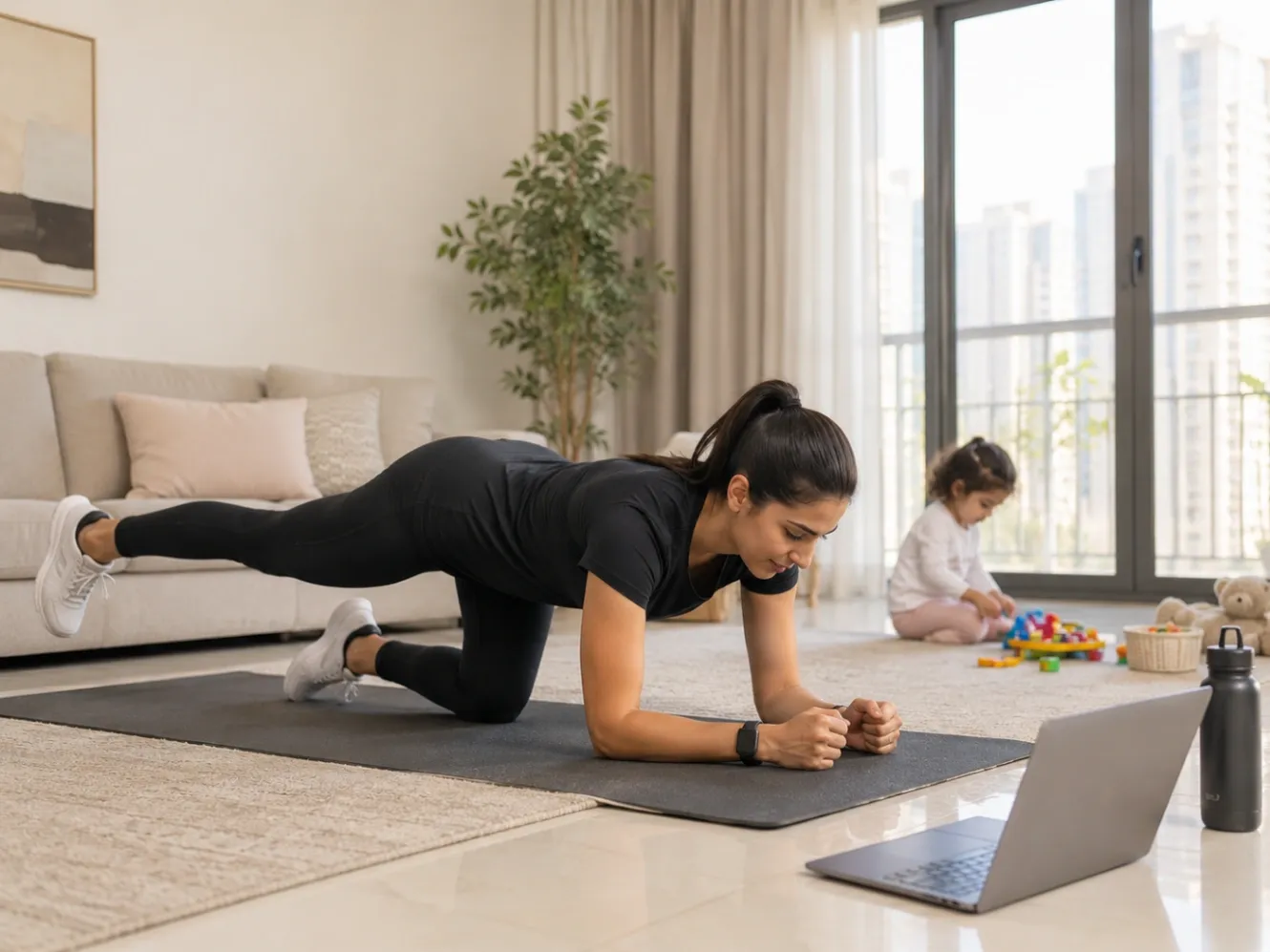
Home Workouts for Busy Mums in Abu Dhabi: Effective Training Around Your Schedule
The reality of being a mum in Abu Dhabi or Dubai — school runs, homework, activities, social commitments, and often a career alongside — leaves very little predictable time for structured gym sessions. Yet staying physically active is not a luxury; it directly impacts energy levels, mental health, body composition, and the modelling of healthy behaviour for your children. This guide gives you the tools to make it work.
The Research Case: Why Exercise Matters Particularly for Mums
Mothers of young children are statistically among the most physically inactive demographics globally — a 2017 study in the Journal of Physical Activity and Health found that physical activity drops by 69% in the year following birth and never fully recovers without intentional intervention. The consequences are compounding:
- Postpartum depression risk increases significantly with physical inactivity
- Metabolic rate slows with muscle loss from inactivity, making weight management progressively harder
- Pelvic floor dysfunction (common post-birth) worsens without targeted rehabilitation exercise
- Energy and sleep quality both improve markedly with even 20–30 minutes of daily moderate exercise
The evidence from Daley et al. (2015, BJOG) is clear: even brief, low-intensity postnatal exercise improves depression scores, body image, and energy in new mothers. You do not need a gym, a full hour, or perfect circumstances — you need a programme designed for the reality of your life.
Postnatal Exercise: Safety Guidelines Before You Begin
If you have delivered in the past 12 months, certain guidelines apply before starting or intensifying exercise:
- Medical clearance: Your 6-week postnatal check with your obstetrician in Abu Dhabi or Dubai should address return-to-exercise readiness — always confirm before starting intense training
- Pelvic floor first: Begin with pelvic floor rehabilitation (Kegel exercises, diaphragmatic breathing) before adding impact or heavy loading. Leaking urine when jumping or running is a signal that pelvic floor rehabilitation is needed before high-impact exercise
- Diastasis recti: Abdominal separation (common after pregnancy) requires specific exercises and restrictions. Avoid conventional crunches and sit-ups until assessed — a women's health physiotherapist in Abu Dhabi or Dubai can screen and guide you
- Breastfeeding: Moderate exercise does not affect breast milk quantity or quality. Wear a supportive sports bra; exercise after feeding when possible for comfort
The Time Problem: Evidence-Based Short Workout Strategies
You do not need 60 minutes to achieve meaningful fitness improvements. Research is robust on this:
- Gillen et al. (2016, PLOS ONE) demonstrated that three 10-minute high-intensity interval sessions per week produced cardiovascular improvements equivalent to 45-minute moderate-intensity sessions three times per week
- Gordon et al. (2017, Medicine & Science in Sports & Exercise) showed that resistance training sessions as short as 13 minutes, three times per week, produced meaningful strength gains over 8 weeks
Three 20-minute sessions per week is a realistic and evidence-sufficient starting point for most mums in Abu Dhabi and Dubai. The key is removing barriers: no commute, no equipment required, can be done during nap time or while children play.
The 20-Minute Home Workout System
This system requires zero equipment and fits into any room in your Abu Dhabi or Dubai home.
Workout A: Lower Body and Core (20 min)
- Glute bridges — 3 × 15 (pelvic floor focus, safe for postnatal)
- Bodyweight squats — 3 × 12
- Reverse lunges — 3 × 10 each leg
- Deadbug (core) — 3 × 8 each side (safe alternative to crunches)
- Side-lying clamshells — 3 × 15 each side
Workout B: Upper Body and Core (20 min)
- Incline push-ups (hands on sofa) — 3 × 10 to 15
- Tricep dips off chair — 3 × 10
- Superman hold — 3 × 10 each side
- Wall sit — 3 × 30 seconds
- Bird-dog — 3 × 8 each side
Workout C: Full Body Circuit (20 min)
- Perform 4 rounds of: 40 seconds work / 20 seconds rest
- Squat jumps (or regular squats for postnatal) → Push-ups → Alternating reverse lunges → Mountain climbers (or plank holds) → Hip thrusts
Fitting Workouts Into UAE Family Life: Practical Strategies
Exercise During Nap Time
A 60–90 minute nap window is sufficient for a 20–30 minute workout plus quick shower. Prepare your workout space and clothes beforehand so there is zero setup delay when the nap starts.
Exercise With Your Children
Children under 4 can participate in your workout — use them as resistance (baby carrier squats, toddler-on-back planks), turn exercise into a game, or use their park play time as your walking/running time. UAE communities like Khalifa City and Arabian Ranches have walking paths directly adjacent to playgrounds.
Early Morning Before School Runs
Many Abu Dhabi and Dubai mums find 5:45–6:30am the most reliable exercise window before the household wakes. The UAE winter (October–April) makes early outdoor walking feasible; summer requires indoor exercise during these hours.
Combine Social and Exercise
Walking groups and mum fitness classes are well-established in Abu Dhabi (British Mums community, various expat groups on Facebook/WhatsApp) and Dubai (Dubai Mamas, various community fitness groups). Social accountability dramatically improves exercise adherence in research on female exercise behaviour.
Progression: When You Are Ready for More
Once the above home workouts feel manageable (typically 4–8 weeks), consider adding:
- Resistance bands (AED 30–80 at most UAE sports stores) for added challenge to lower body and upper body exercises
- Light dumbbells (2–5kg) for upper body work
- A 30-minute session replacing one of the 20-minute sessions
When childcare allows gym access — even 2 sessions per week — a personal trainer in Abu Dhabi or Dubai can accelerate progress significantly by creating a structured programme with proper loading and periodisation.
Frequently Asked Questions
Q: Can I exercise at home as a new mum in Abu Dhabi without any equipment?
A: Absolutely. Bodyweight exercises (squats, lunges, push-ups, glute bridges, planks) provide sufficient stimulus for meaningful strength and cardiovascular improvement for new mothers. You only need a yoga mat and enough floor space to lie down. The workouts above require nothing else.
Q: When can I start exercising after giving birth in the UAE?
A: Light walking can often begin within 1–2 weeks after vaginal birth and 4–6 weeks after caesarean, subject to your doctor's clearance. More structured exercise (bodyweight strength, core work) is typically introduced at 6–8 weeks post-vaginal and 8–10 weeks post-caesarean. Always obtain clearance from your obstetrician at your postnatal check before progressing. Women's health physiotherapists in Abu Dhabi and Dubai specialise in guiding this return-to-exercise process safely.
Q: How do I lose the baby weight while breastfeeding in Dubai?
A: Breastfeeding burns approximately 300–500 extra calories per day — creating a modest caloric deficit on top of this accelerates fat loss while supporting milk production. Do NOT restrict calories severely while breastfeeding; aim for a 250–300 kcal/day deficit maximum and prioritise protein (1.6–2g/kg body weight) to preserve muscle. Consult a dietitian in Abu Dhabi or Dubai specialising in postnatal nutrition for personalised guidance.
Q: My children are older (5–12 years). How do I exercise around school schedules in Abu Dhabi?
A: School hours (typically 7:30am–2:30pm) provide the clearest exercise window for mums of school-age children. A 9–11am gym session, class, or home workout programme during school hours is available to many Abu Dhabi and Dubai mums. After-school activities and homework supervision make evening sessions harder — plan exercise before school pickup whenever possible.
Q: Is HIIT safe for postnatal women in the UAE?
A: High-impact HIIT (jumping, running) is generally not recommended until 12+ weeks post-vaginal birth and longer post-caesarean, and should be preceded by pelvic floor rehabilitation. Low-impact HIIT alternatives (step-ups instead of jumps, modified burpees, cycling) are safer earlier in the postnatal period. If you experience any pelvic floor symptoms (leaking, pressure, pain) during or after HIIT, cease and consult a women's health physiotherapist.
Ready to Train with a Certified Coach?
Get a free consultation and a training plan built specifically for your goals, level, and schedule.
Find Your Coach →References: Daley et al. 2015, BJOG | Gillen et al. 2016, PLOS ONE | Gordon et al. 2017, Med Sci Sports Exerc | Bø et al. 2017 Br J Sports Med — postnatal exercise guidelines
جاهز لتطبيق ذلك؟
احصل على مدرب 369MMAFIT معتمد في دبي — تدريب شخصي وMMA وتغذية، حضوريًا أو عبر الإنترنت.