هذه المقالة متاحة باللغة الإنجليزية فقط حالياً — الترجمة العربية قيد الإعداد.
Mastering the Basic Skills of Tennis in the UAE: A Beginner's Guide
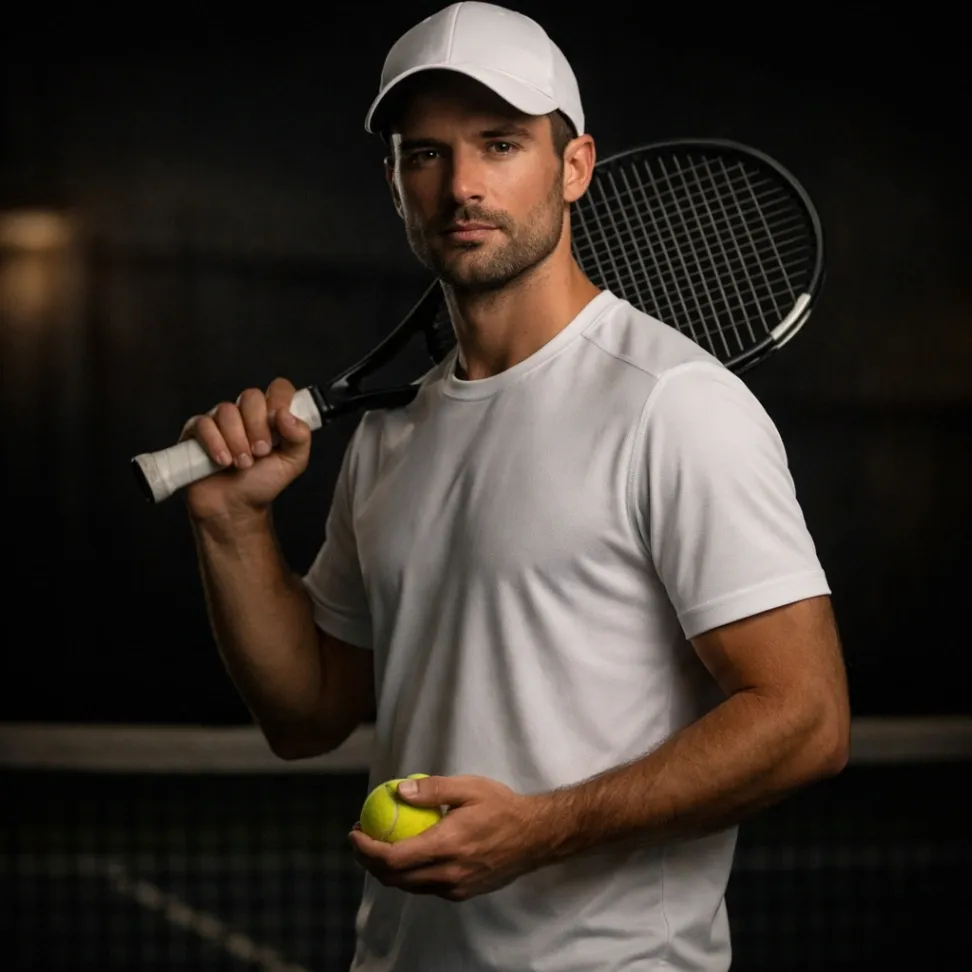
Mastering the Basic Skills of Tennis in the UAE: A Beginner's Guide
Tennis is a sport of extraordinary depth — professionals spend decades refining technique, strategy, and fitness. Yet the fundamentals that make it accessible, enjoyable, and competitive at every level are surprisingly learnable. With access to world-class facilities across Abu Dhabi and Dubai, and a growing tennis community at clubs like Zayed Sports City, Abu Dhabi Country Club, and the Aviation Club in Dubai, there has never been a better time to begin.
This guide covers the five core technical skills every tennis beginner must develop, with evidence-based guidance on how to learn them efficiently, common mistakes to avoid, and how to structure your early practice sessions in the UAE.
How Beginners Learn Tennis Skills: The Motor Learning Framework
Understanding how the brain acquires motor skills helps beginners practice more effectively. Fitts & Posner's (1967) three-stage model, still used in modern sports coaching, describes:
- Cognitive stage: Consciously thinking through each element of the movement. Errors are frequent; focus on understanding the pattern.
- Associative stage: Reducing conscious effort; movements begin to feel more automatic. Error detection improves.
- Autonomous stage: The skill executes without conscious attention, freeing mental resources for tactics and court reading.
Most recreational players remain stuck in stage 2. The key to progress: deliberate, structured practice with specific feedback — ideally from a certified coach — rather than simply hitting balls repeatedly without guidance.
Skill 1: The Forehand Groundstroke
The forehand is typically the first shot beginners develop and often becomes their primary weapon. Biomechanical research (Landlinger et al., 2012 — Journal of Sports Sciences) identifies the following as core elements of an efficient forehand:
- Grip: Begin with a semi-western grip (knuckle of the index finger on bevel 4 of the grip). Allows topspin generation without extreme wrist strain.
- Unit turn: Rotate shoulders and hips together as a unit when preparing — not arms alone. Stores elastic energy for the forward swing.
- Contact point: Slightly in front of the body at roughly hip-to-chest height. Avoid reaching wide — move your feet to the ball instead.
- Follow-through: Swing through the contact point, finishing with the racket head high (over the left shoulder for right-handers). Incomplete follow-through reduces power and consistency.
Beginner drill: Forehand shadow swings (no ball) × 50 before every session. Builds muscle memory of the contact zone.
Skill 2: The Backhand Groundstroke
Beginners may choose a two-handed or one-handed backhand. Research slightly favours the two-handed backhand for beginners due to greater stability and easier topspin production (Reid et al., 2003 — International Journal of Performance Analysis in Sport).
- Two-handed backhand: Dominant hand in continental grip, non-dominant hand in eastern forehand grip above it. Unit turn is even more critical than on the forehand — the non-dominant hand drives the power.
- Contact point: Slightly more in front than the forehand, at hip height. Avoid hitting behind the body — it collapses the structure entirely.
- Two-hand finish: Both hands maintain contact with the racket through the follow-through. Release of the top hand is an advanced technique — not for beginners.
Beginner drill: Backhand wall rally x3 minutes. Consistent low-bounce returns from a wall at close range develop feel without the complexity of live balls.
Skill 3: The Serve
The serve is the most technically complex shot in tennis — it involves the legs, hips, trunk, shoulder, elbow, wrist, and hand in a coordinated kinetic chain (Kovacs & Ellenbecker, 2011 — Sports Health). For beginners, simplify to these three checkpoints:
- Grip: Continental grip only. Shake hands with the edge of the racket — the "chopper" grip.
- Toss: Release the ball with a straight arm, placing it slightly in front and to the right (right-handers) at maximum reach height.
- Contact: Reach as high as possible and pronate the forearm through contact. Do not try to "guide" the ball — trust the motion.
Beginner drill: Serve from the service line (halve the distance to the service box). Build success and consistency before moving back to the baseline.
Skill 4: The Volley
The volley — striking the ball before it bounces, at or near the net — is the most underteached skill at beginner level. It is also the shot that wins the most points in doubles, the format most UAE club players actually compete in.
- Grip: Continental grip for both forehand and backhand volleys. Switching grips at the net is impossible at realistic rally pace.
- Compact swing: Volleys use a punch motion, not a full swing. The racket moves forward approximately 30–40 cm — the backswing is minimal.
- Ready position: Knees bent, weight forward, racket in front of the body at shoulder height. Never stand upright at the net.
- Eyes on the ball: Watch contact with the strings. Beginners consistently look at the target before contact, causing mis-hits.
Beginner drill: Feed-and-catch volley drill — coach feeds softly, player catches the ball on the strings (no swing) and places it. Isolates the racket face angle.
Skill 5: Footwork and Positioning
Footwork is the least glamorous but arguably the most important beginner skill. Research on tennis performance consistently identifies court positioning and movement efficiency as stronger predictors of rally success than stroke quality alone (O'Donoghue, 2001 — Journal of Sports Sciences).
- Split step: A small hop as the opponent contacts the ball, landing just as they strike. This resets centre of gravity and enables explosive movement in any direction.
- Recovery step: After every groundstroke, return toward the centre of the baseline. Never stand at the corner waiting.
- Lateral movement: Move to the ball with small adjustment steps, not large lunges. Large strides destabilise contact.
- Ball tracking: Track the ball from the moment it leaves the opponent's racket — not when it crosses the net. Earlier tracking = earlier positioning.
Beginner drill: Shadow footwork drills (no ball) — side shuffle, crossover step, split step x3 minutes. Footwork patterns learned without ball pressure transfer much more quickly to live play.
How to Structure Your First 8 Weeks as a Tennis Beginner in the UAE
- Weeks 1–2: Shadow swings only (no ball). 30 minutes of forehand, backhand, serve swings daily. Engrave the patterns.
- Weeks 3–4: Ball dropping and hitting (self-feed). Rally from the service line using orange or green balls.
- Weeks 5–6: Coach or hitting partner feeds from basket. Focus: one skill per session. No point play yet.
- Weeks 7–8: Mini-tennis games from the service boxes. Rallies, mini-serves, basic scoring. First competitive context.
Frequently Asked Questions
Q: How long does it take to play tennis at a basic level?
A: With structured coaching and 2–3 sessions per week, most beginners can rally consistently and serve reliably within 8–12 weeks. Playing casual matches becomes realistic within 3–4 months.
Q: Do I need a coach to learn tennis in Abu Dhabi?
A: While self-directed learning is possible, coaching dramatically accelerates progress. Motor learning research shows that external feedback in the early cognitive stage reduces the time to automaticity by 40–60% (Guadagnoli & Lee, 2004). One session per week with a coach alongside self-practice is highly effective.
Q: What racket should I buy as a beginner in the UAE?
A: A head-heavy, larger head size (102–110 sq in), lighter racket (260–275g) provides maximum forgiveness on off-centre hits. Beginner rackets from Wilson, Head, or Babolat are widely available at Dubai Sports City shops or online via Amazon.ae for 200–400 AED.
Q: Can I learn tennis as an adult beginner in the UAE?
A: Absolutely. Many UAE clubs run adult beginner programmes specifically. Research on adult motor learning confirms that while children may acquire automaticity faster, adult beginners achieve high functional tennis skill with structured practice — and often have better strategic understanding from day one.
Q: Is it possible to play tennis year-round in Abu Dhabi?
A: Yes — Abu Dhabi has numerous indoor air-conditioned courts. Outdoor play is comfortable from October to April, and early morning/evening sessions are feasible in shoulder months. The UAE tennis season peaks in winter.
Start Tennis With a Certified Coach in the UAE
Our certified coaches provide beginner tennis programs across Abu Dhabi and Dubai — structured, progressive, and tailored to your starting point and goals.
Find Your Coach →جاهز لتطبيق ذلك؟
احصل على مدرب 369MMAFIT معتمد في دبي — تدريب شخصي وMMA وتغذية، حضوريًا أو عبر الإنترنت.