Эта статья пока доступна только на английском — перевод на русский в процессе.
Pilates Reformer vs Mat Pilates in Dubai: Which Is Right for You? (Science-Based Comparison)
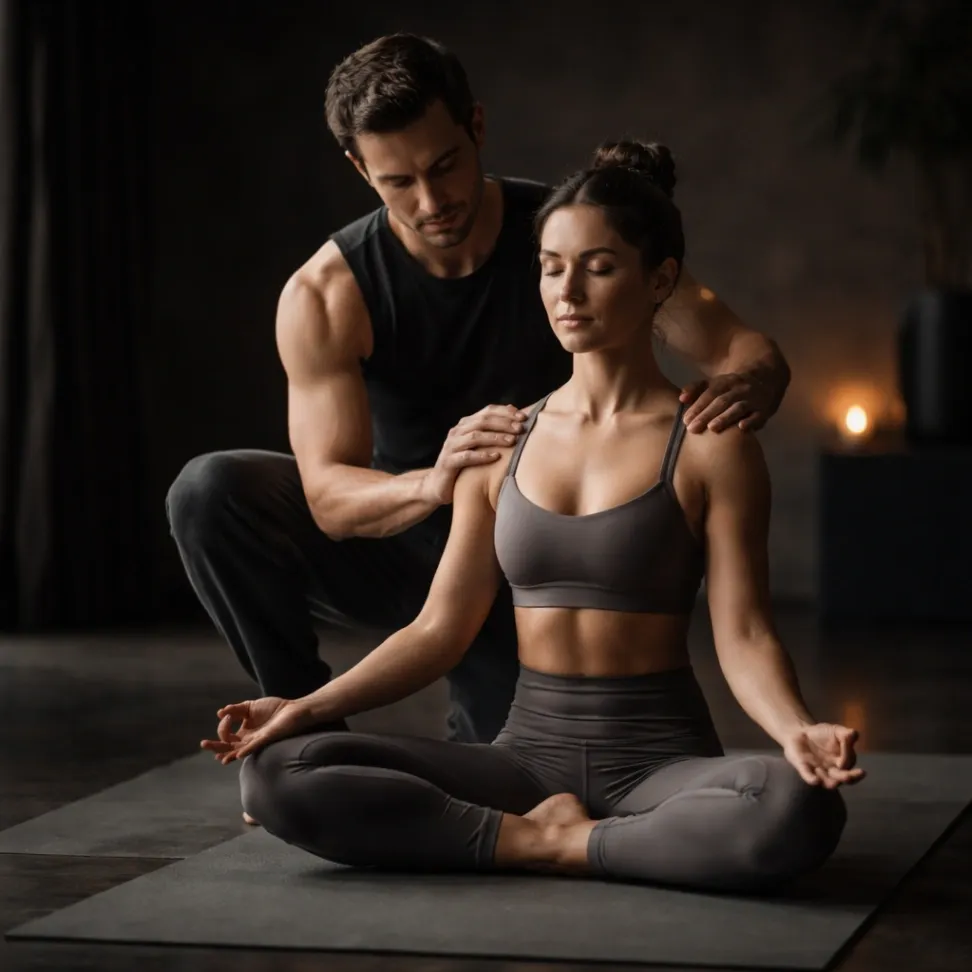
Pilates Reformer vs Mat Pilates in Dubai: Which Is Right for You? (Science-Based Comparison)
Pilates has exploded in Dubai over the past five years. Studios offering both Reformer (machine-based) and Mat sessions are now common in JLT, Marina, Downtown, Jumeirah, Business Bay, and Al Barsha. Yet despite — or because of — the proliferation, most Dubai newcomers face the same question: should I start with the Reformer or the Mat? Are they really different? Is one "better"?
The short, evidence-based answer: both work, both are skill-acquisition disciplines requiring quality instruction, and the optimal choice depends on your goals, your body, and your budget — not on which is "harder" or "more advanced".
This guide breaks down the comparison in the level of detail Dubai practitioners need to make a confident decision.
What Pilates Actually Is (the Common Foundation)
Pilates is a movement system developed by Joseph Pilates in the early 20th century. Its principles — breath, concentration, control, centre, precision, flow — apply equally to Reformer and Mat work. Modern Pilates practice has been validated by multiple systematic reviews and randomised controlled trials for:
- Core strength and lumbar stabilisation (Cruz-Ferreira et al., 2011 — Archives of Physical Medicine and Rehabilitation)
- Posture improvement and reduction in forward head / kyphotic posture (Kim et al., 2016 — Journal of Physical Therapy Science)
- Reduction in chronic non-specific low back pain (Yamato et al., 2015 — Cochrane Review)
- Balance improvement in older adults (Bird & Fell, 2014 — Journal of Aging and Physical Activity)
- Flexibility and range of motion (Phrompaet et al., 2011 — Asian Journal of Sports Medicine)
Critically, these benefits accrue from both Reformer and Mat formats when taught well. The choice between them affects pace, sensation, and which sub-population benefits most — not whether Pilates "works".
Reformer Pilates: What It Is and Who It Suits
The Reformer is a specialised wooden-or-metal apparatus with a sliding carriage, adjustable springs (providing resistance), shoulder rests, foot bar, and straps. Movements are performed lying, sitting, kneeling, or standing on the carriage. The springs simultaneously assist some movements and resist others — a feature unique to apparatus-based Pilates.
Key Advantages
- Spring-loaded assistance for beginners: Movements that require significant strength on the mat (such as roll-ups, teasers, hundred variations) can be assisted by the springs on the Reformer, allowing earlier and more correct technical acquisition.
- Adjustable resistance for progression: As you advance, spring resistance can be increased to provide a strength-training stimulus genuinely comparable to free-weight work, particularly for the posterior chain and obliques.
- Variety of positions: The Reformer enables hundreds of exercises in positions that are difficult or impossible on the mat (footwork in supine, side-lying with strap resistance, jumping in supine on the jump board).
- Better for rehabilitation: Spring assistance, body-supportive surfaces, and adjustable load make the Reformer the preferred format for rehabilitation populations — post-surgery, post-pregnancy, chronic pain.
Disadvantages
- Cost: Reformer sessions in Dubai typically run 180–300 AED per group class or 350–600 AED for private — meaningfully higher than mat group rates.
- Requires the apparatus: You cannot do Reformer work at home without significant investment (3,500–18,000 AED for a quality home Reformer).
- Skill ceiling shifts: Beginners often progress faster on the Reformer initially, but advanced practitioners sometimes find Mat work more humbling — there is no spring to help.
Best For
- Complete beginners who want fast technical wins
- Rehabilitation populations (post-surgery, post-pregnancy, chronic back pain)
- Practitioners with significant strength asymmetries (the spring system reveals and corrects them efficiently)
- Adults 50+ who benefit from body-supported movement
Mat Pilates: What It Is and Who It Suits
Mat Pilates is the original format — Joseph Pilates' "Contrology" was a mat-based system. The classical 34-exercise Mat sequence trains the body using only bodyweight, gravity, and (occasionally) small props (magic circle, light dumbbells, resistance band).
Key Advantages
- Accessibility: All you need is a mat. Class costs in Dubai are typically 80–180 AED (group), 220–400 AED (private). Home practice requires no equipment investment.
- True bodyweight strength: Without spring assistance, Mat work demands genuine core strength and motor control — the foundation for everything else.
- Portable practice: Travel-friendly, home-practice-friendly, and easy to maintain consistency around UAE business travel schedules.
- Mind-body integration: Some practitioners find the lack of apparatus heightens proprioceptive awareness and breath integration.
Disadvantages
- Harder for true beginners: Some classical Mat exercises (full roll-up, teaser, jackknife) require strength most beginners don't have. Without modification or apparatus assistance, frustration is common.
- Plateaus faster: Without adjustable resistance, advanced practitioners must add props (rings, bands) to keep progressing.
- Less protective for fragile populations: Limited support compared with the Reformer makes Mat less suitable as a starting point for some rehabilitation cases.
Best For
- Healthy adults with reasonable baseline strength
- Practitioners prioritising budget or home-practice flexibility
- Athletes using Pilates as supplementary work to running, cycling, swimming, or martial arts
- Anyone who already attends 1+ Reformer session weekly and wants to add daily home work
The Honest Recommendation for Dubai Practitioners
For the typical Dubai newcomer with no specific injury or medical condition:
- Start with 4–8 private Reformer sessions (or duet sessions if budget is tight) to learn the principles correctly with apparatus support.
- Then add Mat group classes 1–2× weekly to build the strength foundation that Reformer alone never fully demands.
- The long-term sweet spot for most Dubai practitioners is 1× Reformer (private or small group) + 2× Mat per week.
This protocol gives you the technique-acquisition benefit of the Reformer's spring support, plus the unforgiving bodyweight foundation that Mat work uniquely provides.
Costs in Dubai (2026)
| Format | Group | Duet | Private |
|---|---|---|---|
| Mat | 80–180 AED | 160–280 AED | 220–400 AED |
| Reformer | 180–300 AED | 280–450 AED | 350–600 AED |
Monthly memberships typically reduce per-session cost by 25–40%. For full Dubai Pilates context see our Pilates in Dubai: Benefits, Types & Cost Guide.
Choosing an Instructor — Critical for Both Formats
The single biggest determinant of whether Pilates works for you is instructor quality. Look for:
- Comprehensive certification: Stott Pilates, Polestar, BASI, PMA (Pilates Method Alliance), or Romana's Pilates. Avoid 1-weekend "Pilates instructor" certificates.
- REPS UAE registration: The UAE recognised exercise professional register.
- Adult-onset experience: Particularly important for Reformer instructors — children's Pilates instructors require different pacing.
- Clinical rapport: If you have any injury history, the instructor should ask about it before your first session, not after.
Common Mistakes to Avoid
- Treating Pilates as "easy stretching": Done properly, Pilates is intensely demanding. If your sessions feel light, your instructor isn't progressing you.
- Mixing too many studios: Different studios use different cuing conventions. Stick with one for the first 8–12 weeks.
- Ignoring breath: Pilates breath is non-negotiable. If your instructor doesn't cue it, find one who does.
- Skipping the basics: The "Hundred", footwork, roll-up, and short spine are not warm-ups — they are the foundation. Master them.
Frequently Asked Questions
Q: Will Pilates alone build a strong body?
A: Pilates builds excellent core, postural, and rotational strength. For maximal whole-body strength and bone density, combine Pilates with 2× weekly resistance training. See Strength Training for Women in Dubai for evidence on combining the two.
Q: Can I lose weight doing Pilates in Dubai?
A: Pilates is moderate-intensity exercise — useful for body composition but most effective when combined with nutritional structure and additional cardiovascular work. See Weight Loss in Dubai.
Q: Is Reformer safer than Mat for someone with a back issue?
A: In most cases, yes — the spring assistance and body-supportive surfaces make graduated rehabilitation easier on the Reformer. Always work with a clinically-trained instructor and clear the programme with your physician.
Q: Can I do Pilates during pregnancy in Dubai?
A: Yes, with a prenatal-certified instructor. Both Mat and Reformer have validated prenatal modifications. See Prenatal Exercise for Women in Dubai.
Q: How long until I see results from Pilates?
A: Postural and core engagement changes are often noticeable within 4–6 sessions. Visible body composition changes require 8–12 weeks of consistent practice combined with nutrition.
Start Pilates With the Right Coach in Dubai
Whether you choose Reformer, Mat, or both, the right instructor will accelerate every metric of progress. Browse certified Pilates coaches across Dubai for in-studio and in-home sessions.
Find a Pilates Coach →Готовы применить это на практике?
Подберём вам сертифицированного тренера 369MMAFIT в Дубае — персональные тренировки, ММА и питание, очно или онлайн.