Эта статья пока доступна только на английском — перевод на русский в процессе.
Diabetes and Exercise in UAE: Safe Training Guide for Dubai and Abu Dhabi Residents
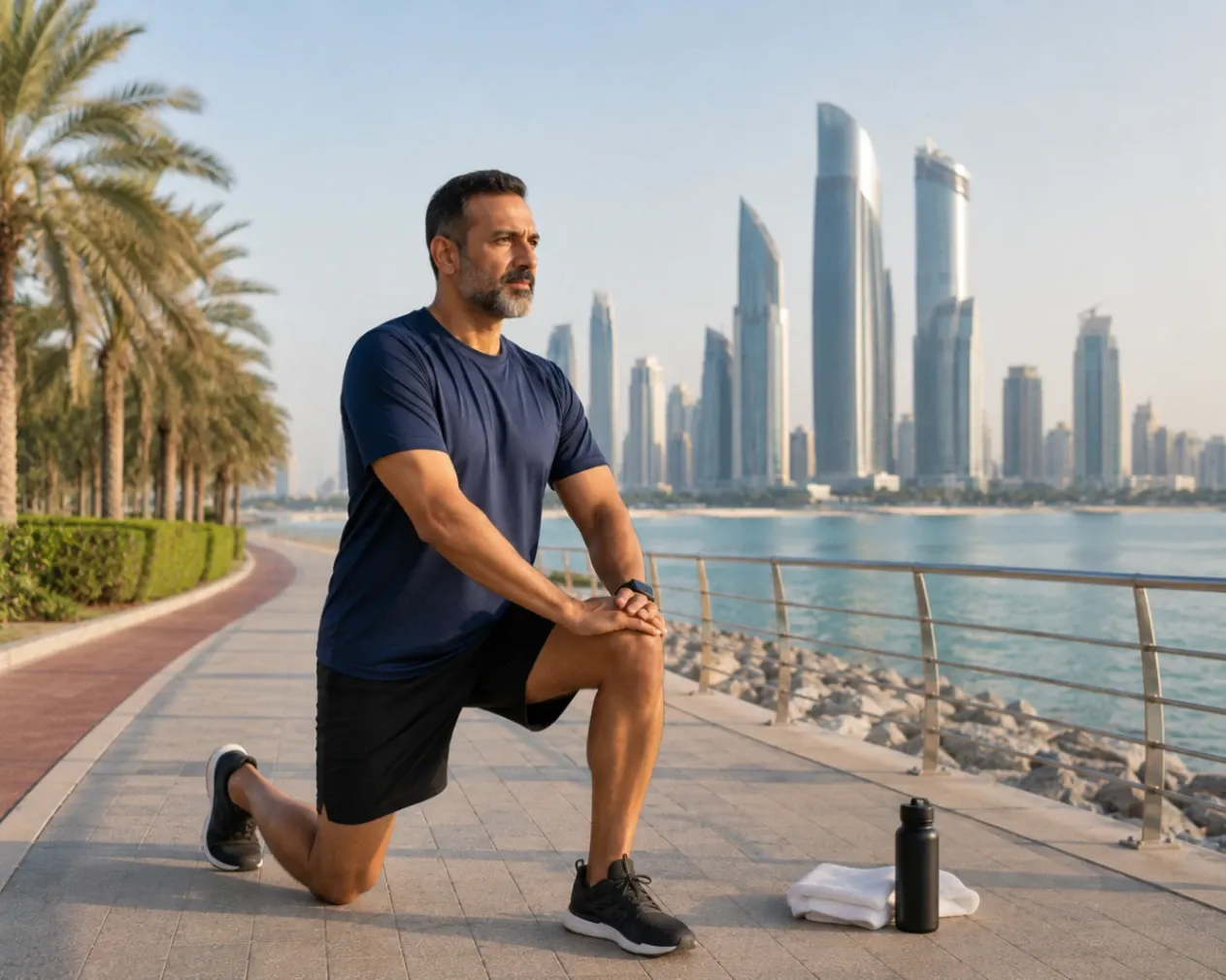
Diabetes and Exercise in UAE: Safe Training Guide for Dubai and Abu Dhabi Residents
Diabetes is one of the most prevalent health conditions in the UAE — with Type 2 diabetes rates among the highest globally. The International Diabetes Federation estimates approximately 19% of UAE adults have diabetes, with many more in pre-diabetic states. Exercise is one of the most evidence-based interventions for managing and preventing both Type 1 and Type 2 diabetes, yet many UAE residents with diabetes avoid exercise due to unfounded fears or lack of guidance. This guide provides safe, evidence-based exercise recommendations for UAE residents with diabetes.
Why Exercise Is Medicine for Diabetes
Research consistently demonstrates exercise as a first-line treatment for Type 2 diabetes. The mechanisms are well-established:
Acute Effects (During and After Exercise)
- Muscle contractions increase GLUT-4 transporter translocation to cell membranes — muscles absorb glucose without requiring insulin during exercise
- Post-exercise insulin sensitivity remains elevated for 24–72 hours — meaning improved blood glucose management for days after each session
- Glycogen replenishment post-exercise creates additional glucose disposal capacity
Chronic Adaptations (With Regular Training)
- A meta-analysis by Snowling & Hopkins (2006, Diabetes Care) found structured exercise programmes reduce HbA1c by 0.6–0.8% on average — equivalent to the effect of many oral hypoglycaemic medications
- Improved insulin sensitivity in muscle tissue persists as a chronic adaptation to regular training
- Reduced visceral fat (primary driver of insulin resistance) — 8–12 weeks of combined aerobic and resistance training reduces visceral fat significantly even without weight loss
- Improved cardiovascular risk factors — particularly important as diabetes is a major cardiovascular risk factor in UAE
Type 2 Diabetes: Exercise Recommendations for UAE Residents
ACSM/ADA Guidelines
The American College of Sports Medicine and American Diabetes Association jointly recommend:
- At least 150 minutes per week of moderate-intensity aerobic exercise (spread across most days, with no more than 2 consecutive rest days)
- Resistance training 2–3× per week on non-consecutive days, targeting all major muscle groups
- Breaking prolonged sitting with brief activity (3-minute walks or light activity every 30 minutes of sitting) — particularly relevant to UAE's desk-work culture
Aerobic Exercise for Type 2 Diabetes in UAE
Moderate-intensity aerobic exercise (walking, swimming coaching, cycling, elliptical) is highly effective for improving blood glucose control:
- Walking: Accessible, safe, and effective. 30–45 minutes daily walking is an excellent starting point for UAE residents with Type 2 diabetes. Timing post-meals (30–60 minutes after eating) is particularly effective at reducing post-meal glucose spikes.
- Swimming: Ideal for UAE residents with neuropathy-related foot concerns — water eliminates impact while providing cardiovascular benefit. Exceptional access in UAE.
- Cycling (stationary or outdoor): Non-weight-bearing, adjustable intensity, appropriate for those with foot complications
Resistance Training: Particularly Powerful for Type 2 Diabetes
Research by Sigal et al. (2007, Annals of Internal Medicine) found combined aerobic and resistance training produced significantly greater HbA1c reductions than either training type alone. Resistance training increases muscle mass, which is the body's primary glucose disposal organ — more muscle mass means greater glucose clearance capacity.
Safe resistance training programme for UAE residents with Type 2 diabetes:
- Start with machine-based exercises (predictable resistance, lower injury risk)
- Full-body 2× per week: leg press, chest press, seated row, shoulder press, leg curl
- 3 sets × 12–15 reps, moderate resistance
- Progress to free weights as confidence and strength develop
- Monitor blood glucose before, during, and after sessions until predictable patterns are established
Type 1 Diabetes: Exercise Considerations
Type 1 diabetes exercise management is more complex due to the absence of endogenous insulin production. Key considerations:
Aerobic Exercise (Glucose-Lowering Effect)
Sustained moderate-intensity aerobic exercise lowers blood glucose significantly in T1D. UAE residents with Type 1 diabetes should:
- Check glucose before exercise: target 6–10 mmol/L (108–180 mg/dL) as starting range
- Consume 15–30g fast-acting carbohydrates if starting below 6 mmol/L
- Consider reducing rapid-acting insulin before planned aerobic sessions (discuss with UAE endocrinologist)
- Monitor during and after exercise — post-exercise hypoglycaemia risk persists for up to 24 hours
Resistance and High-Intensity Exercise (Glucose-Raising Effect)
Research shows high-intensity resistance training and HIIT can temporarily increase blood glucose in T1D due to catecholamine release stimulating hepatic glucose output. This can be used strategically to prevent exercise-induced hypoglycaemia. Individual responses vary significantly — continuous glucose monitoring (CGM) is highly recommended for T1D UAE athletes.
UAE-Specific Diabetes and Exercise Considerations
Heat and Blood Glucose
UAE summer heat significantly affects diabetes management:
- Dehydration from UAE heat reduces blood volume and concentrates glucose — increasing measured blood glucose readings
- Heat accelerates insulin absorption from injection sites — increasing hypoglycaemia risk when injecting before outdoor exercise in UAE heat
- Exercise in air-conditioned environments during UAE summer is strongly recommended for all UAE residents with diabetes
Foot Care for UAE Diabetic Exercisers
Peripheral neuropathy (reduced foot sensation) is common in UAE residents with longstanding diabetes and is particularly relevant in a climate requiring footwear. Rules:
- Inspect feet before and after every exercise session
- Never exercise barefoot — always wear well-fitted, moisture-wicking socks and supportive footwear
- Avoid high-impact activities if significant neuropathy or foot ulceration is present — swimming and cycling are preferred
Hypoglycaemia Management
Fast-acting glucose should always be immediately available during exercise for insulin-using UAE residents. Convenient sources: glucose tablets, dates (3–4 Medjool dates ≈ 40g carbohydrates — culturally appropriate and widely available in UAE), fruit juice boxes, or sports drink.
Working with Healthcare Professionals in UAE
Before beginning an exercise programme with diabetes:
- Obtain medical clearance from your UAE endocrinologist or GP
- Discuss medication adjustments that may be needed when starting regular exercise
- Consider a Continuous Glucose Monitor (CGM) for real-time glucose data during and after exercise — available through UAE pharmacies with prescription
- Work with a personal trainer who has experience with diabetic clients and understands the relevant safety considerations
Ready to Train with a Certified Coach?
Get a free consultation and a training plan built specifically for your goals, level, and schedule.
Find Your Coach →Frequently Asked Questions
Q: Is exercise safe with Type 2 diabetes in Dubai?
A: Yes — and strongly recommended. Exercise is one of the most effective treatments for Type 2 diabetes. With appropriate medical clearance and sensible starting intensity, exercise reduces blood glucose, improves insulin sensitivity, aids weight management, and reduces cardiovascular risk. The risks of sedentary behaviour with diabetes are far greater than the risks of appropriate exercise.
Q: What time of day is best for exercise with diabetes in UAE?
A: Post-meal exercise (30–60 minutes after eating) is particularly effective for blood glucose management — it directly counters the post-meal glucose rise. Morning exercise before breakfast is effective for fat loss but requires more careful blood glucose monitoring for insulin users. Choose the time that fits your UAE schedule consistently — consistency matters more than timing optimisation.
Q: Can exercise cure Type 2 diabetes in Abu Dhabi?
A: Regular exercise combined with appropriate nutrition and weight management can produce Type 2 diabetes "remission" — where blood glucose returns to normal ranges without medication. Research by the DiRECT trial (2018, The Lancet) showed 46% of participants achieved remission at 12 months with intensive lifestyle change. While "cure" is not the accurate term (the underlying risk remains), true long-term remission is achievable for many UAE residents with early Type 2 diabetes.
Q: Should I hire a personal trainer who knows about diabetes in Dubai?
A: Yes — working with a personal trainer in Dubai or Abu Dhabi who understands diabetes management significantly improves safety and outcomes. Look for trainers with NASM-CES, certified diabetes educator training, or specific experience with diabetic clients. They can monitor for hypoglycaemia warning signs, adjust workout intensity based on glucose readings, and design progressions appropriate for your condition.
Q: What precautions should I take exercising in Dubai's heat with diabetes?
A: Exercise indoors (air-conditioned gym, pool) during UAE summer. Maintain aggressive hydration (monitor for dehydration symptoms more vigilantly than non-diabetics). Carry fast-acting glucose and your monitoring device at all times. If exercising outdoors in any season, inform a companion of your diabetes status and signs of hypoglycaemia. If using CGM (Continuous Glucose Monitor), ensure heat doesn't affect sensor adhesion.
Готовы применить это на практике?
Подберём вам сертифицированного тренера 369MMAFIT в Дубае — персональные тренировки, ММА и питание, очно или онлайн.