Shoulder Pain & Exercise: Complete Guide to Training Around Shoulder Injuries (2026)
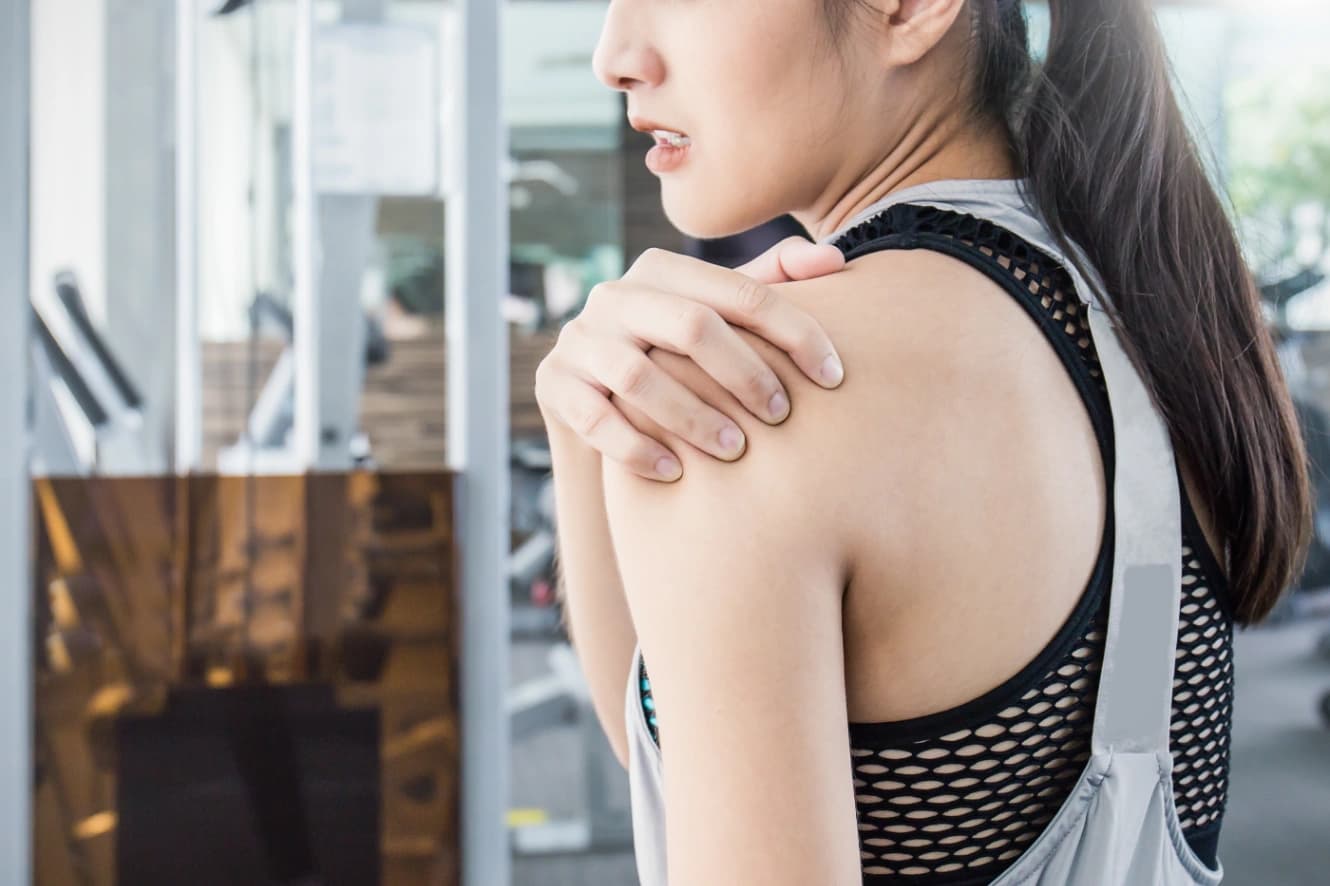
Shoulder Pain & Exercise: Complete Guide to Training Around Shoulder Injuries (2026)
The shoulder is the most mobile joint in the human body — and that extraordinary range of motion comes at a cost. Unlike the hip, which is a deep ball-and-socket joint with inherent bony stability, the shoulder relies almost entirely on soft tissue structures (muscles, tendons, ligaments, and the labrum) to stay in place. This architectural trade-off makes the shoulder uniquely vulnerable to injury, particularly in people who lift weights, play overhead sports, or perform repetitive arm movements.
In Dubai's fitness community, shoulder complaints rank in the top three reasons clients pause their training. At 369MMAFIT, we see this pattern constantly: someone develops anterior shoulder pain during bench pressing, takes a few weeks off, returns without addressing the underlying issue, and re-injures themselves within a month. The cycle repeats until they either give up training entirely or finally seek structured rehabilitation.
This guide breaks that cycle. Whether you're dealing with impingement, a rotator cuff strain, or recovering from surgery, you'll learn exactly how to modify your training, progressively rehabilitate the shoulder, and build resilience against future injuries.
Shoulder Anatomy: What You Need to Know
The Rotator Cuff — SITS Muscles
The rotator cuff is a group of four muscles and their tendons that stabilise the glenohumeral (shoulder) joint. They are collectively known by the acronym SITS:
| Muscle | Origin | Action | Common Injury Pattern |
|---|---|---|---|
| Supraspinatus | Supraspinous fossa of scapula | Initiates arm abduction (first 15°) | Most commonly torn; impingement zone |
| Infraspinatus | Infraspinous fossa | External rotation | Strain from overhead activities |
| Teres Minor | Lateral scapular border | External rotation (assists) | Often injured alongside infraspinatus |
| Subscapularis | Subscapular fossa (anterior) | Internal rotation | Strain from heavy bench pressing |
These four muscles work as a dynamic stabilising unit. While the deltoid provides the major force for shoulder movements, the rotator cuff muscles keep the humeral head centred in the glenoid fossa during motion. When any of these muscles are weak, fatigued, or injured, the humeral head migrates superiorly (upward), narrowing the subacromial space and compressing the supraspinatus tendon and bursa — the classic mechanism of impingement.
The Labrum
The glenoid labrum is a ring of fibrocartilage that deepens the shallow shoulder socket by approximately 50%. It serves as an attachment point for the biceps tendon (at the superior labrum) and several glenohumeral ligaments. Labral tears — including SLAP tears (Superior Labrum Anterior to Posterior) — are common in combat sports athletes and overhead lifters.
The Subacromial Bursa
The subacromial bursa is a fluid-filled sac that sits between the rotator cuff tendons and the acromion (the bony roof of the shoulder). Its purpose is to reduce friction during overhead movements. When inflamed (subacromial bursitis), it swells and occupies precious space in the already narrow subacromial corridor, contributing to impingement symptoms.
Common Shoulder Injuries in Gym-Goers
1. Shoulder Impingement Syndrome
The most prevalent shoulder condition in the weight-training population. Impingement occurs when the supraspinatus tendon and/or subacromial bursa are compressed between the humeral head and the acromion during overhead or elevated arm movements.
Symptoms: Pain at the front or side of the shoulder, especially during overhead pressing, lateral raises above 90°, and reaching behind the back. A painful arc typically exists between 60–120° of abduction.
Contributing factors: Weak external rotators, tight pectorals, forward head posture, excessive internal rotation training (bench press dominance), and poor scapular control.
2. Rotator Cuff Tears
Tears range from partial-thickness (fraying of tendon fibres) to full-thickness (complete rupture). Partial tears are surprisingly common — MRI studies show that up to 30% of adults over 60 have asymptomatic partial rotator cuff tears. In younger gym-goers, tears typically result from acute trauma (heavy lifting, falls) or chronic overload.
Symptoms: Night pain, weakness during external rotation, difficulty lifting the arm, and a catching sensation.
3. Frozen Shoulder (Adhesive Capsulitis)
Characterised by progressive stiffness and pain, frozen shoulder involves thickening and contracture of the joint capsule. It progresses through three stages: freezing (2–9 months), frozen (4–12 months), and thawing (5–24 months). While it can be idiopathic, it's more common in people aged 40–60, diabetics, and those who have immobilised their shoulder after injury.
Symptoms: Gradual loss of both active and passive range of motion, particularly external rotation and abduction. Pain at end range that disturbs sleep.
4. AC Joint Dysfunction
The acromioclavicular (AC) joint sits at the top of the shoulder where the clavicle meets the acromion. AC joint problems are extremely common in people who bench press heavily, perform dips, or have had direct trauma (falls onto the point of the shoulder).
Symptoms: Localised pain at the very top of the shoulder, worse with cross-body movements (horizontal adduction) and heavy pressing.
Red Flags: When to See a Doctor Immediately
Not all shoulder pain is appropriate for self-management. Seek immediate medical evaluation if you experience:
If you're in Dubai, sports medicine clinics like Mediclinic, Prime Hospital Sports Medicine, and Emirates Hospital Day Surgery offer same-day imaging and specialist consultations.
Exercises to AVOID with Shoulder Pain
These exercises place the shoulder in biomechanically compromised positions and are most likely to aggravate existing shoulder pathology:
1. Upright Rows
Upright rows force the shoulder into combined abduction and internal rotation under load — the exact mechanism that reproduces impingement. The Hawkins-Kennedy test, used by physiotherapists to diagnose impingement, essentially replicates this movement pattern. Upright rows should be eliminated entirely from the programme of anyone with shoulder pain.
Alternative: Face pulls or high cable reverse flyes, which achieve similar deltoid and trap activation without the impingement risk.
2. Behind-the-Neck Press
This movement demands extreme external rotation at the end range while the shoulder is abducted and loaded. It places enormous stress on the anterior capsule, the biceps tendon, and the labrum. Even in healthy shoulders, the behind-the-neck press offers no biomechanical advantage over a standard overhead press.
Alternative: Landmine press or neutral-grip dumbbell overhead press.
3. Dips Below 90°
When the elbow drops below the shoulder line during dips, the anterior capsule is stretched maximally while bearing your entire bodyweight (or more, with added weight). This position is particularly dangerous for the AC joint and the anterior labrum.
Alternative: Limit dip depth so elbows stay at 90° or above, or substitute with close-grip bench press.
4. Lat Pulldowns Behind the Neck
Similar issues to behind-the-neck pressing — the cervical spine is forced into forward flexion while the shoulders are externally rotated and loaded.
Alternative: Standard lat pulldowns to the chest with a slight lean back.
5. Flat Barbell Bench Press (Full ROM with Shoulder Pain)
The bottom position of the bench press — bar touching the chest — places the shoulder in maximal horizontal abduction and extension. For those with anterior shoulder pain, this end-range position compresses inflamed structures.
Alternative: Floor press (limits ROM to approximately 90° of elbow flexion), board press, or pin press.
Rehabilitation Progression: 4 Phases
Shoulder rehab follows a systematic progression. Attempting to skip phases is the primary reason rehab fails.
Phase 1: Range of Motion Restoration (Weeks 1–2)
The goal is to restore pain-free passive and active range of motion.
Exercises:
Phase 2: Isometric Strengthening (Weeks 2–4)
Isometric contractions strengthen without joint movement, making them safe when dynamic movement still provokes pain.
Exercises:
Phase 3: Isotonic (Dynamic) Strengthening (Weeks 4–8)
Introduce controlled concentric and eccentric contractions with light resistance.
Exercises:
Phase 4: Dynamic and Sport-Specific (Weeks 8–12+)
Return to compound movements with modifications, and introduce plyometric and reactive elements.
Exercises:
Modified Push/Pull Training Programme
You don't have to stop training while rehabbing your shoulder. Here is a modified 4-day push/pull programme that works around common shoulder pathology:
Push Day (Modified)
| Exercise | Sets × Reps | Notes |
|---|---|---|
| Floor press (DB or BB) | 4 × 8–10 | Limited ROM protects anterior shoulder |
| Landmine press | 3 × 10–12 | Scapular-friendly pressing angle |
| Low-to-high cable fly | 3 × 12–15 | Avoid going behind the shoulder line |
| Lateral raise (below 90°) | 3 × 15 | Stop at shoulder height |
| Tricep pushdowns | 3 × 12–15 | Shoulder-neutral movement |
Pull Day (Modified)
| Exercise | Sets × Reps | Notes |
|---|---|---|
| Chest-supported row | 4 × 10–12 | Removes spinal load, stabilises shoulder |
| Neutral-grip lat pulldown | 3 × 10–12 | Neutral grip reduces internal rotation stress |
| Face pulls | 4 × 15–20 | Critical for external rotator and scapular health |
| Single-arm cable row | 3 × 12 per side | Allows natural scapular movement |
| Band pull-aparts | 3 × 20 | Rehab exercise integrated into training |
Prevention Protocol: The Daily Shoulder Maintenance Routine
This 10-minute routine should become as automatic as brushing your teeth, especially if you train upper body more than twice per week.
Posture and Lifestyle Considerations for Dubai Residents
Dubai's professional environment often involves long hours at desks, driving, and phone use — all activities that promote thoracic kyphosis, forward head posture, and internal rotation of the shoulders. This chronically shortened pectoral and anterior deltoid position shifts the scapulae into protraction and anterior tilt, reducing the subacromial space.
Practical recommendations:
When to Return to Full Training
Return-to-sport criteria for shoulder rehabilitation:
The 369MMAFIT Approach
At 369MMAFIT, our Dubai-based trainers are experienced in working with clients who have shoulder pathology. Our approach integrates the rehabilitation phases directly into your training programme so that you continue to train your lower body, core, and unaffected areas at full intensity while progressively loading the shoulder.
We don't believe in the "rest until it's better" approach — because passive rest without structured rehabilitation almost always leads to re-injury. Every training session includes a tailored warm-up protocol and real-time modification based on how the shoulder is responding that day.
If you're dealing with shoulder pain, book a consultation with one of our trainers. We'll assess your movement, identify the contributing factors, and design a programme that keeps you progressing while your shoulder heals.
Conclusion
Shoulder pain doesn't have to end your training career. With an understanding of the anatomy, awareness of which movements to avoid, and a disciplined rehabilitation progression, most shoulder conditions resolve completely within 8–12 weeks. The key is resisting the urge to skip phases, respecting the tissue healing timelines, and maintaining a balanced training programme that prioritises scapular health and external rotation strength. Your shoulders carry you through every upper body movement — invest in their maintenance, and they'll serve you for decades.
Ready to put this into action?
Get matched with a certified 369MMAFIT coach in Dubai — personal training, MMA, and nutrition, in-person or online.