How to Choose an MMA Coach or Personal Trainer: A Complete Guide
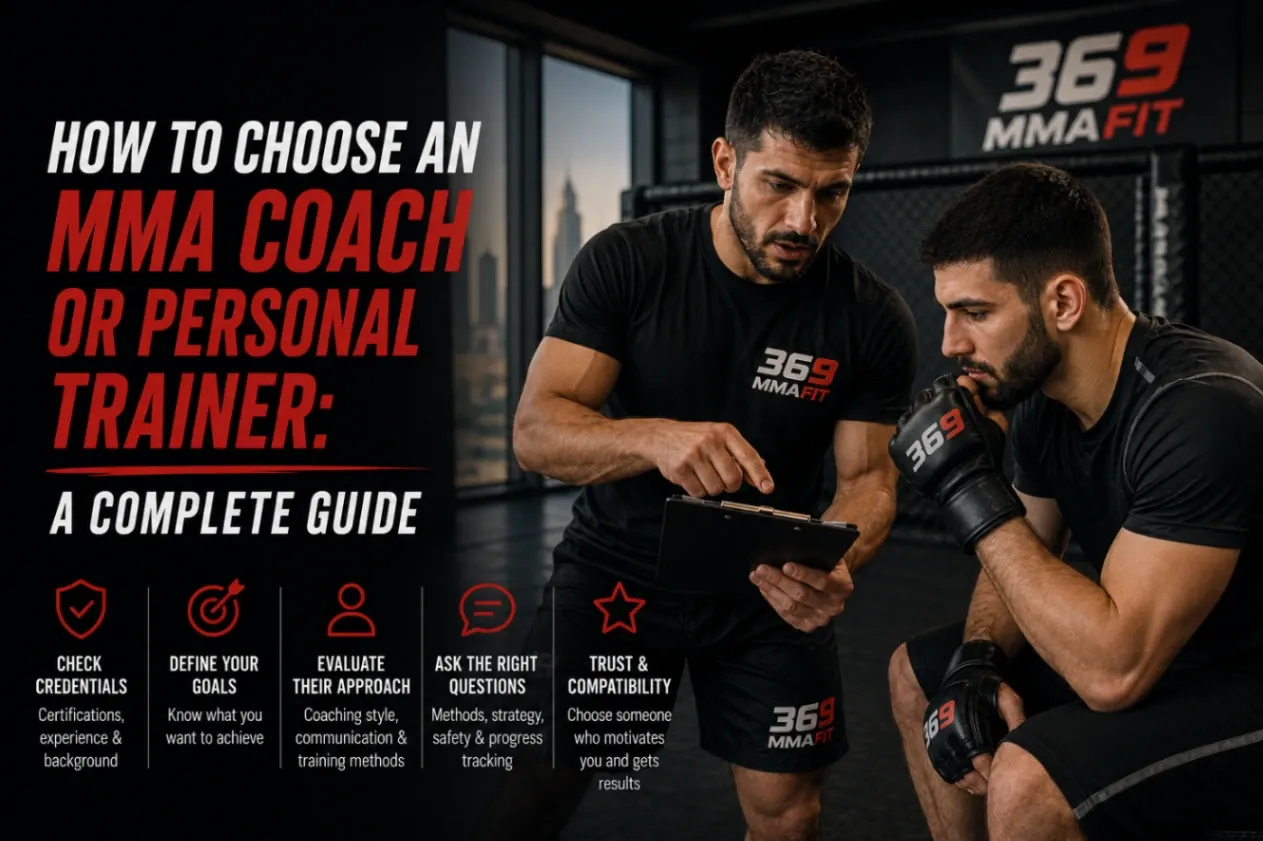
The decision to hire an MMA training coach or personal trainer is one of the highest-leverage investments you can make in your athletic development. But a poor hiring decision is expensive in time, money, and potentially health. This guide gives you the framework to evaluate coaches objectively and ask the right questions before committing.
Why the Right Coach Changes Everything
A comprehensive review by Côté and Gilbert (2009) in the International Journal of Sports Physiology and Performance found that coaching effectiveness — defined as knowledge, interaction quality, and athlete outcomes — was the primary determinant of long-term athlete development across all sports. The difference between self-directed training and coached training is not just instruction: it is the elimination of blind spots, the enforcement of progressive overload, and accountability that prevents the most common training errors.
For MMA specifically — a multi-discipline sport with high technical complexity and significant injury risk — the gap between coached and self-directed athletes widens rapidly after the beginner stage. Technical faults embedded early become increasingly resistant to correction. A qualified coach prevents this by identifying and correcting patterns before they become habits.
The 7 Criteria for Evaluating an MMA Coach
1. Credentials and Education
Look for recognized professional certifications in relevant disciplines: the NSCA-CSCS (Certified Strength and Conditioning Specialist) or NSCA-CPT for strength and conditioning, ACSM-EP for exercise physiology, and sport-specific coaching certifications (USA Wrestling, national boxing federations, IBJJF coaching certification for jiu-jitsu). Credentials do not guarantee quality, but they demonstrate minimum standards of knowledge that have been independently verified.
Be skeptical of coaches whose only credential is competitive experience. Being an excellent fighter does not automatically produce the ability to analyze movement, design programs, or communicate technique to different learning styles. The best performers are rarely the best coaches.
2. Combat Sports Experience
MMA-specific conditioning requires understanding of the sport's energy demands, common injury patterns, and competition preparation requirements. A general fitness coach without combat sports experience will miss the nuances that determine fighter-specific programming decisions. Ask: have they worked with competitive combat sports athletes? Can they describe how they program around a fighter's skill training schedule?
3. Program Design Philosophy
A qualified coach should be able to explain their program design philosophy in accessible terms: how they periodize training across a competitive cycle, how they manage training load to prevent injury, and how they individualize programs for different athletes. Coaches who rely on single templates for all athletes, who cannot explain the rationale for their programming choices, or who dismiss periodization principles should be approached with caution.
4. Communication Style and Coaching Approach
Research by Dhurup, Surujlal, and Kabongo (2016) found that coaching style (democratic vs. autocratic) and quality of athlete-coach communication were significant predictors of athlete satisfaction and long-term commitment. A coach who listens, explains, and adjusts to individual responses is more effective than one who demands compliance regardless of feedback. Interview 2–3 coaches before committing — notice how they respond to questions.
5. Track Record with Athletes at Your Level
An elite professional coach may not be the best choice for a recreational MMA enthusiast — and vice versa. Look for demonstrated experience with athletes at your level and with similar goals. Ask for references or speak with current clients. Testimonials on a website are marketing; direct conversations with current clients are evidence.
6. Testing and Assessment Protocols
A quality coach does not start programming before assessing. At minimum, expect: a health and goals history intake, movement screening (identifying mobility restrictions or asymmetries that affect exercise selection), and a baseline fitness assessment relevant to MMA (aerobic capacity, strength benchmarks, body composition). Coaches who skip assessment and immediately prescribe a generic program are not individualizing — they are templating.
7. Remote vs. In-Person Coaching
Online coaching has matured significantly with the availability of video feedback tools, wearable data (HRV, heart rate zones), and video analysis apps. For conditioning and strength programming, remote coaching can be highly effective. For MMA technique, in-person coaching remains superior due to the physical feedback requirements of partner work. Many athletes benefit from a hybrid model: in-person technique coaching plus remote S&C programming.
Red Flags to Avoid
- Coaches who do not ask about your injury history before programming
- Cookie-cutter programs (the same program given to every client regardless of goals or fitness level)
- No testing or assessment in the first session
- Inability to explain the purpose of exercises in the program
- Promising rapid transformations without discussing sustainable timelines
- No periodization — training at the same intensity every week
- Discouraging questions or dismissing athlete feedback
10 Questions to Ask Before You Hire
- What certifications do you hold, and when were they last renewed?
- How do you structure a training year for an MMA athlete preparing for competition?
- How do you manage training load during fight camp to prevent injury and overtraining?
- How do you integrate S&C work with a fighter's technical training schedule?
- Can you share an example of how you modified programming for an injured athlete?
- How do you track progress, and how often do you reassess?
- What is your communication availability between sessions?
- Can I speak with a current or past client at my level?
- How do you handle it when an athlete is not making expected progress?
- What does your typical onboarding process look like for a new athlete?
Online Coaching for MMA: Pros, Cons, and Best Practices
Pros: Access to specialized coaches regardless of geography, typically lower cost than in-person training, flexibility in session timing, written programs to reference between sessions, and asynchronous video feedback.
Cons: No immediate physical feedback for technique correction, requires higher self-discipline, technology barriers for some, and the quality gap between good and poor online coaches is invisible until you have committed.
Best practices for remote coaching: Ensure weekly check-in calls (not just program delivery), record all training sessions for video feedback, use a shared tracking platform for data (wearable data, session logs), and establish clear response time expectations upfront.
What Good Programming Looks Like
The foundation of all effective MMA programming is periodization — structured variation of training load, intensity, and focus across time. For a detailed look at what a well-designed MMA program includes, read our article: The Complete MMA Training Guide for Beginners. For the nutrition side of the equation that a qualified coach should address, see our MMA Fighter Diet Plan. For the full S&C system, see Strength and Conditioning for MMA.
References
- Côté, J., & Gilbert, W. (2009). An integrative definition of coaching effectiveness and expertise. International Journal of Sports Science & Coaching, 4(3), 307–323.
- Dhurup, M., Surujlal, J., & Kabongo, D.M. (2016). Finding synergic relationships in coaching style, athlete satisfaction and commitment. Perceptual and Motor Skills, 123(2).
- National Strength and Conditioning Association. (2012). Essentials of Personal Training (2nd ed.). Human Kinetics.
Frequently Asked Questions
Q: How much does an MMA personal trainer typically cost?
A: In-person MMA S&C coaching ranges from $50–150 per session depending on location, credentials, and demand. Online coaching programs typically run $100–400 per month. Group training or semi-private sessions offer lower per-session costs at reduced individualization. Evaluate cost relative to the coach's credentials, track record, and the specificity of programming offered.
Q: Can I make serious MMA progress without a coach?
A: For the first 3–6 months, self-directed training with quality resources (like the programs in this blog) can produce significant results. Beyond this, the absence of external feedback creates cumulative blind spots — technical errors compound, programming becomes stale, and injury risk rises without professional oversight of training load. Most serious practitioners benefit from at least periodic coach consultation even if not training fully coached.
Q: What is the difference between an MMA technique coach and an S&C coach?
A: An MMA technique coach teaches and refines striking, wrestling, and submission skills — the martial arts component. An S&C (strength and conditioning) coach designs the physical preparation program: strength, power, aerobic capacity, and conditioning. Elite MMA athletes typically work with both. For recreational athletes, an S&C coach with combat sports experience often provides the greatest value as conditioning is the primary limiter.
Q: How do I know if my coach is actually qualified?
A: Verify certifications directly through the issuing organization's website (NSCA, ACSM, and others have public certification verification tools). Ask for professional liability insurance (legitimate coaches carry it). Request references and actually contact them. Treat the process like hiring a professional for any other specialized service — credentials and verification, not just trust.
Q: How long should I work with an MMA coach before expecting results?
A: Set a 90-day evaluation period. Within 90 days of consistent coaching: you should see measurable improvements in conditioning benchmarks, understand the rationale for every component of your program, and feel that the programming is individualized to your specific strengths and limitations. If after 90 days you are following a generic template with no objective progress metrics, consider changing coaches.
Find a Verified MMA Coach on 369MMAFIT
Every coach on our platform is verified, credentialed, and specialized in combat sports conditioning. Browse profiles, read reviews from real athletes, and book a free consultation — no commitment required.
Browse Certified Coaches →Ready to put this into action?
Get matched with a certified 369MMAFIT coach in Dubai — personal training, MMA, and nutrition, in-person or online.