Functional Fitness Training: Build Real-World Strength (2026)
Functional Fitness Training: Build Real-World Strength (2026)
There is a growing disconnect between gym performance and real-world physical capability. Someone who can bench press 120kg may struggle to carry luggage through Dubai International Airport without back pain. A person who squats heavy may not be able to get down on the floor and back up without awkwardness. A marathon runner may throw out their back picking up a toddler.
This happens because traditional gym training often isolates muscles, fixes the body in stable positions (seated, lying on a bench, leaning against a machine), and eliminates the stabilisation, coordination, and multi-planar movement demands that real life presents.
Functional fitness addresses this directly. It trains movements, not muscles — developing strength, stability, coordination, and endurance that transfer to the activities of daily living, sport, and long-term physical independence.
What Makes Training "Functional"?
A functional exercise meets three criteria:
A barbell back squat, for example, is compound and multi-joint but occurs only in the sagittal plane and with both feet evenly planted. A walking lunge with a dumbbell overhead press adds frontal and transverse plane challenges, unilateral loading, and dynamic balance — making it more "functional" for real-world carryover.
Important clarification: This does not mean traditional exercises are useless. Bench presses, squats, and deadlifts build foundational strength that functional training benefits from. The point is that functional training adds dimensions of movement complexity that isolation and bilateral machine work do not provide.
The 7 Foundational Movement Patterns
All human movement can be categorised into seven patterns. A complete functional fitness programme trains all seven:
1. Squat
Real-world application: Sitting down and standing up, picking objects off the floor, getting in and out of a car.
Key exercises:
Functional emphasis: Train squats to full depth (hip crease below knee) to maintain the ability to use a low toilet, sit on the floor, or access low shelves — movements that many adults lose by age 50 due to disuse.
2. Hinge
Real-world application: Picking up objects from the floor, bending to tie shoes, lifting luggage, deadlifting a heavy box.
Key exercises:
Functional emphasis: The hip hinge protects the lumbar spine by teaching the body to load the posterior chain (glutes and hamstrings) rather than the lower back. This is perhaps the single most important movement pattern for injury prevention in daily life.
3. Lunge
Real-world application: Walking up stairs, stepping over obstacles, recovering balance when stumbling, kneeling to pick something up.
Key exercises:
Functional emphasis: Lunges are inherently unilateral — they load one leg at a time, which is how we actually move through life (walking, climbing stairs, running). They expose and correct left-right imbalances that bilateral squats mask.
4. Push
Real-world application: Pushing a door open, pushing a stroller, getting up from the floor, putting luggage in an overhead bin.
Key exercises:
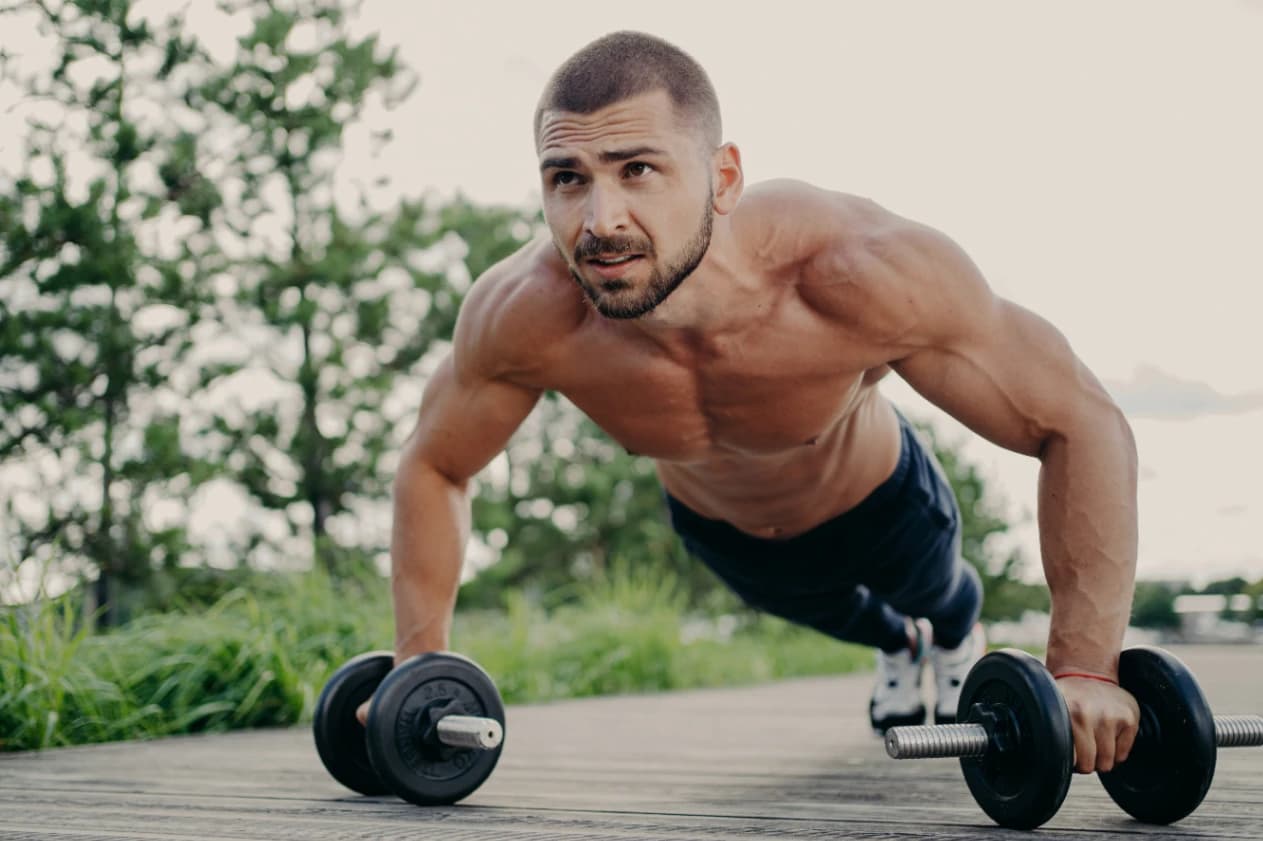
Functional emphasis: The push-up is underrated as a functional exercise. It requires core stabilisation, shoulder stability, and full-body tension — transferring directly to pushing movements in daily life. If you cannot perform 10 strict push-ups, this is a priority to develop.
5. Pull
Real-world application: Opening doors, pulling yourself up, climbing, carrying bags at your sides, rowing a boat.
Key exercises:
Functional emphasis: Pulling strength is often neglected relative to pushing, creating shoulder imbalances and forward posture. A minimum 1:1 push-to-pull ratio (ideally 2:1 in favour of pulling) is recommended for shoulder health and functional balance.
6. Carry
Real-world application: Carrying groceries, luggage, children, furniture. This is arguably the most directly functional movement pattern.
Key exercises:
Functional emphasis: Loaded carries train grip strength, core stability, shoulder endurance, cardiovascular conditioning, and postural resilience simultaneously. They are the most time-efficient functional exercise available and criminally underused in most training programmes.
7. Rotation (and Anti-Rotation)
Real-world application: Twisting to reach something behind you, throwing, swinging, turning while carrying an object, rotational sports (golf, tennis, cricket).
Key exercises:
Functional emphasis: The spine is designed to rotate, but most gym programmes train exclusively in the sagittal plane (forward-backward). Rotational and anti-rotational training develops the obliques, deep core stabilisers, and spinal control that protect against the back injuries commonly caused by twisting under load.
Joint Stability: The Foundation of Function
Functional strength without joint stability is a recipe for injury. The body follows an alternating pattern of mobile and stable joints:
| Joint | Primary Need |
|---|---|
| Ankle | Mobility |
| Knee | Stability |
| Hip | Mobility |
| Lumbar spine | Stability |
| Thoracic spine | Mobility |
| Scapula (shoulder blade) | Stability |
| Shoulder (glenohumeral) | Mobility |
When a joint that should be mobile becomes stiff (e.g., tight ankles), the adjacent stable joint (knee) is forced to compensate with movement it is not designed for — leading to pain and injury. This is why functional fitness programmes always include mobility work for ankles, hips, and thoracic spine alongside strength training.
Practical stability drills to include:
Unilateral Training: Why Single-Leg and Single-Arm Work Matters
Real life is unilateral. You walk one leg at a time, carry bags in one hand, reach with one arm, step over obstacles with one leg. Yet most gym training is bilateral — squats, bench press, barbell rows — which allows the stronger side to compensate for the weaker.
Research in the Journal of Strength and Conditioning Research (2023) found that athletes with greater than a 15% strength imbalance between left and right sides had a 2.5x higher injury rate than those with balanced strength.
Key unilateral exercises for your programme:
A practical guideline: at least 40% of your training volume should be unilateral exercises. This ensures both sides develop evenly and you build the balance and stability that bilateral movements alone cannot provide.
Sample 4-Week Functional Fitness Programme
This programme is designed for intermediate trainees with access to basic equipment (dumbbells, kettlebells, pull-up bar, resistance bands). Three training days per week with one optional conditioning day.
Week 1–2: Foundation Phase
Day A — Lower Body Focus
| Exercise | Sets × Reps | Pattern |
|---|---|---|
| Goblet squat | 3 × 10 | Squat |
| Romanian deadlift | 3 × 10 | Hinge |
| Walking lunge | 3 × 8 each leg | Lunge |
| Single-leg calf raise | 2 × 15 each | Stability |
| Farmer's walk | 3 × 30m | Carry |
Day B — Upper Body Focus
| Exercise | Sets × Reps | Pattern |
|---|---|---|
| Push-up | 3 × 10–15 | Push |
| Single-arm dumbbell row | 3 × 10 each | Pull |
| Overhead press | 3 × 8 | Push |
| Face pull | 3 × 15 | Pull |
| Pallof press | 3 × 10 each side | Anti-rotation |
Day C — Full Body Functional
| Exercise | Sets × Reps | Pattern |
|---|---|---|
| Kettlebell swing | 3 × 15 | Hinge |
| Single-leg Romanian deadlift | 3 × 8 each | Hinge/Balance |
| Lateral lunge | 3 × 8 each | Lunge |
| Push-up to rotation | 3 × 8 each side | Push/Rotation |
| TRX row | 3 × 12 | Pull |
| Suitcase carry | 3 × 25m each hand | Carry |
Week 3–4: Progression Phase
Day A — Lower Body Focus
| Exercise | Sets × Reps | Pattern |
|---|---|---|
| Front squat | 4 × 8 | Squat |
| Single-leg Romanian deadlift | 4 × 8 each | Hinge/Balance |
| Bulgarian split squat | 3 × 10 each | Lunge |
| Step-up with press | 3 × 8 each | Lunge/Push |
| Overhead carry | 3 × 25m each hand | Carry/Stability |
Day B — Upper Body Focus
| Exercise | Sets × Reps | Pattern |
|---|---|---|
| Single-arm dumbbell press | 4 × 8 each | Push |
| Pull-up or band-assisted | 4 × 6–8 | Pull |
| Landmine press | 3 × 10 each | Push |
| Single-arm row | 3 × 10 each | Pull |
| Cable woodchop | 3 × 10 each | Rotation |
Day C — Full Body Functional
| Exercise | Sets × Reps | Pattern |
|---|---|---|
| Turkish get-up | 3 × 3 each side | All patterns |
| Kettlebell swing | 4 × 12 | Hinge |
| Walking lunge with overhead hold | 3 × 8 each | Lunge/Carry |
| Medicine ball rotational throw | 3 × 8 each | Rotation |
| Farmer's walk (heavy) | 3 × 40m | Carry |
| Dead bug | 3 × 10 each side | Core stability |
Optional Day D — Conditioning
Choose one:
Dubai Lifestyle Relevance
Functional fitness is particularly relevant for Dubai residents because of the specific physical demands of life in the UAE:
Heat resilience: Functional fitness builds cardiovascular and muscular endurance simultaneously, improving your body's ability to thermoregulate during Dubai's extreme summer months. The conditioning effect of loaded carries and kettlebell complexes is particularly effective for heat acclimatisation.
Desk worker counterbalance: Dubai's economy is heavily service and finance-oriented, meaning a large proportion of the population spends 8–12 hours seated. Functional training — particularly hip hinges, thoracic mobility work, pulling exercises, and anti-rotation drills — directly counteracts the postural damage of prolonged sitting.
Active lifestyle demands: From carrying shopping bags through malls to playing with children at Kite Beach, from loading luggage for weekend trips to Al Ain to helping friends move apartments — Dubai life places varied physical demands that traditional gym training does not prepare you for. Functional fitness does.
Longevity and independence: The UAE's expat population skews young, but functional fitness is ultimately about maintaining physical independence across the lifespan. The ability to get up from the floor unassisted, carry heavy objects, and maintain balance on uneven surfaces are the physical capabilities that determine quality of life in older age. Training them now builds a reserve that pays dividends for decades.
FAQ
Q: Is functional fitness the same as CrossFit?
No. CrossFit is a branded training methodology that incorporates functional movements but also includes Olympic weightlifting, gymnastics, and high-intensity competition elements. Functional fitness is a broader training philosophy focused on real-world movement capability. CrossFit is one implementation of functional principles, but not the only one.
Q: Can I build muscle with functional training?
Yes. Functional training that uses progressive overload (gradually increasing weight, reps, or difficulty) builds muscle effectively. The difference is that muscle built through functional training tends to be more balanced, with better supporting stabiliser development, than muscle built through machine-based isolation.
Q: I am a beginner — is functional fitness appropriate?
Absolutely. Functional fitness can be scaled to any level. Bodyweight versions of all seven movement patterns exist and are appropriate starting points. A goblet squat is functional. A push-up from the knees is functional. A farmer's walk with light dumbbells is functional. Start where you are and progress gradually.
Q: How does functional fitness help prevent injuries?
By training all seven movement patterns, addressing left-right imbalances through unilateral work, building joint stability, and developing the deep stabiliser muscles that protect the spine and major joints. Research consistently shows that balanced functional training reduces injury rates compared to programmes that emphasise only bilateral, sagittal-plane exercises.
Q: Can a 369MMAFIT trainer design a functional programme for me?
Yes. A personal trainer through 369MMAFIT can assess your movement quality across all seven patterns, identify weaknesses and imbalances, and build a progressive functional programme tailored to your goals, whether that is sports performance, injury prevention, or simply being more capable in daily life.
Ready to put this into action?
Get matched with a certified 369MMAFIT coach in Dubai — personal training, MMA, and nutrition, in-person or online.